A controversy over alleged police third-degree treatment in Tenali, Andhra Pradesh, has returned to the spotlight after a court reportedly dismissed the attempted murder case filed against three youths in connection with an alleged attack on constable Kanna Chiranjeevi.
The development has renewed questions surrounding the police action, the allegations made against the youths and the media campaign that followed the incident in 2025.
According to the account presented in the case, the court examined the evidence submitted by the police and found that there was not sufficient strong evidence to establish an attempt to murder the constable. The development has therefore brought renewed attention to the circumstances surrounding the case.
Tenali Police Third-Degree Allegations
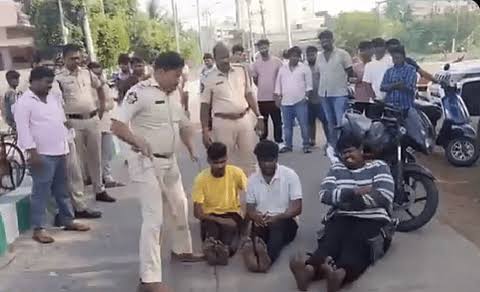
The incident dates back to April 2025, when Chebrolu John Victor, Shaik Baboolal alias Karimulla and Doma Rakesh were taken into police custody in the Aithanagar/Lingaraju Centre area of Tenali.
Videos showing the youths allegedly being made to sit on a public road and beaten on the soles of their feet with sticks later circulated on social media in May 2025. The incident triggered criticism from civil society groups and raised questions about the treatment of people in police custody.
Human Rights Forum objected to the alleged police action and called for action against the officers responsible. The organisation argued that being booked in a criminal case does not by itself establish that a person is guilty and that the rights of people in custody must also be protected.
Attempted Murder Case Against the Youths
Police, however, alleged that the youths had attacked constable Chiranjeevi and registered a serious criminal case, including an attempted murder allegation.
The youths’ supporters disputed the police version and alleged that the young men had been subjected to physical assault before the case was registered against them.
The competing versions of the incident became an important part of the controversy. The latest court development has brought particular attention to the evidence supporting the attempted murder allegation.
Allegations of Media Trial
The case also became politically contentious after the youths were allegedly described in some sections of the political and media discourse as a “ganja batch”, “rowdy-sheeters” and “anti-social elements”.
Those supporting the youths argued that such descriptions amounted to a media trial before the criminal case had been decided by a court.
The controversy has once again raised a broader question: should people accused of a crime be publicly portrayed as criminals before a court determines their guilt?
Human Rights Forum Raises Concerns
Human Rights Forum had earlier questioned the alleged public beating of the youths and called for a comprehensive inquiry into the conduct of the police.
The organisation maintained that constitutional rights apply to people in police custody as well and that allegations against an accused person must be established through due legal process.
The controversy consequently became not only a criminal case but also a wider debate over police accountability, custodial rights and the treatment of accused persons.
Political Reactions to the Tenali Incident
The incident also drew political reactions.
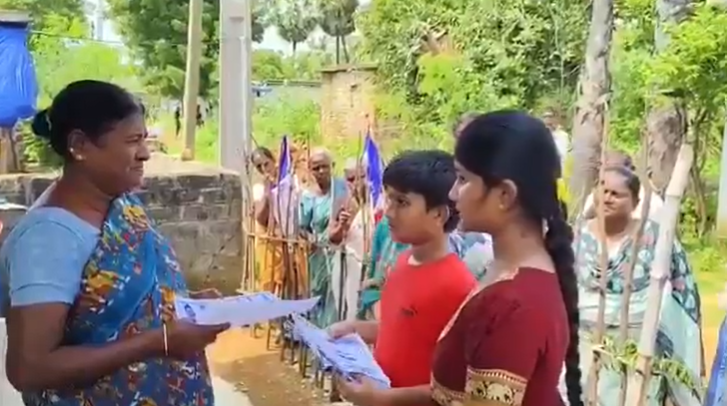
YSR Congress Party president and former Andhra Pradesh Chief Minister YS Jagan Mohan Reddy had visited the families of the affected youths in Tenali on June 3, 2025. He alleged that the youths belonged to Dalit and minority communities and criticised what he described as “Red Book Constitution” governance.
The ruling side, however, criticised Jagan’s intervention and accused him of supporting people described by them as anti-social elements.
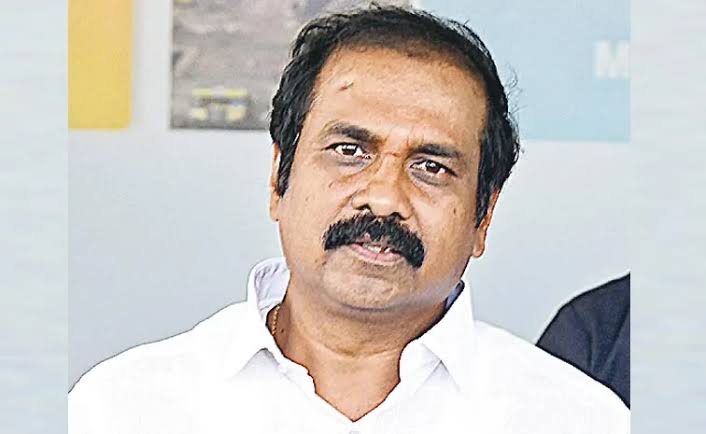
Home Minister Vangalapudi Anitha had also defended the police action at the time, saying that police were taking action against rowdy-sheeters and alleged ganja groups. Human Rights Forum objected to the justification of alleged third-degree treatment and called for the protection of the rights of those involved.
Constable’s Family Also Made Allegations
During the controversy, Kalyani, the wife of constable Chiranjeevi, spoke to the media and alleged that her husband had been subjected to an attempted murder attack.
Her statements were widely discussed in political and media circles, adding another dimension to the dispute.
The Andhra Pradesh Women’s Commission chairperson Rayapati Shailaja also visited the constable’s family and reportedly assured them of support and protection from the commission.
Deputy Speaker Raghurama Krishna Raju also criticised Jagan’s visit to the families of the youths.
Questions Over the Initial Portrayal of the Youths
Dalit and civil society organisations supporting the youths disputed the police narrative. They alleged that John Victor was a young junior lawyer who had worked hard to pursue his education and that attempts were made to portray him and the others as anti-social elements.
They further alleged that the youths questioned a person in civilian clothes during an altercation without knowing that he was a police constable, following which they were allegedly taken from Mangalagiri to Aithanagar and assaulted.
These allegations were disputed and remained matters for legal examination.
Court Decision Puts Focus Back on Evidence
The latest court development has shifted attention back to the evidence supporting the attempted murder allegation against the youths.
The case also highlights an important principle in criminal proceedings: allegations made by police or other parties are not, by themselves, proof of guilt. The court must assess the evidence before reaching a conclusion.
The reported dismissal of the attempted murder case has therefore prompted renewed discussion about the evidence presented in the Tenali case and the manner in which the youths were portrayed during the controversy.
Debate Over Media Trials
The Tenali case has also revived the debate over media trials.
Critics of the earlier coverage argue that describing accused persons as criminals before a judicial finding can affect public perception and potentially undermine the principle that an accused is presumed innocent until proven guilty.
The latest development has led supporters of the youths to question whether the public narrative surrounding the case went beyond what had actually been established through judicial proceedings.
At the same time, the allegations made by the constable and his family remain part of the history of the dispute and should be distinguished from what has been established through the court process.
The Tenali controversy has thus brought together several issues police accountability, custodial rights, criminal evidence, media reporting and the presumption of innocence making the latest court development significant in the continuing discussion over the 2025 incident.