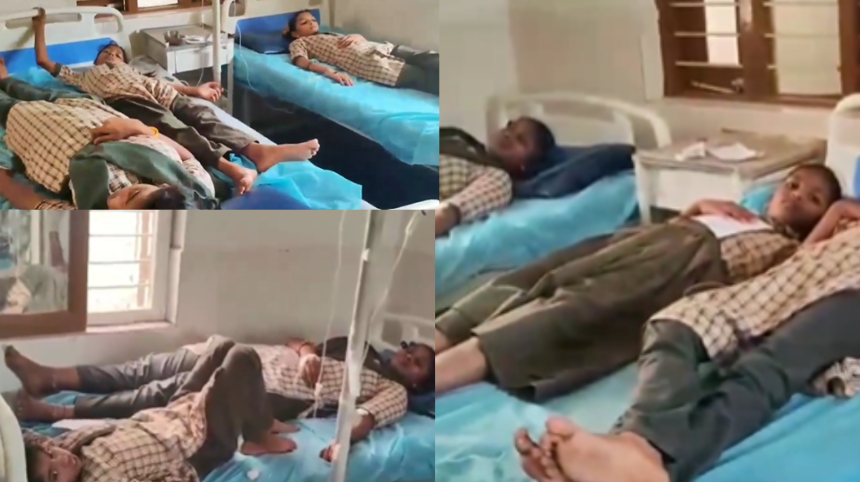
Food safety in Andhra Pradesh government schools, gurukuls and hostels has come under renewed scrutiny following a series of incidents in which students reportedly fell ill after consuming meals or breakfast.
The latest cases have again raised questions about the quality of food served to students, kitchen hygiene, food storage and monitoring at residential educational institutions.
Lizard Reportedly Found in Sambar at Tuni College
A recent incident was reported at the Government Women’s Junior College in Tuni, Kakinada district.
According to local reports, students alleged that a lizard was found in the sambar served at the hostel. Nineteen students reportedly developed symptoms including vomiting and diarrhoea after the meal and were taken to hospital for treatment. Their condition was reported to be stable.
Officials are expected to investigate the incident and determine the exact cause of the students’ illness. The reported presence of a lizard in the food has nevertheless raised fresh concerns about kitchen hygiene and food-safety practices.
A separate incident was also reported at the Dr B.R. Ambedkar Girls’ Gurukul School in Thonduru, YSR Kadapa district. Reports said several students fell ill after consuming food prepared with allegedly spoiled eggs. The students were taken to the local government hospital and were reported to be stable.
Food Poisoning Incidents Reported Across Andhra Pradesh
The recent cases follow several reported incidents involving students at government schools, welfare hostels and residential institutions across Andhra Pradesh.
In June 2025, 16 students at the BC Welfare Boys’ Hostel in Srikalahasti reportedly fell ill after breakfast. They experienced symptoms including nausea, vomiting and stomach pain and were taken to hospital.
In July 2025, three students at a BC girls’ hostel in Srikalahasti were hospitalised after eating upma. Other students alleged that a dead lizard was found in the food, although the reported presence of the lizard and its connection to the students’ illness were matters requiring verification.
Around the same period, a reported incident involving a cockroach in food served during Andhra Pradesh Home Minister Vangalapudi Anitha’s visit to a BC girls’ hostel in Payakaraopeta attracted attention. However, reports differed over what was seen in the minister’s plate, with one report quoting the minister as clarifying that it was hair rather than a cockroach.
At the Panyam Tribal Gurukul School in Nandyal district, 20 students were hospitalised in July 2025 following suspected food poisoning. Officials said the students were stable and received medical treatment.
Polavaram Tribal School Incident Raises Wider Concerns
One of the more serious recent incidents occurred at the Devarapalli Government Tribal Welfare School in the Polavaram area in February 2026.
PTI reported that 74 students fell ill after consuming idli and chutney for breakfast. Students complained of vomiting and stomach discomfort, and several were shifted to nearby hospitals. Food and water samples were collected for laboratory testing to determine the exact cause.
A subsequent report by The New Indian Express highlighted broader concerns about monitoring at tribal welfare schools in the Agency areas. It reported allegations that some institutions were not consistently following prescribed food menus and that concerns had been raised over food quality, hygiene and supervision.
Kadapa Dental College Hostel Food Poisoning Case
In July 2026, around 40 students at the Government Dental College girls’ hostel in Kadapa reportedly fell ill following suspected food poisoning.
Students complained of nausea, vomiting and uneasiness after dinner and were shifted to RIMS, Kadapa, for treatment. Food-safety officials inspected the hostel kitchen and food materials, while the exact cause was investigated.
NHRC Had Earlier Taken Suo Motu Cognisance
Concerns over food safety in residential educational and care institutions are not new.
In August 2024, the National Human Rights Commission (NHRC) took suo motu cognisance of two reported food-poisoning incidents in Andhra Pradesh. One involved 70 students at Chittoor Apollo Health University, while another involved an orphanage in Anakapalli district where three children reportedly died and 37 others fell ill.
The NHRC issued notices to the Andhra Pradesh Chief Secretary and Director General of Police seeking detailed reports, including the status of FIRs, the health condition of victims and steps proposed to prevent similar incidents.
Food Quality, Hygiene and Monitoring Remain Key Issues
The repeated reports point to several areas that require close monitoring in government schools and residential hostels:
- Quality and freshness of food ingredients
- Proper storage of rice, vegetables, eggs and other food items
- Cleanliness of kitchens and cooking utensils
- Safe drinking water
- Proper cooking and serving practices
- Prevention of contamination by insects or other foreign objects
- Regular inspection of hostel kitchens
- Monitoring of caterers, cooks and mess contractors
- Prompt medical response when students fall ill
- Laboratory testing of suspected food and water samples
The reported incidents do not necessarily establish that the same cause was responsible in every case. In several instances, officials collected food or water samples and said that laboratory tests were required to determine the exact cause of illness.
Implementation Matters as Much as the Scheme
Government nutrition programmes are intended to provide children with safe and nutritious meals. The PM POSHAN framework, for example, places emphasis on food quality, hygiene, safe preparation and cleanliness.
For Andhra Pradesh, the recurring complaints make implementation and monitoring particularly important in schools and hostels where students depend on institutional kitchens for their daily meals.
The use of the name of social reformer and philanthropist Dokka Seethamma for a school meal initiative also places attention on the quality of its implementation at the ground level.
The latest incidents in Tuni and Thonduru, along with earlier cases reported across the state, have renewed the debate over whether existing monitoring mechanisms are strong enough to ensure safe food for students.
For the Education and Welfare departments, the key issue is not only responding after students fall ill but also strengthening preventive checks on kitchens, food suppliers, storage facilities and hostel messes. Clear accountability and regular inspections could help reduce the risk of repeated food-safety incidents in Andhra Pradesh’s government educational institutions.