
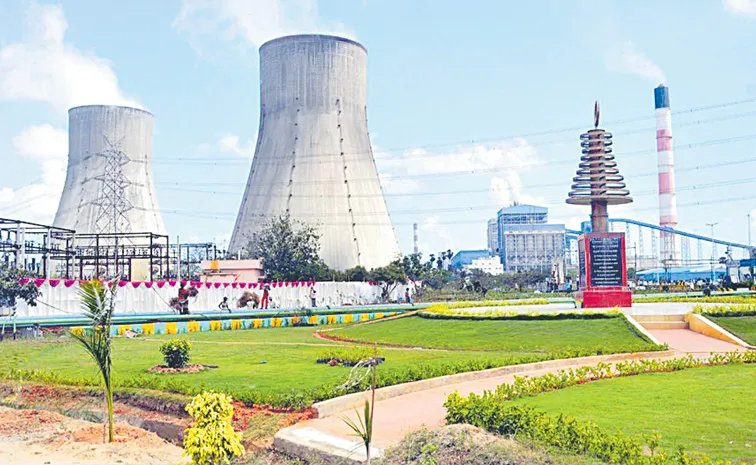
The financial condition of the Damodaram Sanjeevaiah Thermal Power Station (SDSTPS) in Krishnapatnam has come under scrutiny after details submitted to the Andhra Pradesh Electricity Regulatory Commission (APERC) highlighted significant financial losses.
The 2,400 MW thermal power plant is one of Andhra Pradesh’s major electricity generation facilities. However, according to the report, the plant’s accumulated losses are estimated at around Rs 7,500 crore, raising questions about its operational costs, financial management and long-term viability.
APERC Approves Rs 236.20 Crore Against Rs 302.04 Crore True-Up Claim
The Andhra Pradesh Power Development Company sought a true-up amount of Rs 302.04 crore towards expenses related to SDSTPS.
After examining the claim, APERC approved Rs 236.20 crore. The approved amount will ultimately have to be recovered through the power distribution companies, raising concerns about the possible financial impact on the electricity sector and consumers.
A true-up mechanism is generally used to adjust the difference between previously approved costs and the actual expenses incurred by a power utility.
Why Is the 2,400 MW SDSTPS Running Into Heavy Losses?
The major question surrounding SDSTPS is why a power station with a 2,400 MW installed capacity has accumulated losses reportedly reaching around Rs 7,500 crore.
Several factors can contribute to the financial burden of a thermal power plant, including:
- Fuel and electricity generation costs
- Fixed and operational expenses
- Plant maintenance costs
- Financing and other financial charges
- Ash handling and transportation expenses
- Lower or inefficient utilisation of generating capacity
The financial performance of the plant has therefore become an important issue for the state’s power sector.
Rs 14.56 Crore Spent Annually on Ash Transportation
Another significant operating expense highlighted in the report is the cost of transporting ash generated during the thermal power generation process.
According to the reported figures, SDSTPS spends around Rs 14.56 crore every year on ash transportation.
While ash management is an unavoidable requirement at coal-based power plants, such recurring expenses add to the overall operating cost and can further increase the financial burden on the generating company.
Could SDSTPS Losses Increase the Burden on Consumers?
The biggest concern is whether the financial burden associated with SDSTPS could eventually affect electricity consumers.
If approved costs and true-up amounts are recovered through distribution companies, they could become part of the broader power procurement and tariff-related expenses. This raises questions about whether consumers could ultimately bear part of the financial burden through electricity charges.
At the same time, the key issue is not simply the recovery of costs but understanding why such large losses have accumulated at a 2,400 MW power station.
Need for Greater Transparency in Power Sector Finances
The reported figures have renewed the debate over financial management in Andhra Pradesh’s power sector.
With around Rs 7,500 crore in reported losses, a Rs 302.04 crore true-up claim, and Rs 236.20 crore approved by APERC, there is a need for greater transparency regarding the plant’s operational performance and expenditure.
A detailed assessment of generation costs, plant utilisation, maintenance expenses, fuel costs and other financial liabilities could help determine the reasons behind the losses.
Conclusion
The financial situation of Krishnapatnam’s Damodaram Sanjeevaiah Thermal Power Station raises important questions about the management and economic efficiency of large thermal power projects in Andhra Pradesh.
The reported Rs 7,500 crore losses, combined with significant operating expenses and the latest APERC-approved true-up amount of Rs 236.20 crore, have intensified concerns over the financial burden on the state’s power sector.
Instead of simply passing additional costs on to consumers, there is a growing need to identify the underlying causes of the losses, improve operational efficiency and establish accountability for the financial performance of the power station.

Perni Nani Slams Chandrababu Government: Why Should People Vote for It Again?