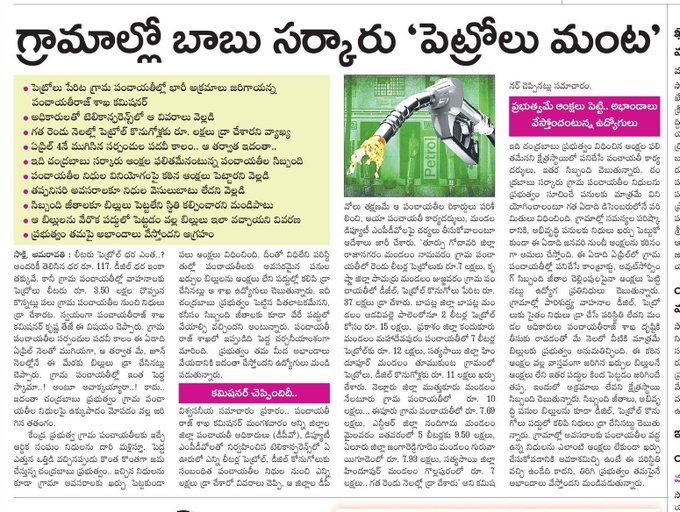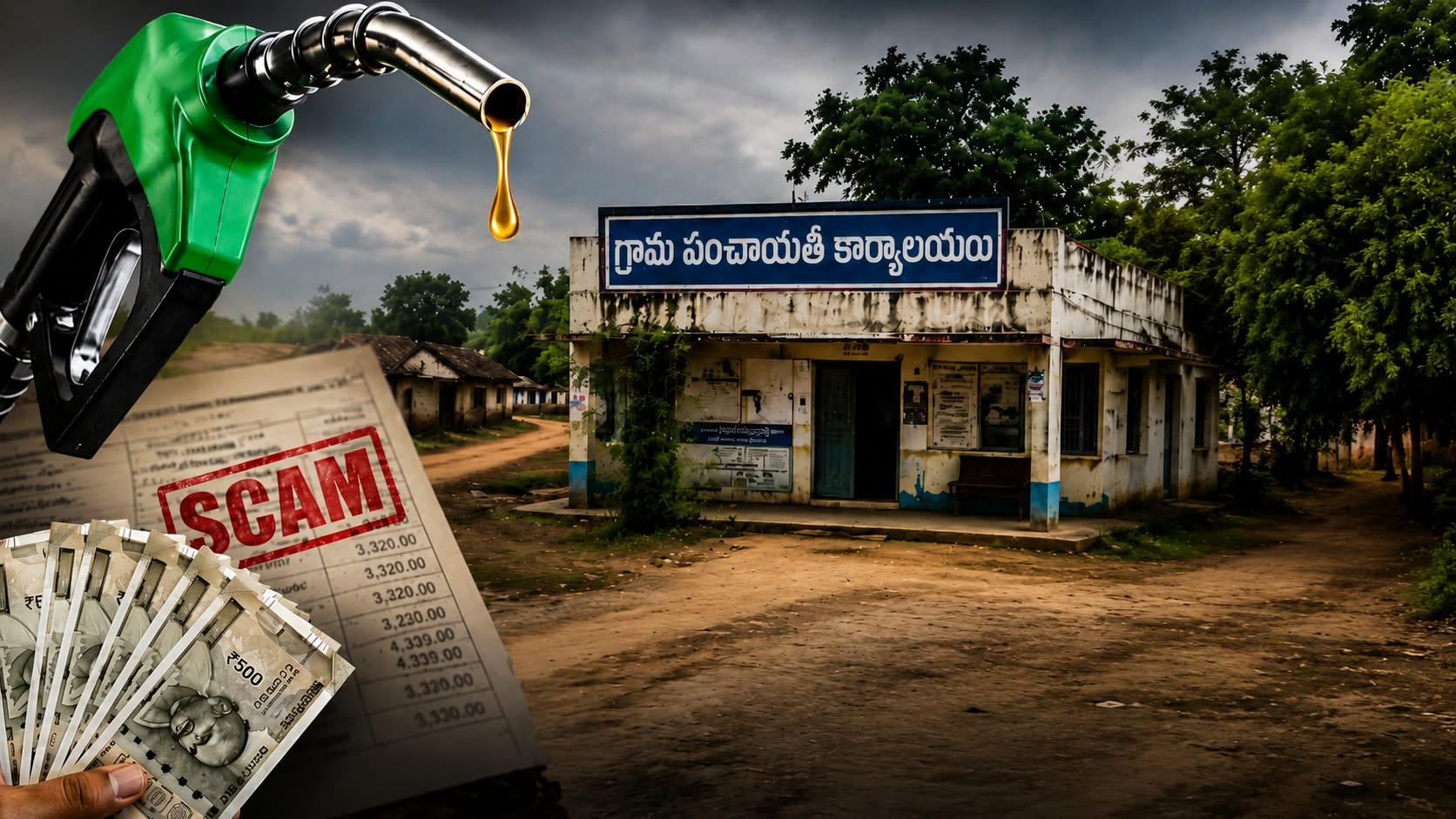
A fresh controversy has erupted in Andhra Pradesh’s Panchayat Raj Department after unusually high petrol bill expenditures reported across several Gram Panchayats drew the attention of the Panchayat Raj Commissioner. While officials have raised concerns over lakhs of rupees being withdrawn under the head of petrol expenses, Panchayat employees argue that the controversy is the direct result of the Chandrababu Naidu government’s financial policies rather than any wrongdoing on their part.
The issue has now triggered a wider debate over the government’s handling of Panchayat finances, the functioning of Special Officers after the expiry of elected bodies, and whether employees are being unfairly made scapegoats for systemic administrative failures.
Lakhs Spent on Petrol Bills Raise Serious Questions
During a recent review meeting, the Panchayat Raj Commissioner reportedly expressed concern after data revealed unusually high petrol expenditures in numerous Gram Panchayats over the past two months.
In several villages, petrol expenses were said to be disproportionately high compared to the actual use of official vehicles. The Commissioner directed officials to verify every claim and conduct a detailed examination of the expenditure records.
The figures have sparked public debate over whether proper financial monitoring exists within the Panchayat Raj Department.
No Elected Sarpanches, Yet Expenditure Continues
The tenure of elected Gram Panchayat Sarpanches ended on April 4, after which administrative responsibility shifted to Special Officers appointed by the government.
Critics are now questioning how substantial petrol bills continued to be generated even after elected local bodies ceased to function. If Special Officers were supervising Panchayat administration, questions are being raised about who authorized the expenditure, who verified the bills, and whether adequate oversight mechanisms were in place.
The controversy has shifted attention from the bills themselves to the government’s administrative accountability.
Employees Point to Government’s Financial Restrictions
Panchayat employees reject allegations of financial irregularities and instead blame the government’s fund management policies.
According to employee representatives, the state government imposed restrictions on the utilization of Panchayat funds, making it difficult to clear payments for essential services such as drinking water supply, electricity charges, sanitation works, and employee salaries.
They claim that because regular payment channels were unavailable or delayed, officials were forced to temporarily adjust certain expenditures under available budget heads, including petrol expenses, to ensure that essential public services did not come to a standstill.
If these claims are accurate, employees argue that the controversy reflects flaws in the financial system rather than deliberate misuse of funds.
Salary Crisis Adds to Employee Frustration
Panchayat employees say they have been struggling with delayed salaries and financial uncertainty for months.
Instead of addressing these long-pending issues, they argue, the focus has shifted toward portraying employees as responsible for the petrol bill controversy.
Employee associations contend that those implementing government policies are now being blamed for administrative decisions taken at higher levels.
Is the Government Avoiding the Real Issue?
Critics argue that the petrol bill controversy exposes deeper structural problems within the Panchayat Raj Department.
Several questions remain unanswered:
- Why were Panchayats left without adequate financial flexibility after the expiry of elected bodies?
- Why were essential operational expenses not provided through transparent funding mechanisms?
- What monitoring systems existed while Special Officers were administering Gram Panchayats?
- If financial rules forced expenditure adjustments, why were those rules not revised in time?
These questions, critics say, deserve as much attention as the expenditure itself.
Political Debate Intensifies
The issue has rapidly acquired political overtones.
Opposition voices argue that instead of resolving the financial crisis facing Gram Panchayats, the government is highlighting petrol expenditure while ignoring the broader problems of fund allocation, salary delays, and operational constraints.
Meanwhile, Panchayat employees insist that they are being unfairly targeted despite continuing to provide basic civic services under difficult financial conditions.
They have demanded that the government reform Panchayat funding mechanisms, ensure timely release of grants, and avoid branding employees as culprits before completing a comprehensive inquiry.
Conclusion
The petrol bill controversy has evolved beyond a question of expenditure. It has become a larger debate about financial governance, administrative accountability, and the functioning of Andhra Pradesh’s Panchayat Raj system.
If irregularities are found, those responsible should be held accountable through a transparent investigation. At the same time, if the controversy has arisen because of policy decisions, funding restrictions, or administrative lapses, those issues must also be addressed.
Ultimately, restoring confidence in local governance will require more than identifying disputed petrol bills—it will require transparent financial management, timely funding of Gram Panchayats, and accountability at every level of the administration.