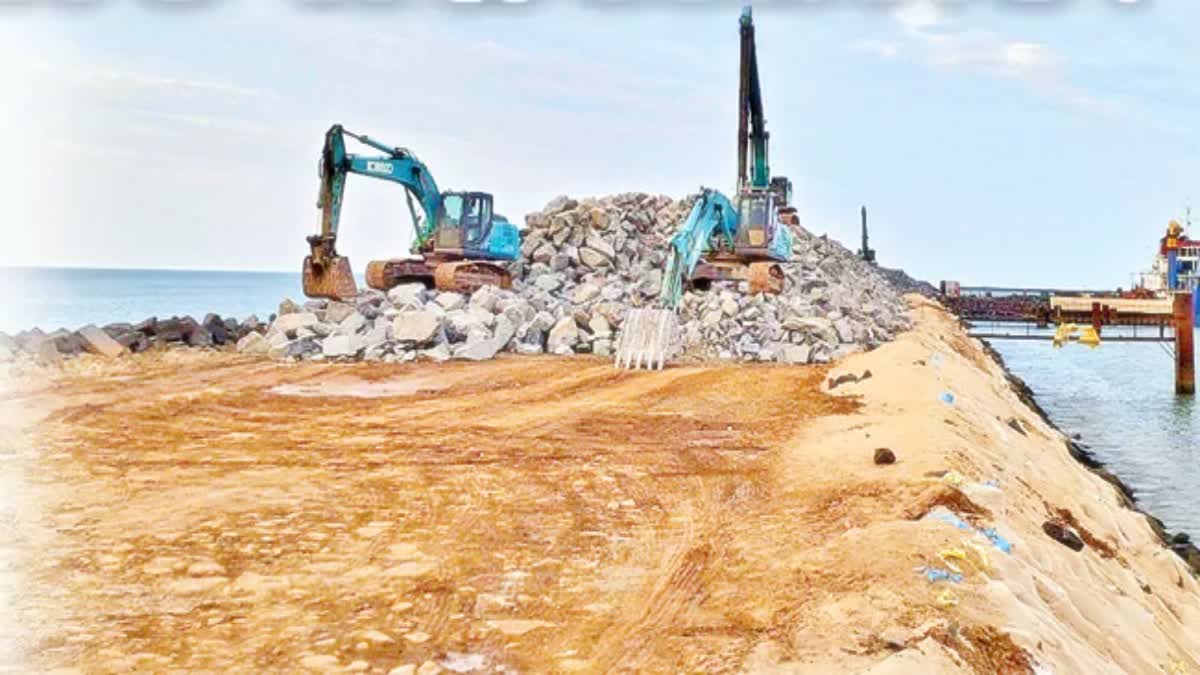
The issue of privatization of government assets has once again become the center of political debate in Andhra Pradesh. The state government’s decision to hand over the operation of Ramayapatnam Port to private companies under the DBFOT (Design, Build, Finance, Operate and Transfer) model has drawn sharp criticism from opposition parties.
Opposition leaders have questioned the move, asking whether the government is functioning as a “public government or a private government.”
According to them, the government is gradually transferring public assets built with taxpayers’ money to private entities instead of retaining them as long-term state assets.
Ramayapatnam Port Built with ₹4,929 Crore of Public Funds
The previous government led by YS Jagan Mohan Reddy considered Ramayapatnam Port a key infrastructure project for Andhra Pradesh’s long-term economic growth.
The project was undertaken at an estimated cost of ₹4,929.39 crore, funded through public resources.
According to government sources, the majority of the construction work had already been completed before the 2024 Assembly elections.
The opposition argues that a project envisioned as a permanent revenue-generating asset for the state is now being prepared for private operation.
Government Clears DBFOT Model for Port Operations
According to reports, the Andhra Pradesh government has approved operating Ramayapatnam Port under the Design, Build, Finance, Operate and Transfer (DBFOT) model.
The government has reportedly issued orders inviting tenders from private companies to take over the port’s operations.
Critics argue that transferring the management of an infrastructure project built with public funds to private firms raises serious concerns about public ownership and long-term state interests.
Medical Colleges, Ports, APSRTC… What Next?
Opposition parties claim that the privatization policy is not limited to Ramayapatnam Port alone.
They allege that:
- Attempts are being made to privatize medical colleges established during the previous government.
- State ports are being handed over to private operators.
- Private participation in APSRTC is being expanded.
- Key sectors such as education and healthcare are increasingly being opened to private entities.
According to the opposition, if public institutions and government assets continue to be transferred to private hands, the state’s control over essential public services may gradually weaken.
Public Money Builds Assets… Private Firms Earn the Profits?
One of the key questions raised by opposition leaders is whether assets constructed with thousands of crores of taxpayers’ money should ultimately generate profits for private companies.
They argue that if the government finances infrastructure development while private firms control operations and revenue generation, the public may not receive the full long-term benefits of those investments.
If Everything Is Privatized, What Is the Government’s Role?
Opposition parties have intensified their criticism by questioning the broader direction of government policy.
According to them, if education, healthcare, ports, public transport, and other government institutions are gradually privatized, people may begin to question the purpose of maintaining a large public sector.
They argue that this concern is becoming an important political discussion across the state.
How Will the State Build Long-Term Public Assets?
Critics argue that the responsibility of a government extends beyond merely constructing infrastructure.
They say governments must also preserve these projects as long-term public assets capable of generating sustainable revenue for future generations.
According to the opposition, transferring completed infrastructure projects to private management raises several questions:
- How will the state generate permanent revenue?
- How will the value of government-owned assets increase?
- What public assets will remain for future generations?
These questions, they claim, deserve wider public debate.
Public Assets in Private Hands: A Larger Debate on Andhra Pradesh’s Economic Policy
The Ramayapatnam Port privatization issue has now evolved beyond the management of a single port and has become part of a larger political debate over Andhra Pradesh’s economic policies.
The government believes that private participation can improve investment, efficiency, and operational management.
However, opposition parties argue that handing over public assets built with taxpayers’ money to private companies could undermine the state’s long-term financial interests and reduce public control over strategic infrastructure.
As a result, the debate continues over a fundamental question:
Should assets created with public money remain under public control for the benefit of the people, or should they be managed by private companies in the name of efficiency and investment?