From Criticism to Appreciation: A Shift in Political Narrative
The role of industrialists in Andhra Pradesh politics has once again become a subject of intense political discussion. While the involvement of business leaders in government projects is not new, the Telugu Desam Party’s (TDP) changing stance toward several industrialists has drawn significant attention.
During the tenure of former Chief Minister Y.S. Jagan Mohan Reddy, several industrialists who brought major investment projects to Andhra Pradesh faced criticism from TDP leaders. However, after coming to power, the same leaders are now appreciating many of those investors and highlighting their projects as achievements of the present government. This shift has become a major talking point in political circles.
Kadapa Steel Plant and Sajjan Jindal’s Remarks
One of the most notable examples is the proposed Kadapa Steel Plant. The Y.S. Jagan Mohan Reddy government signed a key agreement with JSW Group Chairman Sajjan Jindal to establish the long-awaited steel plant in Kadapa.
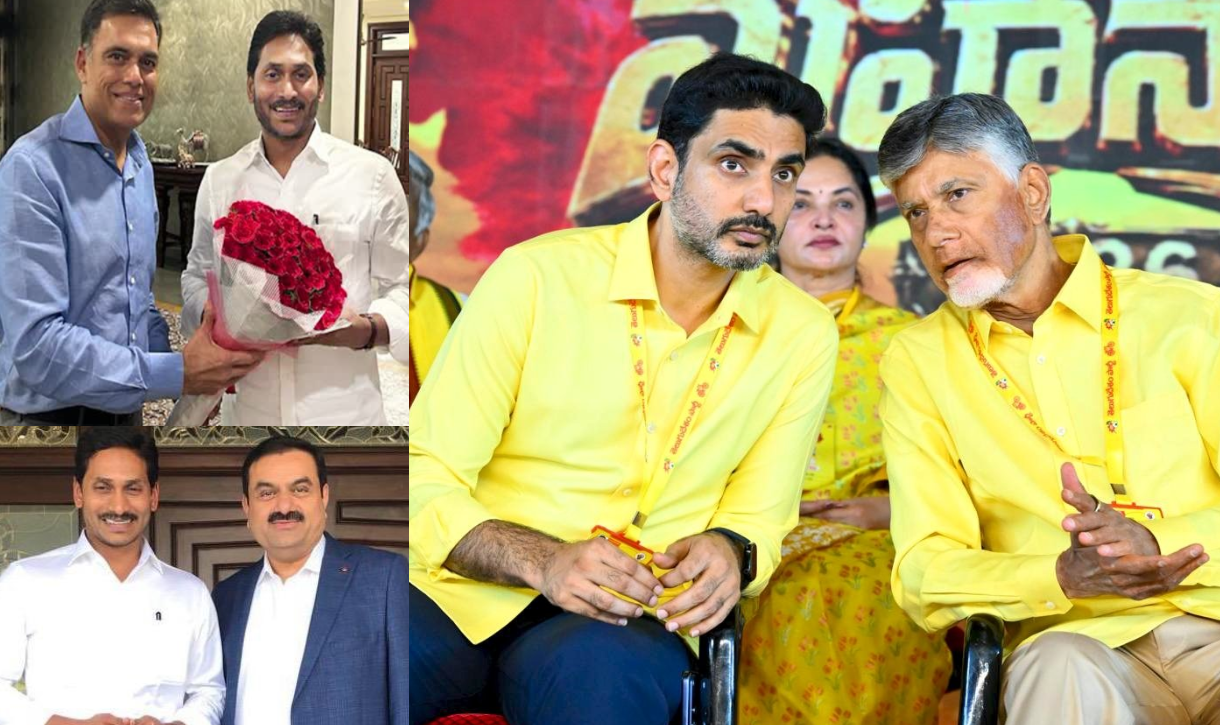
At the time, Jindal publicly praised the Jagan government, stating that the project became possible due to the state’s proactive support and speedy approvals. After the change in government, however, political criticism emerged linking Jindal to the previous administration. Allegations also surfaced that attempts were made to drag the industrialist into controversies, including references to the Mumbai actress case.
Recently, as work on the steel plant resumed, the coalition government attempted to claim credit for reviving the project. However, Sajjan Jindal once again acknowledged that the project’s foundation was laid during the previous government through timely clearances and administrative support, making his remarks politically significant.
SECI Power Agreement and Questions Over Policy Reversal
Another issue attracting political attention is the power purchase agreement signed with SECI during the Jagan administration to ensure long-term free electricity for farmers.
At the time, TDP leaders strongly criticized the agreement, raising allegations involving the Adani Group and questioning the transparency of the deal. However, after assuming office, the same government continued the agreement and approved the supply of 300 MW of power, a move that critics describe as a political U-turn.
The agreement also provides electricity at a relatively low tariff of ₹2.49 per unit while offering a 25-year exemption from interstate transmission charges. Political observers argue that continuing the same agreement has raised questions about the allegations made against it in the past.
Data Centre Project Also Becomes a Political Issue
The debate has extended to Andhra Pradesh’s data centre projects as well.
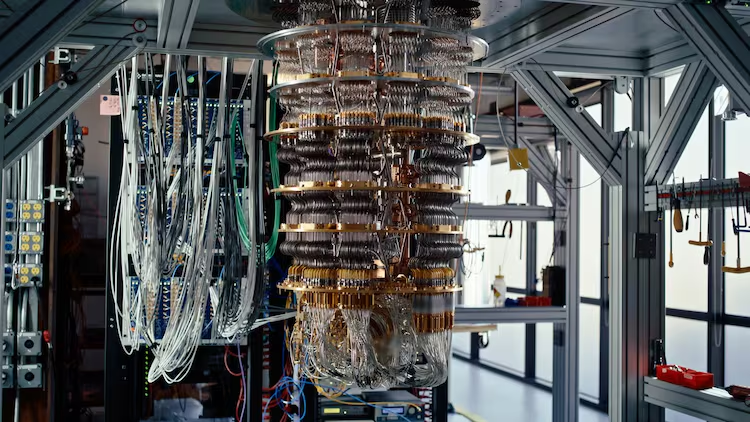
Critics allege that the Adani Data Center project initiated during the previous government is now being promoted as a Google Data Center project, thereby shifting the credit away from the original initiative. This has further intensified the political debate over ownership of development projects.
Development Should Rise Above Politics
Overall, critics argue that projects initiated during the Jagan government’s tenure are now being showcased as achievements of the current administration. They also point to what they describe as a contradiction in first criticizing industrialists and later projecting them as symbols of development.
Many political observers believe that irrespective of which party is in power, development projects and investments should be encouraged without politicizing industrialists. They argue that turning investors into political targets could discourage future investments and ultimately affect Andhra Pradesh’s long-term economic growth.