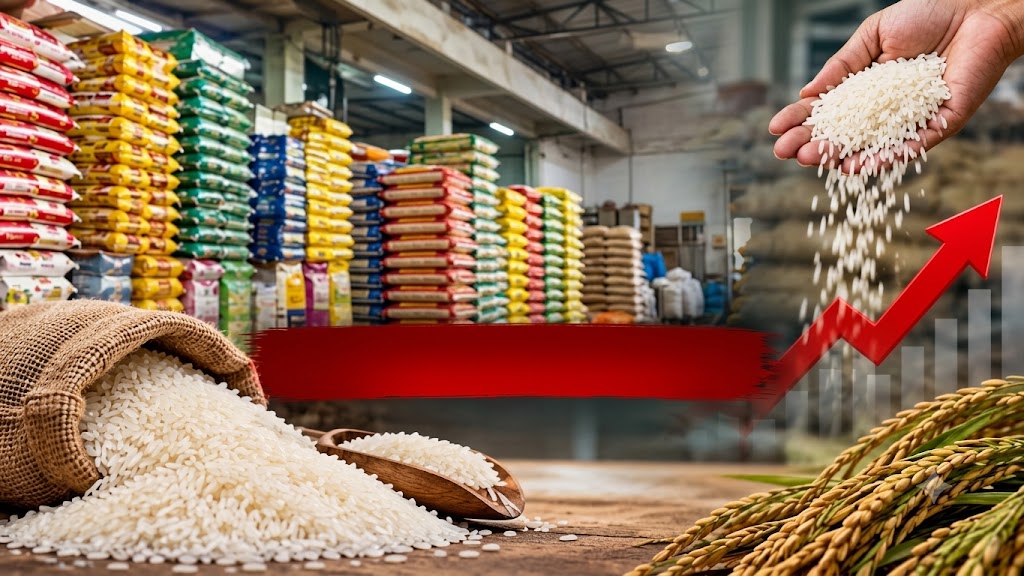
Rice prices are rising sharply across the state, with retail prices increasing by Rs 15 to Rs 20 per kg, putting significant pressure on household budgets. What was initially believed to be limited to premium and fine varieties has now extended to ordinary rice as well. Market details indicate that prices of some varieties have increased by as much as Rs 2,000 per quintal.
At the same time, allegations are emerging that artificial shortages are being created in the market under the pretext of drought and reduced yields. Critics allege that millers and traders are restricting supplies despite having stocks available, thereby pushing up prices. Amid these developments, questions are being raised over what the government machinery is doing to control prices, inspect stocks and monitor the market.
Rice Prices Rise Sharply
Market sources indicate that rice prices have increased considerably across the state. Allegations are being made that millers and traders are working together to create an artificial shortage. The rise is not limited to fine varieties, as prices of ordinary rice have also increased, causing concern among consumers.
Rice prices have reportedly increased by Rs 15 to Rs 20 per kg, adding to the financial burden on ordinary households. Since rice is a daily essential commodity, the price increase is directly affecting monthly household expenses.
Branded Rice Prices Touch Rs 70 per Kg
According to the details in the clipping, the state consumes around 5–6 lakh tonnes of rice every month based on its population. With a large number of families consuming rice twice a day, demand in the market remains substantial.
Prices of branded rice varieties have also reportedly increased sharply. Prices of TBP, half-boiled and other varieties are said to have increased by around Rs 7–10 per kg, while the difference is even higher in the case of some brands.
Although inadequate supply compared with market demand is being cited as one of the reasons for the price rise, the key question is where exactly the problem lies in the supply system.
Same Rice as Last Year, But at a New Price
There are allegations that millers have been holding stocks from the previous harvest and releasing them into the market in stages depending on demand.
There are also claims that much of the rice currently being sold belongs to stocks from the previous year. The fact that prices of old stocks are rising before the new crop enters the market fully has raised several questions.
How much rice is actually stocked with millers and traders? Which crop year do those stocks belong to? When were they released into the market? These details need to be established.
Are Millers Raising Prices Under the Pretext of Drought?
Normally, prices tend to increase when crop yields decline. However, questions are being raised as to whether the current price rise is solely due to lower production or whether stockpiling and supply restrictions are also contributing to the situation.
According to market-related details mentioned in the clipping, millers and traders are allegedly holding stocks and selling them after prices increase. These remain allegations, and the actual situation can be established only through official inspections and verification of stock records.
Prices Rise by Up to Rs 2,000 per Quintal
The price table in the clipping highlights the changes in the rice market. It compares the prices of 25-kg bags during May with the prices in September.
| Rice Variety | May Price | September Price |
|---|---|---|
| BPT varieties | Rs 1,125–1,250 | Rs 1,600–1,650 |
| Half-boiled varieties | Rs 1,300–1,350 | Rs 1,650–1,850 |
| Raw rice | Rs 1,450 | Rs 1,750 |
| Half-boiled Masoor | Rs 1,100 | Rs 1,450 |
The figures indicate a significant increase in the prices of several varieties within a few months. The rise is therefore not confined to fine rice, with ordinary and other varieties also being affected.
Significant Increase Even in Retail Prices
The clipping also contains details of retail prices. According to the table, BPT varieties have increased from Rs 50 to Rs 65 per kg, half-boiled varieties from Rs 54 to Rs 72, raw rice from Rs 60 to Rs 72, and half-boiled Masoor from Rs 46 to Rs 56 per kg.
Although the increase per kilogram may appear small, it can translate into a substantial additional expense for families that purchase 25–50 kg of rice every month.
Prices Rise from Rs 4,200 to Rs 5,400
Market details also indicate sharp increases in the prices of several other rice varieties. Prices that were earlier in the range of Rs 3,500 to Rs 3,900 have reportedly increased to around Rs 4,200, while prices of some varieties have reached as high as Rs 5,400.
The price of half-boiled Masoor, which was reportedly around Rs 4,200, has now reached Rs 5,400. Meanwhile, prices from millers have increased from Rs 4,500 to Rs 4,800, while raw rice is reportedly priced at around Rs 5,300.
With rice prices continuing to rise, the key question is what measures are being taken to regulate prices in the market.
Government Under Scrutiny Over Price Control Measures
When prices of an essential commodity such as rice increase, there is a need for effective market monitoring. In particular, inspections of mills, warehouses and wholesale traders holding large stocks are necessary to verify actual stock levels, daily supplies and selling prices.
The clipping also raises questions about the government’s regulatory mechanism. There are demands to curb black marketing, identify the reasons behind the price rise and strengthen monitoring of rice stocks.
Market Determines Prices, Where Is Government Monitoring?
While millers and traders may cite various reasons for the increase in prices, consumers are facing the direct impact of higher costs.
If the government makes official data available on crop production, supply, stocks and demand, it would help establish the actual reasons behind the price increase.
At present, however, the rising prices are putting increasing pressure on consumers’ purchasing power. The key question is whether the government will step up direct market monitoring to bring rice prices under control or whether the price rise will continue.
Price Rise Hits Household Budgets
Public reactions mentioned in the clipping also reflect concern over the increase in rice prices. Consumers reportedly say that their monthly rice expenditure, which was around Rs 4,000, has now increased further because of the higher prices.
Some consumers expressed concern about how families can manage rising expenses when only one member is earning. Others said that rice prices have been increasing as the crop season progresses and alleged that the government is not paying sufficient attention to the issue.
Some young consumers reportedly said they are spending up to Rs 500 more per month on 26 kg of rice due to the increase of Rs 15–20 per kg.
More Than a Rice Price Issue: A Test of Market Monitoring
Establishing the actual reasons behind the rise in rice prices is now an important responsibility for the government.
Has production genuinely declined? Has market supply fallen? Are large quantities of rice being held by millers? Are traders creating an artificial shortage? Clear answers are needed to these questions.
If the allegations of illegal stockpiling and artificial shortages are found to be true, appropriate action should be taken. If the price increase is purely the result of normal market conditions, the government should make the relevant data available to the public.
Consumers should not have to continue bearing an additional monthly financial burden simply because rice prices are rising.
When Will the Heat of Rising Rice Prices Ease?
As rice prices continue to rise, household budgets are coming under increasing pressure. The increase in prices from fine varieties to ordinary rice, the additional Rs 15–20 per kg burden and the sharp rise in the prices of some varieties have caused concern.
The government needs to clarify the allegations that artificial shortages are being created in the name of drought. Transparent inspections of stocks held by millers and traders are also needed.
Only when the government publishes official data on available rice stocks, supply conditions and the actual reasons behind the price rise will the facts behind the surge become clear.
The key question now is whether the government will be able to bring down rice prices or whether the burden on household budgets will continue to increase.