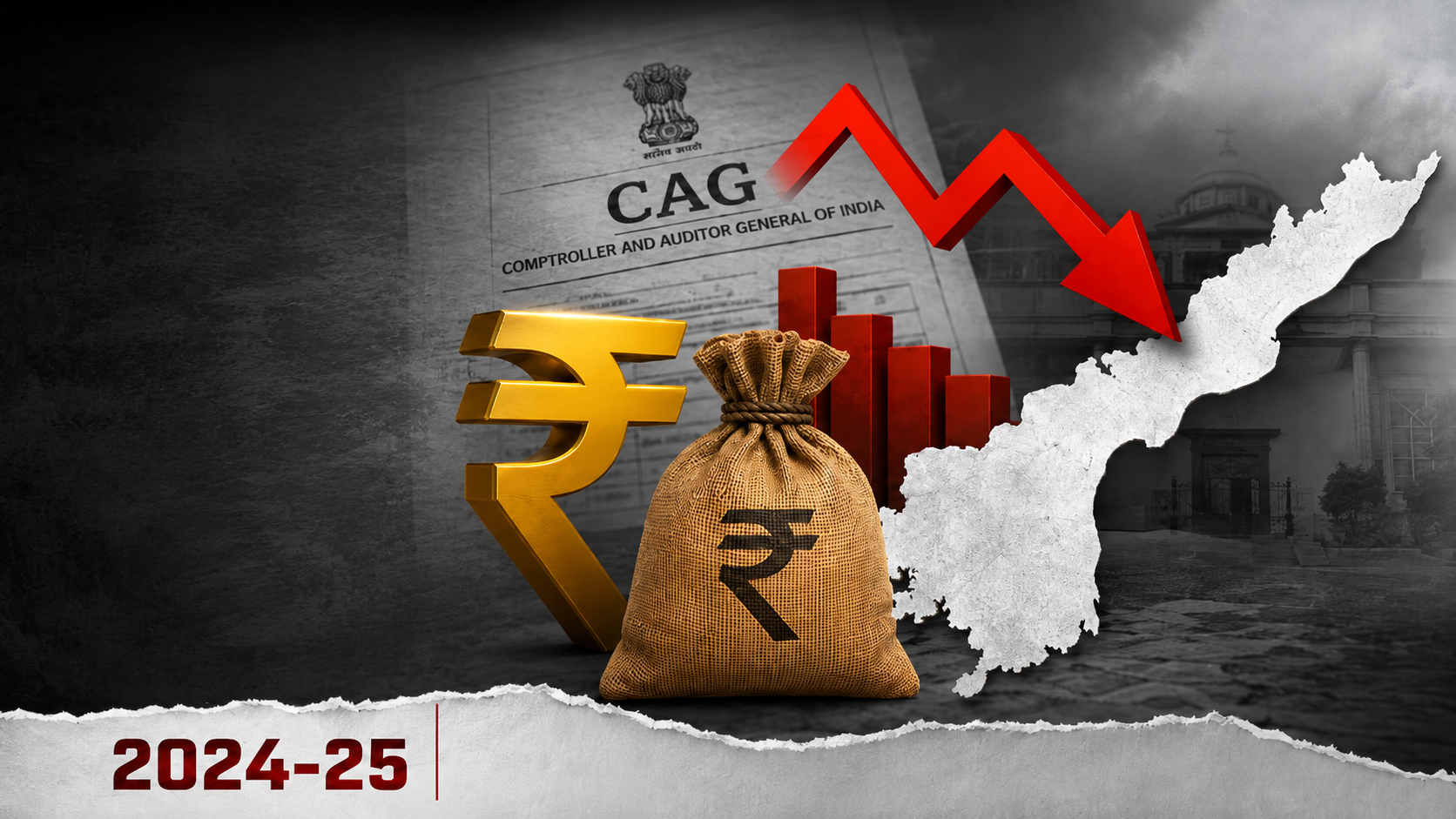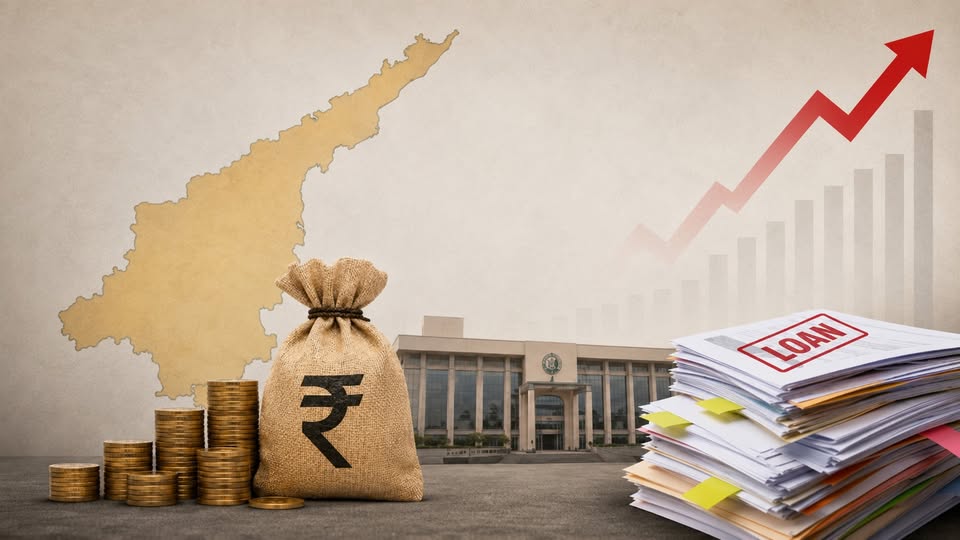
Criticism is mounting against the Andhra Pradesh government led by Chief Minister N. Chandrababu Naidu, with opposition parties alleging that despite promising “wealth creation” and economic transformation, the administration is pushing the state into an unprecedented debt trap. The latest borrowing of ₹3,800 crore has reignited the debate, with estimates suggesting that total borrowings in just two years have reached ₹3,59,157 crore.
Opposition leaders question whether the government’s much-publicized vision of economic growth has ultimately translated into a model driven primarily by continuous borrowing.
₹3.59 Lakh Crore Borrowed in Just Two Years
According to available figures, the Andhra Pradesh government has accumulated ₹3,59,157 crore in borrowings during its two-year tenure.
The breakup includes:
- Budget borrowings: ₹1,98,666 crore
- Off-budget borrowings through various corporations: ₹1,13,104 crore
- Direct state government borrowings: ₹47,387 crore
In addition to these figures, the government has recently raised another ₹3,800 crore, adding further to the state’s debt burden.
Fresh ₹3,800 Crore Loan Sparks Questions on Fiscal Management
The latest loan has triggered fresh criticism over the government’s financial management.
The opposition is raising several questions:
- Why is the government borrowing thousands of crores almost every week?
- Where are the new sources of state revenue?
- Where are the promised investments?
- Where is the wealth creation the government frequently speaks about?
- Has borrowing become the government’s only financial strategy?
Critics argue that the administration appears to be operating through continuous borrowing, with allegations that new loans are increasingly being used to service existing liabilities.
Comparison With Jagan Government During the COVID-19 Pandemic
One of the major political debates revolves around comparing borrowings between the present government and the previous YSR Congress Party administration during the COVID-19 crisis.
Borrowings Over Two-Year Period
| Government | Total Borrowings |
|---|---|
| Y.S. Jagan Mohan Reddy Government (COVID years) | Approximately ₹3.31 lakh crore |
| Chandrababu Naidu Government (First two years) | ₹3.59 lakh crore |
According to the opposition, the previous government had to deal with an unprecedented pandemic, declining revenues, lockdowns, and continued welfare expenditure. Despite those extraordinary circumstances, they argue that the borrowings were lower than those of the present government.
They further point out that the current administration is functioning without pandemic-related disruptions, yet borrowing has accelerated.
Is ‘Wealth Creation’ Limited to Slogans?
The Naidu government has consistently promoted its economic vision under the theme of “wealth creation.”
However, critics argue that:
- Large-scale industrial investments are yet to materialize.
- Employment generation has fallen short of expectations.
- State revenues have not shown significant improvement.
- Visible development does not match the pace at which debt is increasing.
According to the opposition, the growth in borrowings appears to be outpacing tangible economic development.
What Happened to the Super Six Promises?
The opposition also alleges that many of the Super Six election promises are yet to be fully implemented.
The key allegations include:
- Insufficient funds to implement welfare commitments.
- Reduction in spending on several welfare schemes.
- Failure to fulfill promises made during the election campaign.
- Continuous borrowing despite delays in implementing major assurances.
Critics argue that while election promises remain incomplete, the state’s debt continues to rise steadily.
A Government Running on Loans?
The government’s financial strategy has come under sharp criticism.
According to opposition leaders:
- Instead of expanding the state’s own revenue base, the government is relying heavily on loans from banks and financial institutions.
- Regular government expenditure is increasingly dependent on fresh borrowings.
- Every month brings new loans and additional debt obligations.
They describe the administration as one surviving primarily on borrowed funds.
If Debt Becomes the Biggest Asset, What Lies Ahead for Andhra Pradesh?
Opposition parties argue that a government elected with promises of visionary governance has, within two years, accumulated borrowings of ₹3.59 lakh crore, setting what they describe as a new debt record.
They contend that while the previous government borrowed during the unprecedented COVID-19 crisis, the current administration has accumulated even higher debt under relatively normal economic conditions. Questions are also being raised over the gap between promises of wealth creation and the continued dependence on loans, delays in implementing Super Six commitments, and allegations that the government’s finances are increasingly sustained through borrowings.
As Andhra Pradesh’s debt burden continues to grow, the long-term implications for the state’s fiscal health, development, and future generations have become a major subject of political as well as economic debate.