Concerns Over the Future of Medical Education in Andhra Pradesh
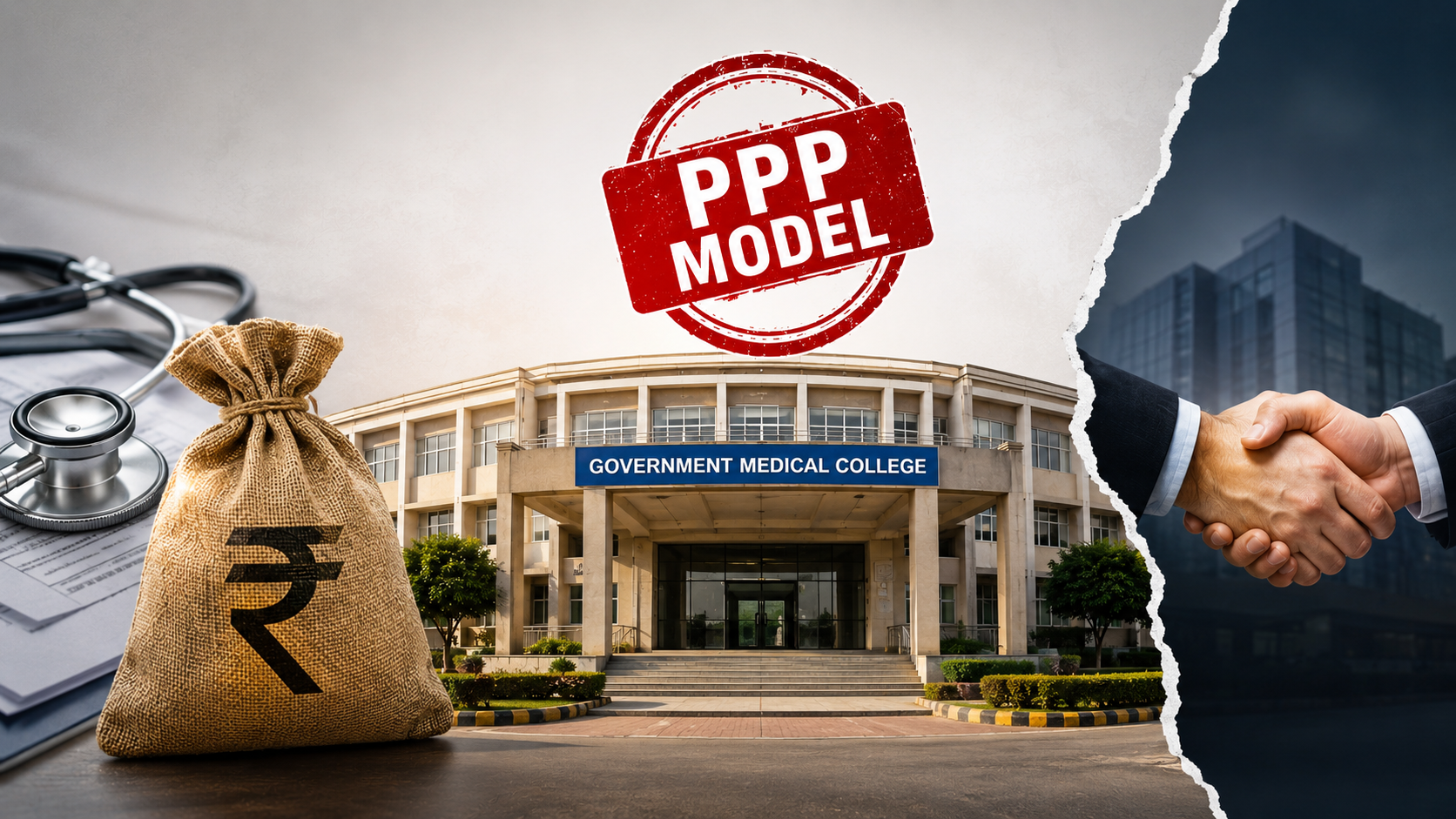
People are wondering if government medical colleges built with public money are now going to be controlled by private institutions. Some things that are happening in Andhra Pradeshs medical education sector are making people think this. The state government seems to be pushing to hand over government medical colleges to private institutions through a Public-Private Partnership model.
The government is willing to give benefits to private institutions even though they do not seem very interested. This is causing a debate.
PPP Push for Government Medical Colleges
Many government medical colleges have already been built in the state with land, buildings and infrastructure ready.. The government does not want to run them itself and instead wants to give them to private partners.
What is surprising is that after offering many incentives private institutions are not coming forward. Still the government is looking for ways to make this work and that is raising many questions.
Why the Urgency Without Private Interest?
The main question people are asking is: why is the government so keen to make this model work even when private institutionsre not interested?
Critics say that of making public medical education better the government seems determined to make the Public-Private Partnership model work no matter what.
Introducing the Viability Gap Funding Strategy
To attract institutions the government has come up with a new plan called Viability Gap Funding.
Under this plan the government is willing to pay up to 30% of the cost of the project. This means that public money will be used not to build medical colleges but also to help private institutions run them.
Critics say that this reduces the risk for institutions and increases their chance to make a profit.
Public Assets at a Discount?
While the government says this is a partnership model critics say that it is actually giving assets to private institutions at a low price.
There are concerns that medical colleges and hospitals built for the good may start to focus on making money instead. Experts also warn that medical education and healthcare services may become focused on profit.
Proposals Sent to the Central Government
Reports say that proposals to get approval for Viability Gap Funding have already been sent to the government. If approved the central government may also pay a part of the project cost.
This means that the government is not giving land, buildings and infrastructure but also guaranteeing money to private institutions.
Opposition Parties Raise Strong Objections
Opposition parties have strongly criticized these decisions saying that of making government medical colleges better the administration is paving the way for privatization through Public-Private Partnership models.
They argue that medical education should be available and affordable to all and giving institutions to entities undermines that.
The Core Question
If private institutions are not coming forward does that mean there is something with the Public-Private Partnership model?. Is the government trying to make the proposal more attractive by offering extra benefits?
Why is the government not willing to run colleges built with money on its own?
These are questions that according to observers need clear answers from the government.
Conclusion
The Public-Private Partnership arrangement for government colleges has become a political issue. Despite incentives private institutions are still hesitant. Yet the government is willing to offer, up to 30% Viability Gap Funding to make the model work.
Is this an attempt to improve medical education infrastructure or a move to indirectly privatize public assets? The answer will become clear in the coming days. People will be watching to see what happens to government medical colleges built with public money.