Are Politicians Remembering “Unity” Now?
For a long time people have said that politicians change what they say and what they believe in depending on what is good for them at the time. Lately some speeches and public statements have started a debate about whether politicians care about staying in power than about helping people.
Many leaders who are now talking about “unity” and “social harmony” used to be accused of playing politics based on things like caste, religion, region and emotions. The leaders of Politics of Unity were doing this for a time.
At times people who criticize politicians point out that they have:
- Held meetings and gatherings based on caste
- Said things like “I am one of you” to communities
- Changed what they said depending on where they were speaking
- Said one thing in Telangana and another thing in Andhra Pradesh
- Criticized the BJP strongly in the past. Now they praise the BJP
- Said different things in churches, mosques and temples
People are talking about these changing messages a lot on media and in everyday conversations about Politics of Unity.
Politics of Unity
Are Emotional Politics Influencing Youth?
People often say that some political speeches make young people behave emotionally and aggressively of participating in responsible civic activities. The Politics of Unity is affecting the youth.
Critics point to times when public figures allegedly encouraged:
- Loud. Aggressive celebrations
- Doing reckless things on bikes and making too much noise
- Causing chaos outside movie theaters and political gatherings
- Reacting based on emotions of thinking carefully
People who watch these things say that leaders should guide young people towards being responsible and helping society rather than making them emotional and divided about Politics of Unity.
One Narrative in Opposition… Another in Power?
The fact that politicians say things when they are in power versus when they are not is a big topic of discussion.
While in Opposition:
- They demanded Special Category Status
- They strongly criticized the government
- They made statements about Polavaram and Visakhapatnam Steel Plant
- They questioned the courage of their rivals about the Politics of Unity
After Coming to Power:
| Issue | Earlier Statements | Current Situation |
|---|---|---|
| Special Category Status | Strong criticism of the Centre | Relative silence |
| Polavaram Project | Called it a state right | Limited response over height reduction concerns |
| Visakhapatnam Steel Plant | Strong opposition to privatization | Weak response to central decisions |
| BJP | Once called “Northern arrogance” | Now political alliance and praise |
People on media are questioning these changes and demanding that politicians be accountable for the Politics of Unity.
Politics of Unity
Shouldn’t Real Public Issues Come First?
While politicians talk about unity and harmony many people think they should focus on the problems that affect everyday life and the Politics of Unity.
Key Issues Frequently Raised by the Public
| Issue | Public Concern |
|---|---|
| Aarogyasri | Allegations of services slowing down in hospitals |
| Government Hospitals | Shortage of medicines |
| Farmers | Fertilizer availability and MSP concerns |
| Unemployment | Dissatisfaction over jobs and unemployment support |
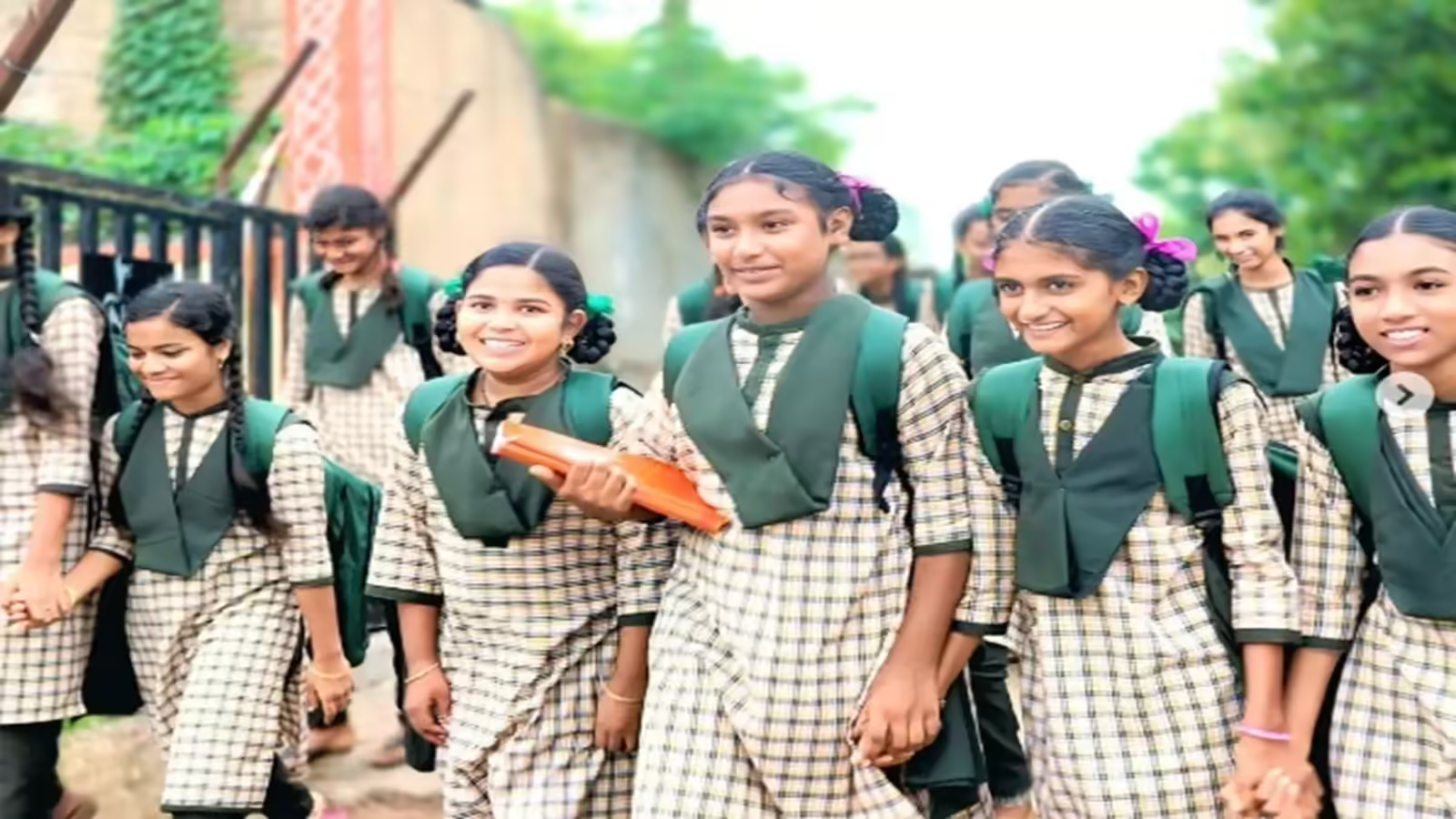
| Gurukul Hostels | Lack of drinking water, food, and medical facilities |
| Super Six Promises | Questions over implementation delays |
People are saying that what they need is not emotional speeches but:
- Honest governance
- Leaders keeping their promises
- administration
- Solutions to everyday problems related to the Politics of Unity
Is There Political Calculation Behind the “Unity” Narrative?
It is not bad for politicians to talk about unity. However critics say that when leaders who used to benefit from identity-based politics suddenly start talking about ” harmony ” people become skeptical about the Politics of Unity.
Many people are asking a question:
“Why do politicians keep changing what they say but the problems of the people stay the same especially with the Politics of Unity?”
People Want Answers, Not Just Slogans
Talking about unity can be good in a democratic society.. Governments and politicians are also expected to give clear answers about real issues like:
- Promises they made during elections
- Helping farmers
- Public healthcare
- Unemployment
- Implementing welfare schemes
- Education and hostel conditions related to the Politics of Unity
Observers say that if emotional speeches continue to dominate while real issues remain unsolved people will only question more about the Politics of Unity.
FAQ
What is meant by “Politics of Unity”?
Critics use this term to describe when politicians talk about unity or harmony mainly because it helps them politically which is the point of the Politics of Unity.
What issues are people currently discussing the most?
People are talking a lot about healthcare, unemployment, farmer issues, conditions in Gurukul hostels and implementing welfare schemes all of which are related to the Politics of Unity.
Why is there debate, over the “Super Six” promises?
The debate started because people criticized the delay or lack of fulfillment of election promises, which is also a part of the Politics of Unity.