Development Agenda or Gradual Privatization?
The government of Andhra Pradesh has been pushing for development, wealth creation and investment-driven growth since it came to power.. Some people are worried that this might lead to large-scale privatization of public assets and welfare sectors.
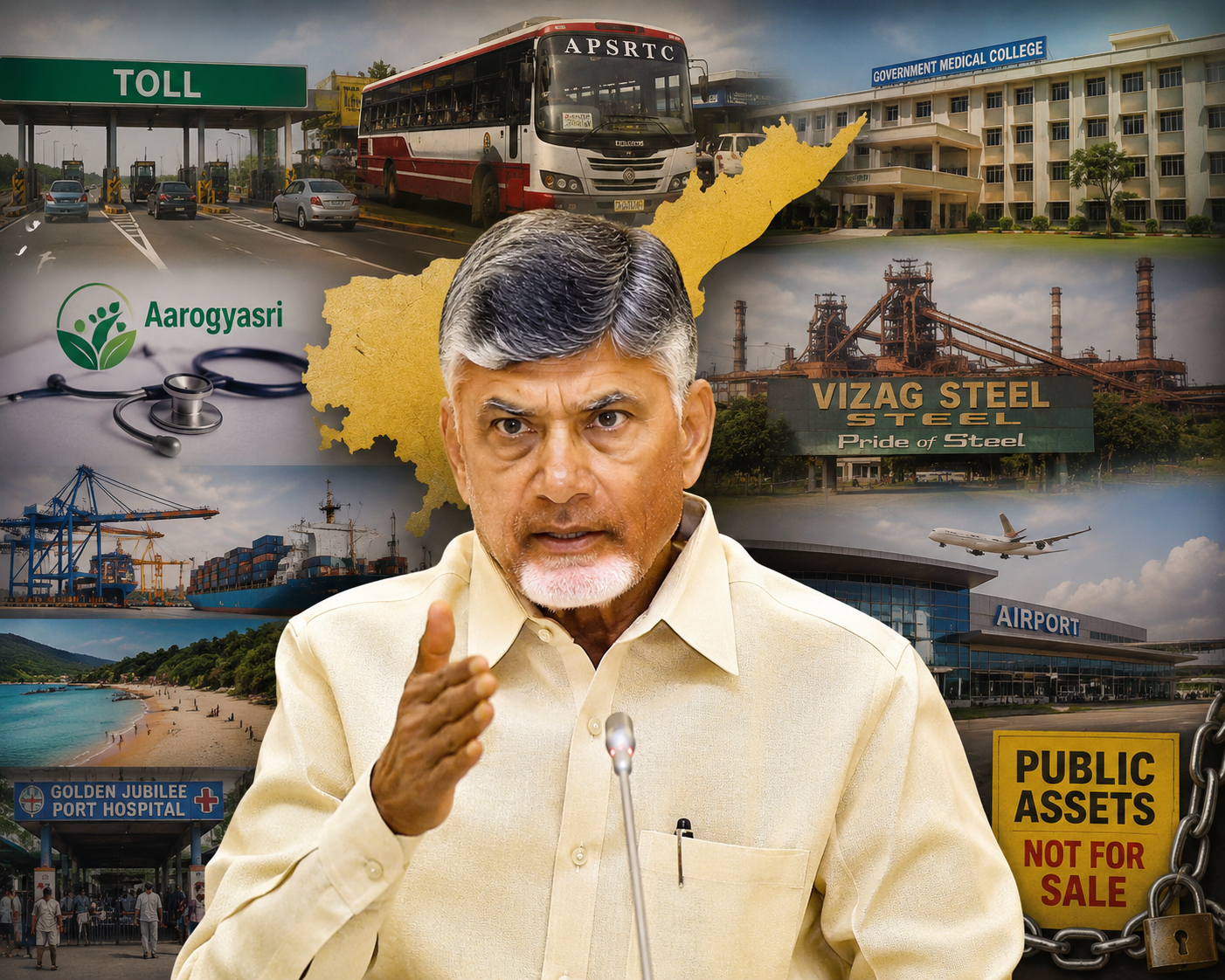
Many think that sectors like roads APSRTC, healthcare, government medical colleges, tourism properties, port lands and airports are being opened to companies through Public-Private Partnerships (PPP) leasing and monetization.
This trend is making people fear that essential public services might become more focused on making profits than helping the public.
Toll Expansion Plans Trigger Public Anxiety
One big controversy is the plan to bring 10,200 kilometers of state roads under PPP management. There are reports that toll collection systems might be expanded, including tolls in areas.
This has made middle-class families, small traders and daily commuters worried. They think that additional toll charges on used roads could make life even harder for ordinary citizens who are already struggling with rising living costs, fuel prices and inflation.
People also question whether handing over public road infrastructure to operators might reduce government accountability in maintaining affordable transportation access.
Concerns Over Privatization in Healthcare Sector
The healthcare sector is also a topic of debate. There are reports that the Aarogyasri health insurance scheme might be handed over to insurance companies.
Also proposals to operate 17 built government medical colleges through PPP models have raised fears that medical education could become too expensive.
Experts warn that if government medical infrastructure is managed by companies, poor and middle-class families might not be able to afford quality healthcare and medical education.
Port Hospital Privatization Faces Employee Resistance
Privatization proposals for the Golden Jubilee Port Hospital in Visakhapatnam have led to protests from labor unions and employee associations.
Workers argue that hospitals built for employee welfare should not be transferred to entities. They fear that privatization could weaken healthcare security for workers retired employees and their families.
APSRTC and “Vadodara Model” Under Scrutiny
The future of APSRTC has become a sensitive issue. Critics say that rising operational costs, especially related to buses are being used to justify indirect privatization measures.
There is opposition to the proposed “Vadodara Model,” under which major bus stations and valuable RTC lands might be leased to private companies for commercial development.
Visakhapatnam Steel Plant and Port Lands Spark Debate
The issue of Visakhapatnam Steel Plant and port lands has become politically sensitive again in Andhra Pradesh.
Critics say that transferring officials on deputation and administrative restructuring could weaken the steel plant. Proposals to lease thousands of acres of Visakhapatnam Port land at prices have raised questions about protecting public assets.
Tourism Properties Under Privatization Cloud
The tourism sector is also seeing concerns. Reports about proposals to lease government tourism properties like Bhavani Island and Suryalanka Beach Resort to private operators have generated criticism.
Airport Monetization Raises Passenger Concerns
Airport monetization has become a talking point. Experts warn that if airports like Vijayawada, Rajahmundry and Tirupati are handed over to companies passengers might face higher service charges, parking fees and operational costs.
Fears Over the Future of Public Welfare
Critics argue that the government is shifting responsibility toward corporations instead of strengthening public sector institutions.
Many social analysts warn that if education, healthcare, transportation and welfare infrastructure move into hands basic services could become unaffordable, for ordinary citizens.
They emphasize that public assets were built using taxpayer money and are intended to serve social welfare goals. If these assets end up under the control of a corporate groups it could lead to reduced economic freedom, weakened social security systems and growing inequality.
The bigger concern is whether development is being pursued in a way that protects interest or whether valuable government assets are being transformed into corporate-controlled enterprises under the banner of modernization and investment-led growth.