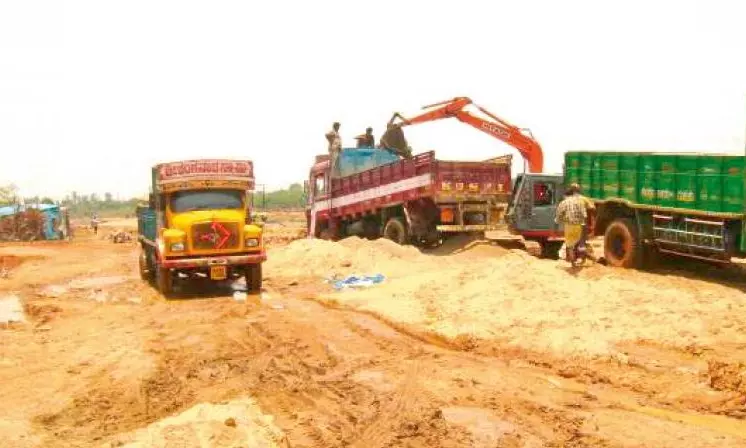
Allegations of illegal sand mining in the Godavari River have sparked fresh concerns in Andhra Pradesh. Reports of sand excavation between the Rajahmundry Road-cum-Rail Bridge and the Old Havelock Bridge have raised questions about mining permissions, sand transportation and the role of government officials.
Allegations that sand is being excavated during the daytime, transported in boats and stored at nearby sand ramps have added to the controversy. Authorities are now facing questions about whether the operations comply with mining regulations and whether adequate inspections are being conducted.
Illegal Sand Mining Allegations in the Godavari River
The alleged sand excavation between the Road-cum-Rail Bridge and the Old Havelock Bridge in Rajahmundry has raised concerns among observers.
According to the allegations, sand is being removed from the riverbed and transported to the riverbanks using boats. However, the availability of valid mining permits, the permitted quantity of sand extraction and compliance with transportation rules need to be verified by the concerned authorities.
An official investigation is necessary to establish whether the reported activities are legal or constitute violations of mining regulations.
Sand Transported by Boats, Storage at Nearby Ramps
Another concern relates to the alleged transportation of sand from the Godavari River to sand ramps near Aurangabad and Vadapalli.
Authorities need to examine the transportation routes, storage locations, mining permits and transit documents to determine whether the movement of sand follows the prescribed rules.
If illegal sand mining is confirmed, the government should take appropriate legal action against those responsible. Field inspections and transparent disclosure of the findings are essential to address public concerns.
Alleged Political Links to Sand Mining
Allegations of involvement by TDP public representatives have also become a subject of political debate. However, their alleged involvement has not been independently established in the information available.
An impartial investigation is needed to determine whether any political representatives or other individuals have links to the alleged activities. Any action should be based on verifiable evidence rather than political accusations.
If violations are established, the authorities must ensure that legal action is taken without considering the political affiliations or influence of those involved.
What Are Mining Officials Doing?
The allegations have raised questions about the role of the Andhra Pradesh mining authorities in monitoring sand extraction in the Godavari River.
Officials should clarify whether mining permissions have been granted for the disputed locations and whether inspections have been conducted to verify compliance with the applicable regulations.
Authorities should also examine boat movements, transportation records, storage facilities and relevant permits. If unauthorised excavation is detected, the illegal operations should be stopped and appropriate legal proceedings initiated.
Regular field inspections and effective monitoring are necessary to prevent unauthorised sand extraction and protect the river’s natural resources.
Could Sand Mining Affect Godavari Bridge Safety?
The alleged excavation near the Rajahmundry Road-cum-Rail Bridge and the Old Havelock Bridge has also raised concerns about bridge safety.
However, there is no established evidence in the available information confirming that the alleged sand mining has damaged either bridge. A technical assessment by qualified engineering experts is necessary to determine whether any excavation has affected the riverbed or the stability of bridge foundations.
Relevant engineering officials and mining authorities should jointly inspect the area and assess the riverbed conditions near the bridges. If unauthorised excavation is found within restricted or sensitive zones, immediate corrective measures should be taken.
A technical report would help establish the actual condition of the bridges and address public concerns.
Key Questions the Andhra Pradesh Government Must Answer
The allegations have raised several questions that require clear answers from the concerned departments:
- Are sand mining operations authorised between the Rajahmundry Road-cum-Rail Bridge and the Old Havelock Bridge?
- How is sand being transported to the ramps near Aurangabad and Vadapalli?
- Have officials verified the mining permits, transportation documents and storage records?
- Have any inspections been conducted, and what were the findings?
- Has a technical assessment been carried out to evaluate the safety of the nearby bridges?
- Is the government prepared to order an impartial investigation into the allegations of political involvement?
The relevant departments should release evidence-based findings and explain what action, if any, has been taken. Transparent communication is essential to establish the facts and maintain public confidence.
Protecting the Godavari River and Its Natural Resources
The Godavari River is an important natural resource that supports communities, agriculture and the regional environment. Protecting its riverbed, regulating sand extraction and ensuring the safety of nearby infrastructure are key responsibilities of the government.
The Andhra Pradesh government should respond to the allegations of illegal sand mining with a transparent investigation. Details of mining permissions, authorised extraction limits, transportation records and inspection reports should be made available to the public wherever legally permissible.
If violations are confirmed, those responsible should face appropriate legal action. An impartial investigation, effective enforcement and regular monitoring are essential to protect the Godavari River’s natural resources and prevent unauthorised sand extraction.