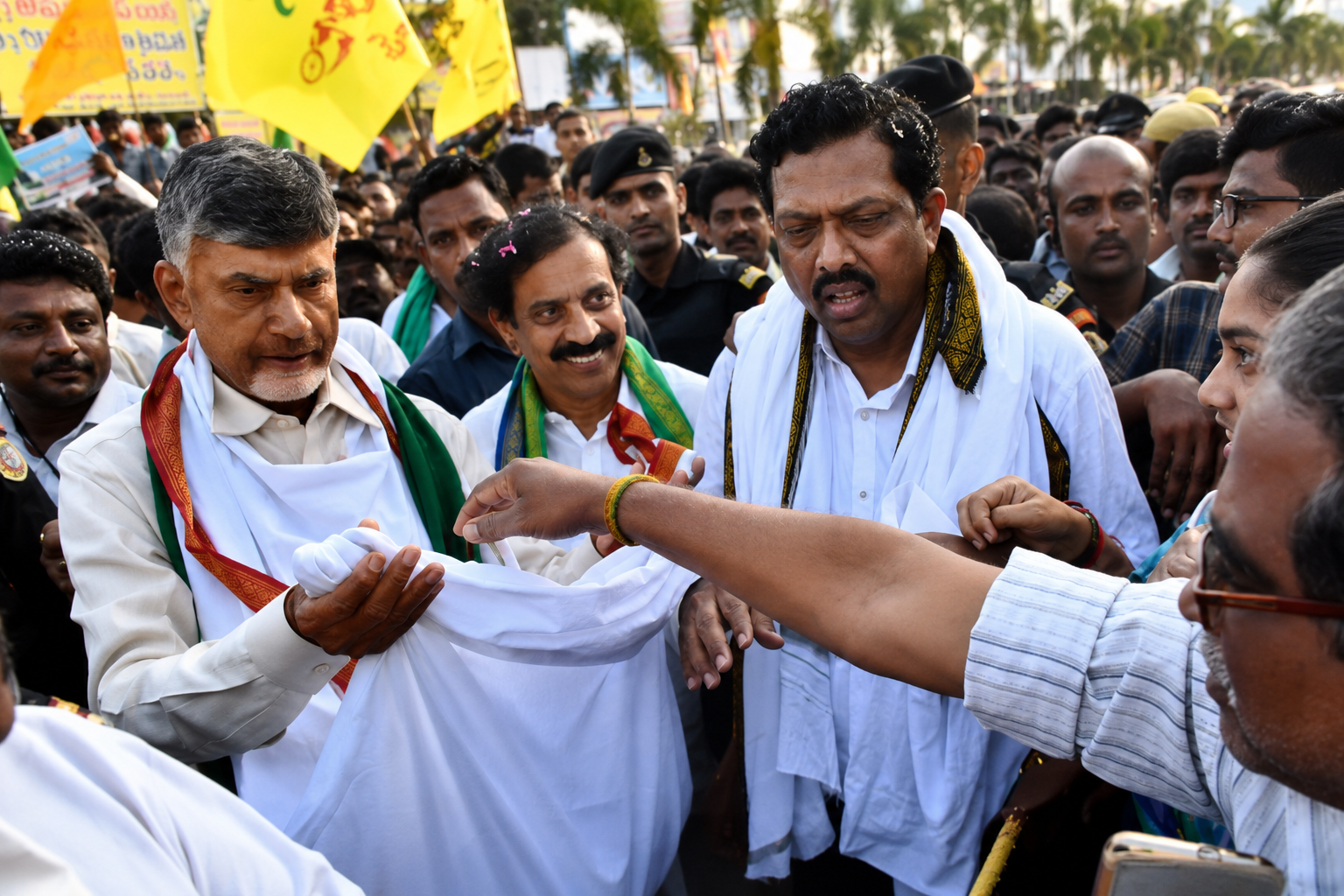
Grand Visions vs Ground Realities in Andhra Pradesh
Every time the Telugu Desam Party comes back to power in Andhra Pradesh a familiar pattern seems to emerge. The government talks about dreams for development, world-class infrastructure and international cities like “Swarnandhra”.. People are increasingly asking why even basic things like schools and hospitals are depending on donations from the public.
This contrast is now a topic of debate across the state.
Telugu Self-Respect and the Politics of Donations
Telugu people have always valued self-respect. Taking care of themselves. The idea of the government asking for donations all the time is causing a lot of discussion about the states image and stability.
Critics say that saying the government doesn’t have money while asking for donations for important things sends mixed signals about the governments priorities and financial management.
From “My Brick – My Amaravati” to “Donate for Amaravati”
This debate is not new.
After Andhra Pradesh was split in 2014 the Amaravati capital project was a focus. During that time people were encouraged to donate through campaigns like “My Brick – My Amaravati”. Many people contributed,. Later opposition parties and activists questioned how those funds were used.
Now with programs like “Donate for Amaravati” starting criticism is growing. Opponents say that saying Amaravati will be a self-sustaining city while depending on donations is contradictory.
Donation Culture Expanding Beyond the Capital
Whats getting attention is that the donation-based model is not just for the capital city anymore.
The government is asking for contributions for:
- Helping families
- Funding Anna Canteens
- Adopting weaker sections
- Building educational infrastructure
Critics say this raises a question: should important public services depend on charity?
Government Launches AP School Infra Development Society
The latest controversy emerged after the Andhra Pradesh government issued G.O.MS.NO. 8 dated 14-05-2026, announcing the formation of the AP School Infra Development Society.
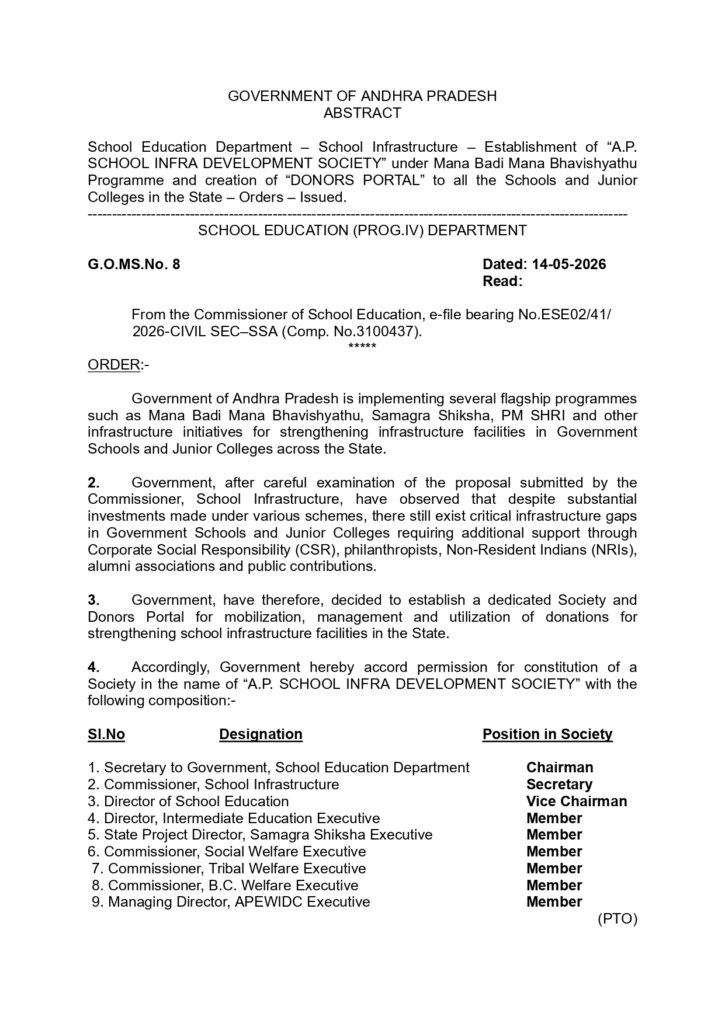
The government wants to create a portal for donors to contribute to:
- CSR funds
- Contributions from NRIs and the Telugu diaspora
- Donations from alumni
- contributions for government schools and junior colleges
The government says many schools still lack basic infrastructure and more funding is needed.
Critics Question Why Education Needs Donations
Critics argue that education is a responsibility of the government.
Their main question is:
If people are already paying taxes and the state is taking loans why should schools depend on donations?
Opposition voices say that relying on donations for schools raises concerns about governance priorities and term financial planning.
YSRCP Highlights “Nadu-Nedu” Model
Supporters of YSR Congress Party and former Chief Minister Y. S. Jagan Mohan Reddy are also part of the debate.
They point out that during the COVID crisis the previous government modernized thousands of government schools using government funding, not donations.
According to them the current situation shows a difference in governance approaches.
Political Criticism Targets Chandrababu Naidu
Critics are also looking at comments from Chief Minister N. Chandrababu Naidu about the governments role in education and welfare.
The latest move to institutionalize donation collection has fueled allegations that the administration is shifting responsibilities onto citizens and private contributors.
A Larger Debate on Governance and Accountability
The controversy has become a debate in Andhra Pradesh:
Should the government be responsible for important sectors like education, welfare and infrastructure?
Should the government depend more on public participation and philanthropy?
Many observers think this issue will become more sensitive if the government doesn’t provide transparency about:
- State finances
- Public debt
- Budget allocations
- Utilization of borrowed funds
Demand for Financial Transparency Growing
Critics and analysts are demanding that the Andhra Pradesh government release a comprehensive report on the states financial condition, debts and fiscal priorities.
Without this transparency they argue, people may think the government is shifting its responsibilities onto citizens.
The debate continues: is participation strengthening governance, in Andhra Pradesh or is it replacing government accountability?