Criticism is growing against the Chandrababu government in Andhra Pradesh over drinking water problems in several parts of the state. Recently, The Economic Times published an article referring to Andhra Pradesh Chief Minister N. Chandrababu Naidu as a “Waterman.” The title was subsequently highlighted at cabinet meetings and government programmes, where ministers and officials also acknowledged his water-management initiatives.
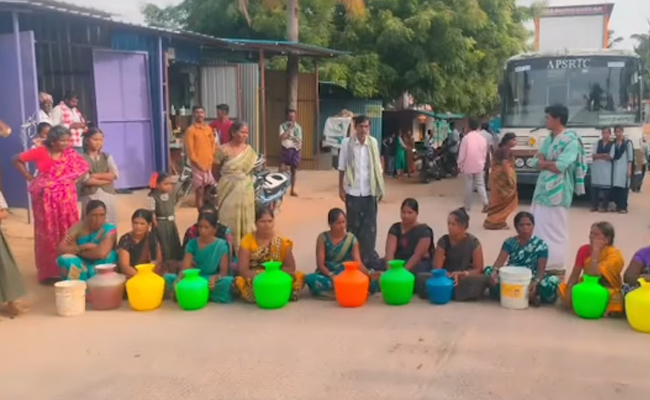
However, the situation on the ground appears to present a contrasting picture, with people in several areas taking to the streets with empty water pots to protest drinking water shortages. This has now triggered a political debate over the “Waterman” title given to Chandrababu.
Drinking Water Protests During the Monsoon
Drinking water shortages during summer are not unusual, and protests over water availability are commonly reported during the season. However, the fact that women are reportedly coming onto the roads with empty pots even during the monsoon has raised questions among the public.
People are questioning why drinking water shortages continue despite the rainy season. Critics are also asking who gave Chandrababu the “Waterman” title when people in several parts of the state are still struggling to secure basic drinking water.
Water Shortage in Visakhapatnam Suburbs
Residents in several suburban areas of Visakhapatnam say that the drinking water problem has become serious. People in areas such as Gajuwaka, Yendada, Madhurawada, Pendurthi and Bheemili have reportedly expressed anger over inadequate water supply.
Locals say that water supply has declined in some areas and that even water tankers are not providing sufficient quantities to meet demand.
Women in and around MVV City and Yendada had earlier staged a protest over the water shortage, reportedly lighting candles at night to draw attention to their difficulties.
Women Protest With Empty Pots in Anantapur
Drinking water shortages have also triggered protests in Anantapur district. In Gudibanda mandal, women reportedly staged a road blockade on the Nagepalli–Karikera road, carrying empty water pots and demanding improved water supply.
Anantapur has historically faced drought and water scarcity problems. Against this backdrop, the protest by women seeking drinking water has attracted attention locally.
Farmers have also expressed concern that water shortages are affecting not only drinking water availability but also the agricultural sector.
Water Shortage Complaints From Kadapa, Kurnool and Prakasam
Reports of public protests over drinking water shortages have also emerged from some areas of Kadapa, Kurnool and the erstwhile Prakasam districts.
In several places, residents have reportedly staged protests with empty pots and demanded that authorities improve the water supply in their respective areas.
At the same time, experts point out that drinking water availability can be affected by several factors, including water availability, reservoir storage levels, rainfall patterns and the management of available water resources.
‘Waterman’ Tag Raises Questions
Chandrababu being described as a “Waterman” has become a subject of political discussion. While the title has been highlighted as part of the government’s narrative on water management, reports of people protesting for drinking water during the monsoon have created a contrasting picture.
Questions are being raised over whether a government that claims to be setting an example in water management can ensure that people do not have to take to the streets with empty pots for basic drinking water.
The Challenge of Ensuring Water for Every Household
The reported protests over drinking water, despite the ongoing monsoon season, have brought basic water availability back into the spotlight.
For the Chandrababu government, the challenge now is to ensure that adequate and reliable drinking water reaches households across the state, particularly in areas where residents continue to report shortages.
The contrast between the “Waterman” tag and ground-level complaints over drinking water has therefore become a significant point of political and public debate in Andhra Pradesh.