
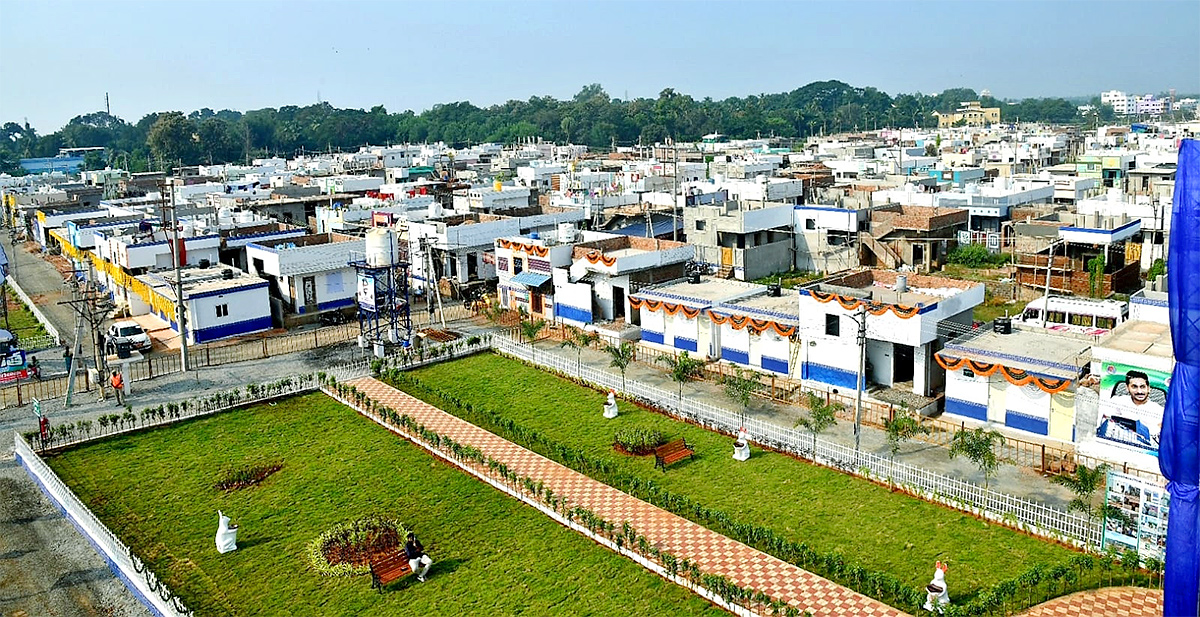
At a time when the issue of housing for the poor has become a major political flashpoint in Andhra Pradesh, official statistics presented by the Central Government in the Rajya Sabha have triggered fresh debate.
In a written reply to questions raised by YSRCP Rajya Sabha MPs Y.V. Subba Reddy and Raghunatha Reddy, Union Minister of State for Housing and Urban Affairs Tokhan Sahu disclosed official figures related to the Pradhan Mantri Awas Yojana–Urban (PMAY-U) scheme.
According to the Centre, Andhra Pradesh has been sanctioned a total of 1,967,971 houses under PMAY-Urban. Of these, the highest number 1,415,800 houses were sanctioned during the 2019–2024 YSRCP government. The figures also indicate that the combined sanctions during both TDP administrations did not reach even half of that number.
Official Figures Presented in the Rajya Sabha
According to the Ministry of Housing and Urban Affairs, Andhra Pradesh has received the following under PMAY-Urban:
- Total houses sanctioned: 1,967,971
- Houses completed: 1,138,000
- Beneficiaries already residing in completed houses: 1,075,000
These figures were officially placed before the Rajya Sabha based on records maintained by the Central Government.
Highest Number of Sanctions During YSRCP Government
The Centre’s reply states that between 2019 and 2024, when the YSRCP government was in power, 1,415,800 houses were sanctioned under PMAY-Urban.
According to the official data, this five-year period recorded the highest number of housing sanctions under a single government in Andhra Pradesh.
How Many Houses Were Sanctioned During TDP Governments?
The Central Government’s statistics show the following:
2015–2019 (TDP Government)
- Houses sanctioned: 491,087
2024–Present (Coalition Government)
- Houses sanctioned: 61,578
Combined, both TDP-led administrations account for:
- Total houses sanctioned: 552,171
When compared with the 1.415 million houses sanctioned during the YSRCP government’s tenure, the combined total for the TDP governments is significantly lower, according to the Centre’s official data.
Latest Sanctions Under PMAY-Urban 2.0
The Central Government launched PMAY-Urban 2.0 on September 1, 2024.
Under the new phase:
- 61,084 houses have so far been sanctioned to Andhra Pradesh.
Significant Progress in House Construction
Apart from approvals, the Centre also shared details regarding construction progress.
According to the official figures:
- 1.138 million houses have been completed.
- 1.075 million beneficiaries are already living in these completed houses.
This indicates that a substantial number of sanctioned houses have not only been completed but are also occupied by beneficiaries.
Housing Sanctions by Government
| Period | Government | Houses Sanctioned |
|---|---|---|
| 2015–2019 | TDP | 491,087 |
| 2019–2024 | YSRCP | 1,415,800 |
| 2024–Present | Coalition Government | 61,578 |
Overall PMAY-Urban Statistics for Andhra Pradesh
| Category | Number |
|---|---|
| Total Houses Sanctioned | 1,967,971 |
| Houses Completed | 1,138,000 |
| Beneficiaries Residing | 1,075,000 |
| PMAY-Urban 2.0 Sanctions | 61,084 |
Centre’s Data Becomes the Basis for Political Debate
While political parties continue to exchange allegations over housing for the poor in Andhra Pradesh, the official figures presented by the Central Government in the Rajya Sabha have become the latest point of discussion.
According to the Centre’s written reply, 1,415,800 houses were sanctioned during the YSRCP government’s tenure (2019–2024), compared with 491,087 houses during the 2015–2019 TDP government and 61,578 houses since 2024 under the present coalition government. The data further states that the combined sanctions during both TDP administrations total 552,171 houses.
Overall, out of 1,967,971 houses sanctioned under PMAY-Urban in Andhra Pradesh, 1.138 million houses have been completed, and 1.075 million beneficiaries are already residing in them, according to the official statistics presented by the Central Government in the Rajya Sabha.

Revanth Reddy’s Remarks on AP Fee Reimbursement Dues Trigger Fresh Political Debate