Are Self-Help Groups (SHGs), which have long been the backbone of women’s financial empowerment in Andhra Pradesh, now losing their strength? The statistics emerging on the financial condition of women’s groups during the two years of coalition government appear to strengthen this concern. Critics allege that the Self-Help Group system, once considered a model for the entire country, has suffered a major setback after the Chandrababu government came to power.
The number of groups receiving bank loans has declined sharply, while the amount of loans extended through banks has fallen by Rs. 8,521 crore. Concerns are also being raised over delays in loan repayments, rising non-performing assets, declining savings and the lack of financial support expected through government schemes.
With the financial position of women’s groups reportedly weakening on several fronts, questions are being raised over whether the coalition government, despite promising to strengthen women’s economic empowerment, is actually weakening a system that was already well established.
Within Two Years, SHGs in Distress? Rs. 8,521 Crore Decline in Bank Loans!
Bank loans are extremely important for Self-Help Groups. SHGs save money collectively, establish links with banks, obtain loans and use the funds for small businesses, self-employment and family requirements. This system has continued for years.
However, the statistics in the clipping indicate a major change between 2023-24 and 2025-26.
According to the figures cited in the clipping, bank loans extended to Self-Help Groups stood at Rs. 49,626 crore in 2023-24, while the figure declined to Rs. 41,105 crore in 2025-26.
This represents a decline of approximately Rs. 8,521 crore in bank lending to women’s groups.
This is not a minor decline. A reduction in the volume of loans available to women’s groups could affect their self-employment activities, small businesses and ability to meet family financial requirements.
Sharp Decline in the Number of Groups Taking Loans
It is not only the total amount of loans that has declined. The number of Self-Help Groups obtaining loans from banks has also fallen sharply, according to the figures in the clipping.
In 2023-24, as many as 5,58,362 groups received loans through banks. By 2025-26, the number had fallen to 3,60,280.
This means that nearly 1.98 lakh groups appear to have moved away from the bank-credit system within just two years.
Why has the number of groups receiving bank loans declined so significantly at a time when women’s financial empowerment should have been strengthened? What are the reasons behind this decline? Why has access to bank credit for women deteriorated? These are questions the government needs to answer.
Savings Also Declining? Women Forced to Spend Their Earlier Savings!
The real strength of Self-Help Groups lies in savings. Members contribute a certain amount every month, build a collective fund and use it when necessary. These savings also help them qualify for bank loans.
However, the clipping indicates that this savings system is now facing increasing pressure.
The savings of Self-Help Groups are reportedly declining. Concerns have also been raised that women are being forced to use the savings they accumulated over the years to meet family expenses.
Another figure mentioned in the clipping states that the total amount related to Self-Help Group savings in banks stood at Rs. 90,771 crore as of March 2024, while it was Rs. 89,938 crore by March 2026.
At the same time, the report points to a decline in the savings of the groups. This indicates that instead of building fresh savings, women may be increasingly forced to use their existing savings to meet financial needs.
Repayments Falling Behind, Non-Performing Assets More Than Doubling!
Loan repayment is another important indicator of the financial health of Self-Help Groups. But developments on this front are also raising concerns.
According to the details in the clipping, the amount outstanding from Self-Help Groups to banks stood at Rs. 197 crore as of March 2024, while it increased to Rs. 487 crore by March 2026.
This represents a significant increase in the burden of outstanding dues.
On one hand, the volume of loans is declining. On the other, the number of groups receiving loans is falling. At the same time, delays in loan repayments are increasing. As a result, the burden of non-performing assets appears to be rising, according to the figures.
A System That Survived the Pandemic—Why Is It Struggling Now?
The report points out that Self-Help Groups demonstrated their repayment capacity even during severe crises such as the COVID-19 pandemic. At a time when the economy across the country was under tremendous pressure, women’s groups managed to remain financially resilient.
Why, then, is such a system appearing to weaken within just two years? Has government support declined? Has financial assistance to women been reduced? Is the government failing to focus adequately on the availability of bank loans? These questions are now naturally being raised.
What Happened to the Promise of Zero-Interest Loans Up to Rs. 10 Lakh?
The report states that before coming to power, the coalition government led by Chandrababu had promised zero-interest loans of up to Rs. 10 lakh for women’s Self-Help Groups.
This was considered an important promise for women’s groups. Lower interest costs can help women who borrow money to run small businesses increase their earnings and reduce the financial burden on their families.
However, critics allege that implementation has not matched the promise and that programmes such as zero-interest loans implemented during the previous YSRCP government have also been discontinued or weakened.
Where are the promised zero-interest loans of up to Rs. 10 lakh?
What happened to the promise made to women’s groups?
Why were earlier schemes not continued?
These are questions the government is now expected to answer.
‘Aasara’ and ‘Cheyutha’ Gone? Women Face Greater Financial Burden Without Government Support
Loans alone are not sufficient for women’s economic empowerment. Direct financial assistance provided through government welfare schemes is also important.
The YSRCP has maintained that schemes such as YSR Aasara and YSR Cheyutha, implemented during its government, provided financial support to women and helped strengthen their economic position.
However, critics allege that with the reduction or absence of such support, women are facing greater financial difficulties.
According to the report, without government assistance, women are increasingly being forced to use their own savings to meet family expenses, children’s education costs, medical expenses, small-business requirements and daily household needs.
Bad Loans Declined During Jagan’s Tenure—Why Are They Rising Now?
The financial health of women’s groups cannot be assessed solely by looking at the volume of loans. Their ability to repay those loans is equally important.
A system that managed to control non-performing assets even during a major crisis such as the COVID-19 pandemic is now reportedly witnessing a rise in outstanding dues under relatively normal circumstances. This has also become a politically significant issue.
The YSRCP argues that financial support from the government, including zero-interest loan programmes, helped reduce the repayment burden on women’s groups during its tenure. The party alleges that the withdrawal of such support is one of the reasons behind the deterioration in the financial situation.
How Many ‘Melas’ Were Held for Zero-Interest Loans?
Representatives of Self-Help Groups expressing concern over the financial condition of women’s groups are raising questions about the government’s approach.
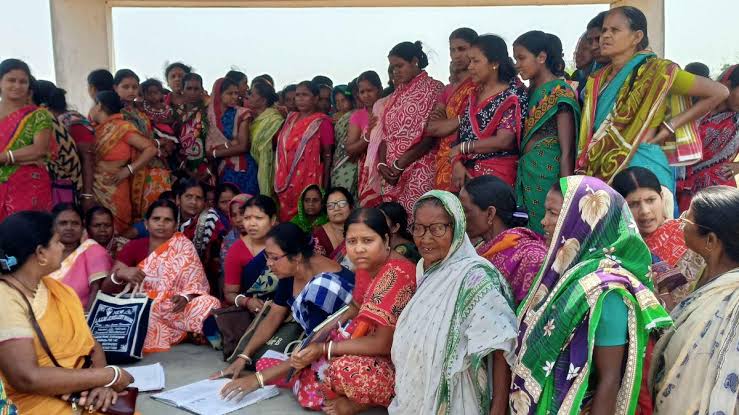
Women in Self-Help Groups have been saving money for years. The savings system, which began with small contributions, eventually helped women gain access to bank credit. Through this system, lakhs of families were able to achieve greater financial stability.
However, if declining loans, falling savings and rising outstanding dues occur simultaneously, the financial foundation of women’s groups could come under serious pressure, representatives warn.
No Financial Assistance From the Government? Women Raise Questions
The views of women mentioned in the clipping also reportedly reflect strong dissatisfaction with the government’s approach.
Women say they are being forced to use the money they had saved for family needs and are facing difficulties because loans are not available when required. There are also allegations that the reduction in government assistance has increased their financial pressure.
This raises questions about why a government that claims to strengthen women’s Self-Help Groups is not taking a comprehensive approach to their savings, loans, interest burden, outstanding dues and government support.
If the Backbone of Women’s Groups Breaks, the Rural Economy Could Also Suffer
Self-Help Groups are not merely a system where a few women come together and save money. In rural areas, they serve as an important financial support system for thousands of families.
The groups have supported women in several areas, including small businesses, livestock rearing, agriculture-related activities, petty trade and household financial requirements.
Therefore, developments such as declining loans, falling savings and rising non-performing assets cannot be viewed merely as ordinary statistics. They could directly affect the incomes of rural families and the financial independence of women.
Women’s Empowerment Cannot Be Achieved Through Promises—It Must Be Visible in Action!
The Chandrababu government, which promised to strengthen women’s Self-Help Groups, now faces questions over why the situation appears to have deteriorated so significantly within just two years of its rule.
Bank loans declined by Rs. 8,521 crore.
The number of groups receiving loans fell from 5,58,362 to 3,60,280.
Bank loans declined from Rs. 49,626 crore to Rs. 41,105 crore.
The savings system witnessed a decline.
Outstanding dues increased from Rs. 197 crore to Rs. 487 crore.
Questions have been raised over the promise of zero-interest loans up to Rs. 10 lakh.
Women have reportedly been deprived of support through schemes such as Aasara and Cheyutha.
When so many developments occur simultaneously, it is natural to ask:
“Is the coalition government genuinely strengthening women’s Self-Help Groups, or is it weakening within two years a strong system built over the years?”
Women’s savings are a source of financial security for their future. At a time when the government should be supporting this savings system, the reported situation in which women are forced to use their existing savings to meet their needs is concerning.
Promises must not remain limited to public meetings. They must be reflected in women’s bank accounts, access to group loans and growth in their savings.
Otherwise, the government will have to answer the criticism that Andhra Pradesh’s Self-Help Group system, once regarded as a model for the country, is at risk of becoming financially weaker.