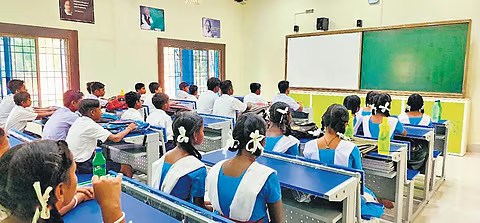
Growing Debate Over Government Education in Andhra Pradesh
The state of government education in Andhra Pradesh has become a major topic of public debate in recent months. Many argue that the education reforms introduced during the tenure of former Chief Minister YS Jagan Mohan Reddy significantly transformed government schools, while critics claim that the momentum has slowed under the current coalition government.
Several parents, educationists, and opposition leaders have expressed concerns that many flagship education initiatives launched by the previous government have either been discontinued or weakened under the leadership of Education Minister Nara Lokesh.
Major Reforms Introduced Between 2019 and 2024
During its tenure from 2019 to 2024, the YSRCP government prioritized strengthening the government education system through large-scale reforms.
Nadu-Nedu Modernized School Infrastructure
The Nadu-Nedu programme upgraded thousands of government schools across Andhra Pradesh by providing:
- Modern classrooms
- Digital learning facilities
- Smart furniture
- English language labs
- Clean drinking water
- Improved toilets
- Better overall infrastructure
The initiative aimed to bring government schools closer to private school standards.
Student Welfare Schemes Strengthened Education
The previous government also introduced several welfare schemes designed to improve student enrolment and reduce the financial burden on families.
These included:
- Jagananna Amma Vodi – Direct financial assistance to mothers for children’s education.
- Jagananna Vidya Kanuka – Distribution of school kits to students.
- Jagananna Gorumudda – Nutritious mid-day meals for schoolchildren.
These programmes provided both financial and nutritional support to students studying in government schools.
Focus on English Medium and Digital Learning
The government also implemented several academic reforms aimed at improving educational quality.
Key initiatives included:
- Expansion of English Medium education in government schools.
- CBSE affiliation for more than 1,000 schools.
- Distribution of tablets to students.
- TOEFL training programmes.
- Introduction of internationally aligned curriculum standards.
- Promotion of digital education.
These reforms were intended to prepare students for global academic and employment opportunities.
Government School Enrolment Increased During Previous Administration
According to official data from that period, government school enrolment witnessed a significant rise.
Student enrolment reportedly increased from 63.2% in 2018 to 70.8% by 2022, suggesting improved public confidence in government schools following infrastructure upgrades and welfare initiatives.
Critics Claim Progress Has Slowed Under the Coalition Government
Education experts and opposition leaders now argue that several of these initiatives have lost momentum after the change in government.
Among the concerns being raised are:
- Withdrawal of CBSE affiliation for many schools.
- Suspension of the third phase of Nadu-Nedu works.
- Slower implementation of digital education programmes.
- Halt in tablet distribution.
- Delay in implementing the Talliki Vandanam scheme, introduced as a replacement for Amma Vodi.
Critics believe these developments have affected the pace of educational reforms.
Concerns Over Mid-Day Meals and Student Welfare
There have also been complaints regarding the quality of the Jagananna Gorumudda mid-day meal programme in certain areas.
Additionally, allegations have emerged that:
- School kits under the education welfare programme are not being distributed on time.
- Delays in student welfare initiatives have affected parents and schoolchildren.
These issues have further fueled the ongoing debate over the quality of government education.
Falling Student Enrolment Raises Fresh Concerns
Recent enrolment figures have become another point of concern.
Reports indicate that during the 2025–26 academic year:
- Government schools and junior colleges together witnessed a decline of around 266,000 students.
- First-grade admissions reportedly dropped from 687,000 to 560,000.
- Around 4,750 government schools recorded zero admissions in Class 1.
- Nearly 350,000 students are believed to have shifted to private schools.
These figures have sparked concerns over declining public confidence in government education.
Educationists Call for Immediate Corrective Measures
Based on these enrolment trends, several educationists and parent associations argue that declining confidence in government schools is linked to concerns over educational quality and implementation of welfare programmes.
They believe the coalition government should prioritize:
- Improving school infrastructure.
- Strengthening teaching quality.
- Reviving digital education initiatives.
- Ensuring timely implementation of student welfare schemes.
- Enhancing the overall quality of government education.
Many also urge the government to focus more on policy implementation and long-term educational outcomes rather than political messaging, arguing that restoring public confidence in government schools should remain a top priority.
Conclusion
The debate over Andhra Pradesh’s education sector continues to intensify, with the previous government’s supporters highlighting infrastructure development and welfare initiatives, while the current government faces criticism over implementation delays and declining enrolment figures. Whether these concerns reflect a long-term trend or a temporary transition remains a matter of political and public discussion, but education experts agree that sustained investment and effective implementation will be essential to strengthen the state’s government education system in the years ahead.