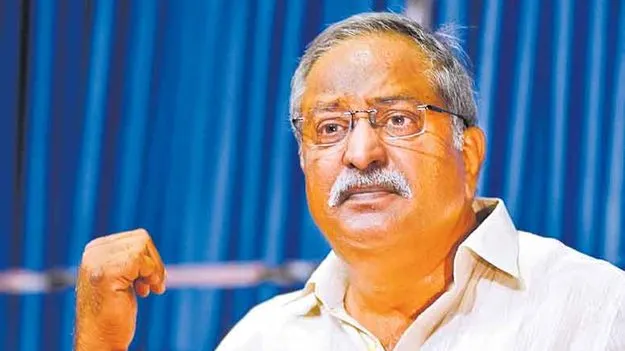
Criticism Over UAPA Charges and Alleged Political Implications
Former Intelligence Chief A. B. Venkateswara Rao’s comments on the arrest of YouTuber Joseph Ravan and the imposition of the Unlawful Activities (Prevention) Act (UAPA) have triggered a major political debate in Andhra Pradesh.
Political circles are discussing whether Rao’s remarks indirectly criticised the stand taken by the Jana Sena Party in the Ravan case, while also creating an impression that the Telugu Desam Party has no direct involvement in the controversy.
UAPA Invocation Called a Major Mistake
The arrest of Ravan, associated with the YouTube channel Prashna Channel, and the use of UAPA against him have become politically sensitive issues for the coalition government led by Chief Minister N. Chandrababu Naidu.
Amid allegations that the issue could politically damage the government, discussions have emerged over whether AB Venkateswara Rao’s statements were aimed at shifting the focus of criticism towards Jana Sena while reducing pressure on the Telugu Desam Party.
Rao strongly criticised the application of UAPA against Ravan, stating that invoking an anti-terror law in such a case was a serious mistake and could be viewed as an attempt to suppress freedom of expression.
Allegations Over Social Media Campaigns
Rao also criticised the social media campaign surrounding the case. He alleged that some political groups financially support YouTube channels and use edited videos to promote specific agendas and mislead the public.
His remarks have gained political significance, with some observers suggesting that these comments were indirectly aimed at the Jana Sena ecosystem and its style of political mobilisation.
Speaking About Naxalism Does Not Justify UAPA: ABV
Responding to allegations that Ravan supported Naxalite ideology, Rao argued that merely discussing or expressing views about Naxal movements cannot automatically justify invoking UAPA.
He referred to historical examples, including former Chief Minister Marri Chenna Reddy lifting the ban on Naxalite groups during his tenure. He also recalled former Chief Minister N. T. Rama Rao describing Naxalites as patriots during an election campaign.
Rao argued that such political statements did not lead to charges of sedition or terrorism laws, and that similar standards should apply today.
Controversy Over Alleged Remarks on Hindu Deities
Rao also spoke about allegations that Ravan had insulted Hindu deities. He said that the viral videos circulating on social media appeared to be edited through a cut-and-paste method and that the full context could be different.
He stated that questioning social practices and religious customs has historically been part of social reform movements. He cited figures such as Swami Vivekananda, Kandukuri Veeresalingam, and Ramakrishna Paramahamsa, who discussed issues within society and religion.
Rao also referred to literary criticism and reformist writings, including Ramakatha Vishavruksham by Ranganayakamma and social commentary by Tapi Dharma Rao, arguing that criticism or debate over religious practices has traditionally existed without the use of anti-terror laws.
Normal Laws Can Apply, But Not Anti-Terror Laws: ABV
However, Rao clarified that if Ravan’s language contained objectionable or offensive remarks, authorities could take action under relevant sections of ordinary criminal law.
But, he maintained that applying stringent anti-terror legislation like UAPA in such circumstances was not justified.
Political Debate Over Jana Sena and TDP’s Roles
Against this backdrop, an intense political discussion has emerged in Andhra Pradesh.
Some political analysts believe that AB Venkateswara Rao’s comments may be an attempt at political damage control by shifting responsibility towards Jana Sena, particularly its leadership under Pawan Kalyan, while reducing criticism against the Telugu Desam Party.
According to this view, concerns over the aggressive response of some Jana Sena supporters and the possibility of alienating sections of voters within the coalition may have influenced the comments.
Questions Over Coalition Politics
At the same time, critics are questioning whether an attempt is being made to project that the Telugu Desam Party has no role in the controversy and that the political damage is mainly due to pressure from Jana Sena.
The Joseph Ravan case has therefore evolved beyond a legal issue, becoming a larger debate over freedom of expression, the use of UAPA, and the internal political dynamics within the Andhra Pradesh coalition government.