
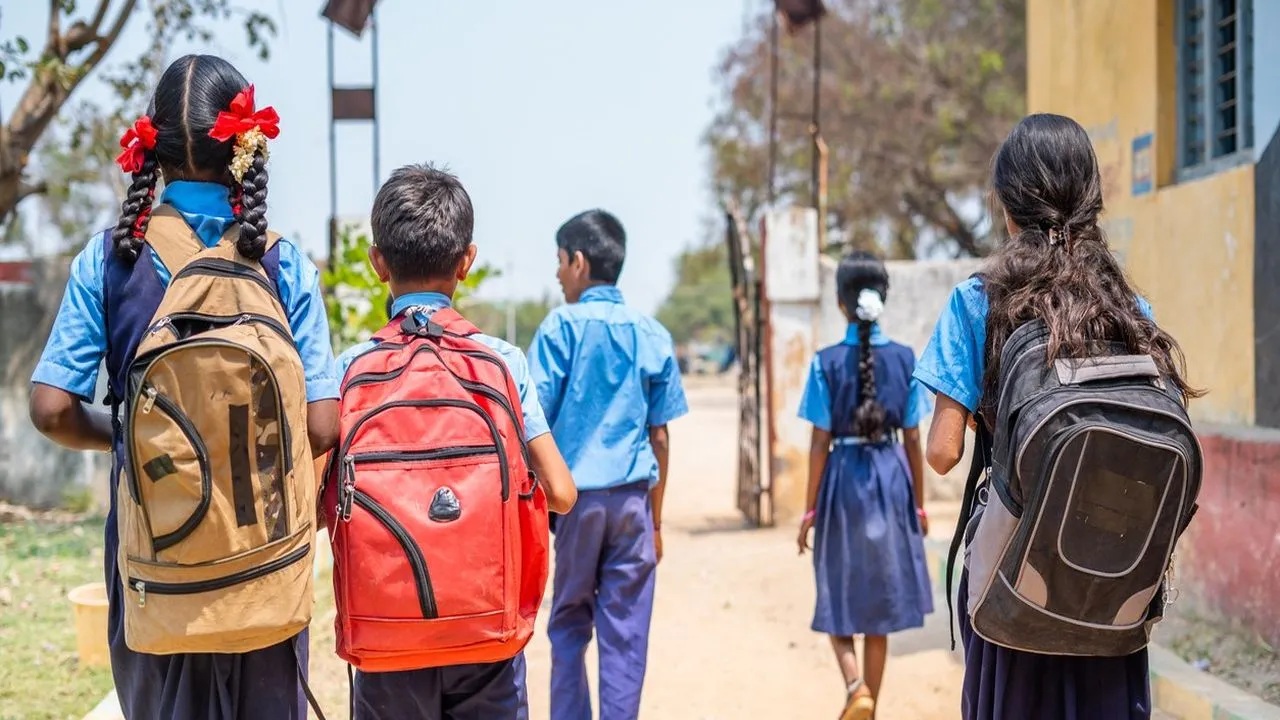
Concerns are growing over the future of government education in Andhra Pradesh, with critics alleging that the coalition government is giving increasing space to private and corporate schools while failing to adequately strengthen government schools.
The latest controversy follows a Cabinet decision to amend key provisions of the Andhra Pradesh Education Act, 1982, including Sections 20 and 33-B. According to Information and Public Relations Minister Kolusu Parthasarathy, the Cabinet approved the issuance of an ordinance to make the changes.
Critics fear that relaxing existing rules could lead to a rapid increase in private schools and put additional pressure on parents who are already struggling with high school fees.
Private School Regulations Relaxed
Under the earlier system, opening a private school in a particular area involved certain requirements. Authorities had to conduct a survey, assess existing government and private schools and determine whether there was a genuine need for another school.
Only after establishing the requirement could permission be considered.
The decision to amend these provisions has triggered concerns among education activists and sections of parents. They argue that easier permissions for private schools could encourage the expansion of commercial education without adequately addressing the quality and accessibility of government schools.
There are also concerns that a growing number of private schools could increase competition for students and resources, particularly in areas where government schools are already facing challenges.
Concerns Over Rising Private School Fees
One of the major issues facing middle-class and low-income families is the rising cost of private education. Tuition fees, admission charges, books, uniforms, transportation and other expenses can significantly increase the overall cost of schooling.
Critics argue that instead of making it easier for private institutions to expand, the government should focus on regulating unreasonable fees and improving the quality of government schools.
They believe a strong public education system can provide economically weaker families with a reliable alternative to expensive private schools.
What Changed Under the Previous Government?
Supporters of the previous YSRCP government point to several initiatives aimed at improving Andhra Pradesh government schools.
The Nadu-Nedu programme focused on upgrading school infrastructure and improving facilities in government schools. The objective was to make government schools more attractive and provide students with facilities comparable to those available in private institutions.
The Amma Vodi scheme provided financial assistance to eligible mothers to support their children’s education. The government also introduced the Vidya Kanuka programme, under which students received educational materials such as school bags, uniforms, shoes, belts and textbooks.
The previous government also promoted English-medium education and provided tablets to eligible students as part of its efforts to expand access to digital learning. The Goru Mudda programme was aimed at providing nutritious meals to schoolchildren.
Supporters of these initiatives argue that strengthening government schools is particularly important for children from poor and lower-income families.
Coalition Government Faces Questions Over Education Policy
The current coalition government’s approach to school education has now come under scrutiny from critics who allege that several initiatives introduced during the previous government have either been renamed, modified or implemented differently.
Critics claim that changing the names of welfare and education programmes should not become more important than improving their actual implementation.
They are also questioning whether relaxing regulations for private schools could eventually increase dependence on private education.
Government Schools Need Greater Focus, Critics Say
Education activists and parents argue that the government should prioritise strengthening public education rather than relying heavily on private institutions.
They say government schools need adequate teachers, modern infrastructure, digital learning facilities, quality teaching and effective monitoring. At the same time, private school fee structures should be properly regulated to prevent excessive financial pressure on families.
For economically weaker sections, the availability of quality free education in government schools can play a crucial role in preventing children from dropping out of education.
Bigger Question Over the Future of Education in AP
The debate over private school regulations has therefore raised a larger question: Should Andhra Pradesh expand private education or focus primarily on strengthening its government school system?
Critics of the Cabinet decision argue that easier approvals for private schools, combined with inadequate regulation of fees, could increase the financial burden on parents and widen the gap between families who can afford private education and those who cannot.
The government, meanwhile, will face the challenge of demonstrating that changes to private school regulations will not come at the cost of accessible, affordable and quality government education in Andhra Pradesh.



Perni Nani Slams Chandrababu Government: Why Should People Vote for It Again?