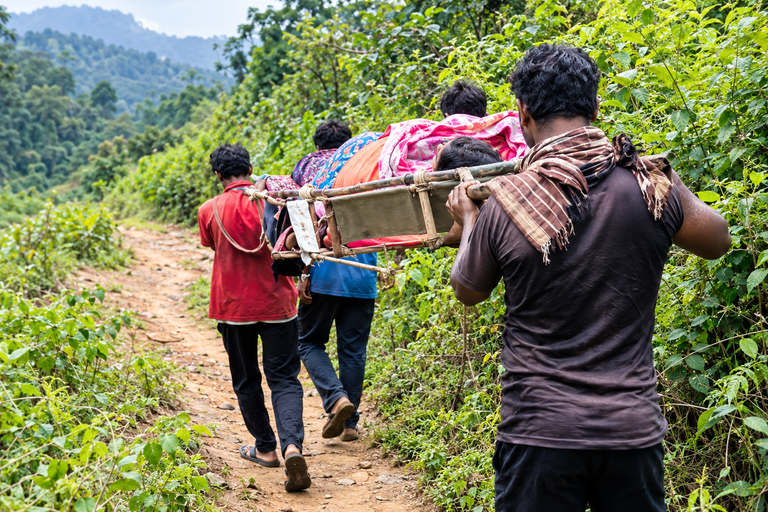
While the government claims that development is progressing rapidly across Andhra Pradesh, the situation in remote tribal villages tells a different story. In a disturbing incident in Alluri Sitarama Raju district, villagers had to carry a heavily pregnant woman on a stretcher to reach medical assistance because there was no proper road connecting their village.
The incident has once again highlighted the gap between government development claims and the ground realities in remote tribal areas. Even basic facilities such as roads and emergency ambulance services remain inaccessible to several tribal communities.
No Roads, No Ambulance Access in Remote Tribal Village
The incident took place in a remote tribal area of Alluri Sitarama Raju district. The absence of proper road connectivity has been causing serious difficulties for local residents, particularly during medical emergencies.
The situation becomes even worse during the rainy season, when damaged roads and inaccessible pathways prevent vehicles from reaching these villages.
When a pregnant woman developed labour pain, her family and other villagers struggled to arrange transportation to the hospital. As an ambulance could not reach the village due to the lack of road facilities, local residents carried her on a stretcher along a narrow pathway.
Tribal Villagers Carry Pregnant Woman to Reach Hospital
Under normal circumstances, pregnant women should receive timely medical attention and emergency transportation whenever required. However, the situation in this tribal village forced residents to take responsibility for transporting the woman themselves.
According to reports, villagers carried her on a stretcher until they reached a location accessible to an ambulance. She was subsequently shifted to a hospital for medical treatment.
The incident highlights the difficulties faced by tribal communities in accessing emergency healthcare services due to poor road connectivity and inadequate infrastructure.
Where Is Development in Remote Tribal Areas?
Government announcements about development and infrastructure projects often make headlines. However, providing basic facilities such as roads, healthcare centres and emergency ambulance services should be a priority, especially in remote tribal regions.
Having to carry a pregnant woman on a stretcher because an ambulance cannot reach her village is a serious concern. It raises questions about the availability of basic infrastructure and the effectiveness of rural healthcare services.
The government must focus on resolving the everyday problems faced by tribal communities rather than limiting development to announcements and publicity campaigns.
Tribal Communities Still Struggle for Basic Facilities
This incident is not just about one pregnant woman or one village. It reflects the wider challenges faced by people living in remote tribal areas, where access to roads, transportation and healthcare remains difficult.
The government should take immediate steps to improve road connectivity and strengthen emergency medical services in inaccessible tribal villages. Ambulance facilities and timely healthcare assistance must be made available to people living in these areas.
Tribal communities need practical solutions, not just promises. True development can be measured only when basic facilities reach every village and no pregnant woman is forced to depend on a stretcher to reach a hospital.