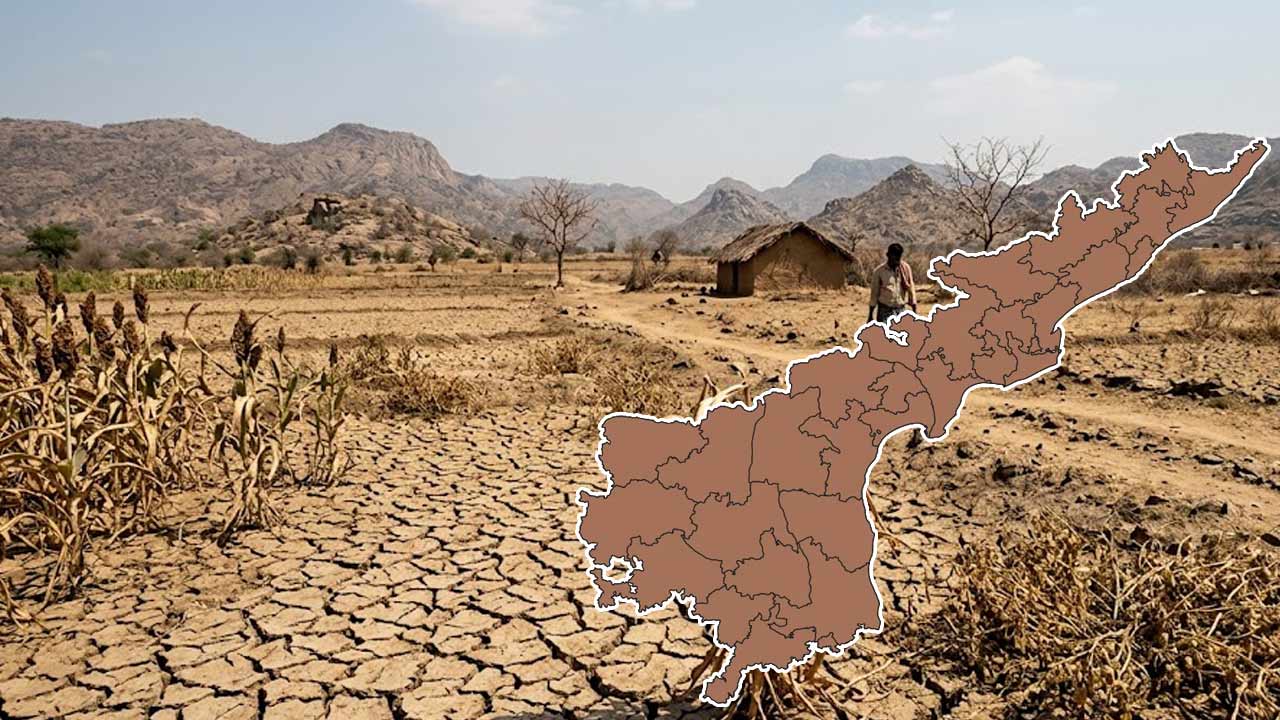
Andhra Pradesh is facing a serious drought situation during the Kharif season, with deficient rainfall and the impact of El Niño affecting agricultural activities across several regions. The state government has declared 388 mandals across 21 districts as drought-affected areas, categorising 283 mandals as severely drought-hit and 105 as moderately drought-hit.
However, opposition parties have criticised the government, claiming that the official drought assessment does not reflect the severity of the situation on the ground.
Opposition Seeks Drought Declaration for 544 Mandals
Opposition parties have demanded that 544 mandals in Andhra Pradesh be declared drought-affected. They have also called for the Centre to recognise the situation as a national disaster and announce a special financial package for the state.
They have urged the government to consider changes to the Central Drought Manual-2016, arguing that the existing assessment criteria may not adequately capture the ground realities caused by prolonged rainfall deficiency and changing weather patterns.
The opposition has also alleged that the government failed to take adequate preventive measures despite warnings about deficient rainfall from the beginning of the year.
Severe Drought Conditions Reported in Several Districts
The government’s own drought list, opposition leaders say, highlights the seriousness of the situation.
In Anantapur district, 28 of the 31 rural mandals have been declared drought-affected. Kuppam, represented by Chief Minister Chandrababu Naidu, has also been included in the severe drought category.
All 24 mandals included from Chittoor district have reportedly been classified as severely drought-affected. Tulluru mandal in the Amaravati capital region has also been included in the severe drought category.
Kharif Crops Hit by Rainfall Deficit
Opposition parties claim that crops have dried up across North Andhra, Rayalaseema, Prakasam and Palnadu, as well as parts of Guntur, Bapatla, NTR, Krishna and Nellore districts.
Western mandals and areas at the tail end of delta irrigation systems have also reportedly faced water shortages. In several locations, farmers were unable to take up cultivation, leaving agricultural land uncultivated.
Farmers are also reported to have suffered losses after spending money on seeds, fertilisers and other agricultural inputs. The lack of farm activity has affected agricultural labourers, while shortages of drinking water and cattle fodder have added to the rural distress.
Farmers Seek Wider Drought Relief Measures
The opposition has warned that restricting the drought declaration to 388 mandals could leave farmers, agricultural labourers and rural families in other affected areas without adequate government assistance.
It has demanded a fresh assessment of the Andhra Pradesh drought situation and urged the government to include more mandals based on actual ground conditions.
The opposition has also called for immediate drought relief measures, including support for farmers who have lost crops and investments, assistance for agricultural labourers who have lost employment, drinking water arrangements and fodder supply for livestock.
Centre Urged to Announce Special Package
With the El Niño impact and rainfall deficiency affecting the Kharif season, opposition parties are seeking greater intervention from the Central government.
They have demanded a special drought relief package for Andhra Pradesh and called for measures to protect farmers and rural communities from the economic impact of the drought.
The wider demand is for a comprehensive drought assessment based on field-level conditions rather than relying only on existing classification criteria.