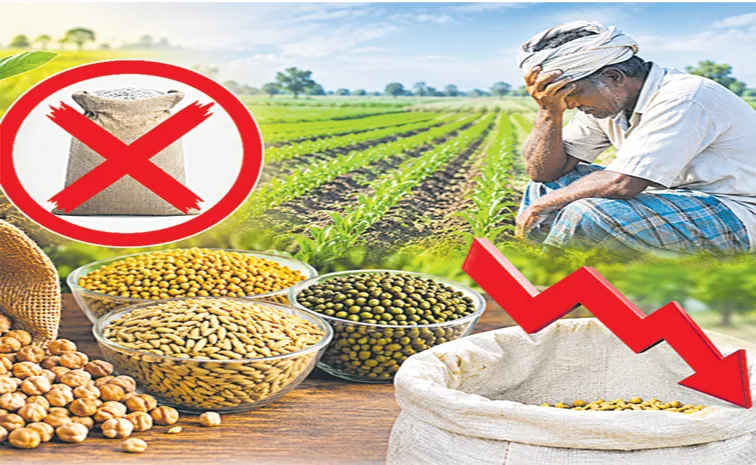
The Rabi season has begun in Andhra Pradesh, and farmers are preparing their fields for the next crop cycle. With sowing approaching, the availability of subsidy seeds for Rabi crops has become an important issue for farmers.
Farmers need clarity on when and where subsidised seeds will be available, which crops are covered, the subsidy rates and the quantity of seed available at distribution points.
Seed is one of the first and most important inputs in agriculture. Any delay in getting quality seed can affect sowing schedules and increase cultivation costs.
AP Seeds Has a Seed Supply System for Rabi Crops
The Andhra Pradesh State Seeds Development Corporation (APSSDC) says it prepares seed supply plans for both Kharif and Rabi seasons based on crop requirements and departmental indents.
According to its official marketing information, AP Seeds is responsible for positioning certified and quality seeds at sale points well before the commencement of distribution under various government subsidy schemes. The corporation also supplies seeds through Rythu Bharosa Kendras (RBKs).
AP Seeds states that subsidised seed is intended to help farmers purchase quality seed at an affordable price and improve seed replacement and agricultural productivity.
This makes the timely availability of Rabi seed an important part of the agricultural support system.
Bengal Gram Is a Major Rabi Crop in Several Areas
Bengal gram, or chickpea, is among the important Rabi crops in Andhra Pradesh.
In Kurnool district, AP Seeds lists a normal Rabi crop coverage of 1,97,492 hectares. Bengal gram accounts for 1,82,018 hectares, followed by blackgram at 12,599 hectares and smaller areas under redgram, greengram and horsegram.
The figures show why timely availability of Bengal gram seed is particularly relevant to farmers in the district.
AP Seeds also lists Bengal gram varieties such as JG-11, NBeG-49 and PKVK-2 among the varieties produced or promoted for cultivation in the state.
AP Seeds Has Started 2026-27 Procurement Processes
Official AP Seeds records show that procurement activities for the 2026-27 agricultural year have been initiated for several crops.
The AP Seeds tender page lists:
- Procurement of horsegram, cowpea, greengram and blackgram seed on July 20, 2026
- Procurement of Rajma and red local seed on June 23, 2026
- Procurement of different certified and truthfully labelled paddy seed varieties on April 30, 2026
These records establish that seed procurement processes have been undertaken. However, procurement activity by itself does not provide farmers with all the information they need about district-wise stock, distribution dates, subsidy rates and availability at individual distribution centres.
The Key Question for Farmers: When Will the Seed Reach Them?
For farmers, the practical question is not simply whether a procurement process has been initiated.
The immediate concerns are:
When will the seed be available?
Where can farmers collect it?
What is the subsidy?
How much seed is available?
AP Seeds itself says certified and quality seed should be positioned at sale points in advance of distribution.
Therefore, publishing a clear Rabi seed distribution schedule can help farmers plan their sowing activities without uncertainty.
Seed Distribution Network Already Exists
Andhra Pradesh has an established seed distribution network.
For example, the AP Seeds Gannavaram unit says it caters to Krishna district’s Kharif and Rabi seed requirements under both subsidy and non-subsidy programmes. It distributes seed through 50 mandal-level seed distribution points, including PACS, DCMS, private dealers, Agricultural Research Stations and Mandal Agriculture Officers.
AP Seeds also says that Rythu Bharosa Kendras were introduced to make agricultural inputs available closer to farming communities, with seeds supplied through RBKs under subsidy and non-subsidy programmes.
The infrastructure, therefore, is already in place. The focus now is on timely stock positioning and transparent communication to farmers.
What Farmers Need to Know About Rabi Subsidy Seeds
The government and agriculture authorities can provide greater clarity by publishing crop-wise and district-wise information covering:
- Rabi seed distribution starting dates
- Crop-wise subsidy rates
- District-wise seed stocks
- Availability at RBKs and other authorised centres
- Bengal gram seed availability
- Paddy, blackgram, greengram and other Rabi seed schedules
- Eligibility requirements for subsidised seed
- Maximum quantity available per farmer
- Arrangements in case of seed shortages
Such information would allow farmers to plan sowing and input purchases more effectively.
Seed Supply Is Only One Part of Farmer Support
Farmers also depend on other agricultural support mechanisms during the crop cycle, including crop insurance, interest-free or subsidised credit, input assistance and compensation for crop losses where applicable.
The agricultural cycle broadly runs from:
Seed → Investment → Sowing → Crop Protection → Harvest → Insurance/Compensation
Timely access to quality seed is therefore the starting point of the crop cycle.
Government Data Can Provide Greater Clarity
Political parties may raise questions about the implementation of farmer welfare programmes, but the clearest way to establish the current position is through official data.
The government can provide district-wise information on seed procurement, available stock, subsidy rates and distribution schedules for the 2026-27 Rabi season.
AP Seeds’ official records confirm that procurement and distribution systems exist and that seed planning is part of its responsibilities.
The remaining question for farmers is whether the required seed is available at the right place, at the right time and at the announced subsidy price.
Rabi Season 2026: Farmers Await Clear Seed Distribution Details
With the Rabi season underway, farmers need timely and reliable information rather than uncertainty over seed availability.
For farmers preparing their fields, the most important information is simple: which seed is available, where it is available, when distribution begins and what subsidy applies.
A transparent crop-wise and district-wise seed distribution schedule would help farmers plan their Rabi cultivation with greater certainty.
For farmers, the real test of a seed subsidy programme is not only the procurement process on paper, but the timely availability of quality seed at the distribution point.