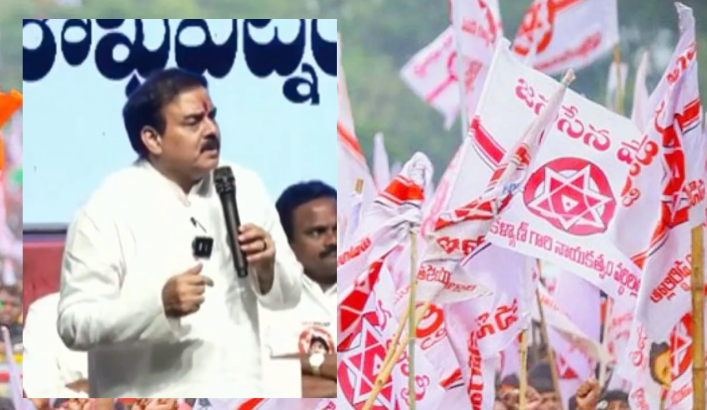
Amid discussions over seat allocation in the upcoming local body elections, Jana Sena Party leader Nadendla Manohar’s remarks to party cadre have triggered a fresh debate within the party. While party workers have been seeking a larger share of seats, Manohar reportedly advised them to focus on strengthening the organisation gradually, stating that the party may not yet be organisationally strong enough in all areas.
His comments have drawn attention, particularly as the Jana Sena was established 12 years ago and has completed two years in government. Questions are now being raised within political circles about the party’s organisational growth and its preparedness for local elections.
Nadendla Manohar’s Message to Party Cadre
Addressing party workers, Nadendla Manohar reportedly said that the Jana Sena should not seek more seats merely to increase its numbers. Instead, the party should focus on constituencies where it has a realistic chance of winning.
He also emphasised the need to work towards a 100 per cent strike rate, suggesting that the number of seats contested should be secondary to the number of seats won.
Manohar further told party workers that organisational development cannot be completed in a day, a year or even five years, and that the party needs to grow gradually.
‘Work for the Nation, Not for Positions’
Another part of Manohar’s remarks that has attracted attention was his appeal to party workers to work for the nation rather than seeking positions.
The message has become a subject of discussion among Jana Sena ranks, with some questioning the logic of asking grassroots workers not to seek positions while party leaders continue to occupy political and government posts.
The remarks have also led to criticism from sections of the party’s supporters, who believe that workers’ expectations regarding local body positions should also be taken into consideration.
Earlier Debate Over TDP-Jana Sena-BJP Seat Sharing
The issue of seat allocation had already become a topic of discussion following earlier comments by TDP leader Nara Lokesh regarding the possible seat-sharing formula among the alliance partners.
At the time, a possible arrangement of 80 per cent seats for the TDP, 15 per cent for the Jana Sena and 5 per cent for the BJP had been discussed in political circles.
The possibility reportedly led to dissatisfaction among sections of the Jana Sena cadre. Nadendla Manohar had subsequently clarified that seat allocation would be decided based on local political conditions rather than a fixed formula.
Focus on Winnability Over Seat Numbers
Manohar’s latest remarks have once again brought the seat-sharing issue into focus.
The Jana Sena leadership appears to be stressing that the party should concentrate on winnable seats rather than simply seeking a larger numerical share. The 100 per cent strike-rate target also indicates an emphasis on electoral performance in the constituencies where the party contests.
However, the remarks have triggered a wider discussion about the party’s organisational strength after 12 years of its existence.
Questions Over Organisational Growth
The statement that the party is still not organisationally strong in some areas has become a talking point among political observers.
The Jana Sena has been in power as part of the alliance for two years, while the party itself was established 12 years ago. Against this backdrop, questions are being raised over why the party continues to emphasise gradual organisational growth even after more than a decade.
The statement that party building cannot be completed in one day, one year or five years has also been interpreted by critics as an attempt to temper the expectations of the cadre regarding local body election seats.
Alliance Seat Sharing Remains a Key Issue
The latest developments come at a time when discussions over seat adjustments among the alliance partners are gaining importance ahead of the local body elections.
While the Jana Sena leadership has maintained that local circumstances will determine the final allocation, there is continuing discussion over whether the party will secure a significant number of key positions.
Against this backdrop, Manohar’s comments have acquired political significance, particularly among Jana Sena workers seeking a greater representation in local elections.
Conclusion
The debate within the Jana Sena now revolves around two key issues: the number of seats the party will secure in the local body elections and its long-term organisational expansion.
While the party leadership is stressing winnability and a high strike rate rather than simply increasing the number of seats contested, questions are being raised about the pace of organisational strengthening after 12 years.
The remarks have therefore added another dimension to the ongoing discussions over alliance seat sharing and the expectations of the Jana Sena cadre.