Allegations Mount Over Food Quality in Government Educational Institutions
Since the coalition government assumed office in Andhra Pradesh, criticism has intensified over the recurring incidents of food poisoning in government schools, residential schools, welfare hostels, Anganwadi centres, and college hostels. Parents and civil society groups allege that while the government has widely promoted the Dokka Seethamma Mid-Day Meal Scheme through photographs of Chief Minister N. Chandrababu Naidu, Deputy Chief Minister Pawan Kalyan, and Education Minister Nara Lokesh sharing meals with students, the ground reality appears to be vastly different.
According to critics, repeated cases of contaminated food have raised serious questions about the safety and quality of meals being served to students across the state.
Growing Number of Food Poisoning Cases Raises Alarm
The increasing number of food poisoning incidents has triggered widespread concern over student welfare. Observers note that the National Human Rights Commission (NHRC) has even issued notices to Andhra Pradesh authorities over the issue—an unprecedented development—yet significant improvements are still not evident.
Parents and education activists argue that repeated incidents indicate systemic lapses in food safety standards and monitoring.
Cockroach Found on Home Minister’s Plate Sparks Statewide Debate
One incident that drew statewide attention occurred in Anakapalli district, where State Home Minister Vangalapudi Anitha visited a BC Girls’ Gurukul Hostel and shared a meal with students. During the visit, a cockroach was reportedly found on the minister’s own plate, triggering widespread criticism and reigniting concerns about hygiene and food quality in government educational institutions.
The incident became a symbol of the larger debate surrounding the implementation of food safety measures in state-run schools and hostels.
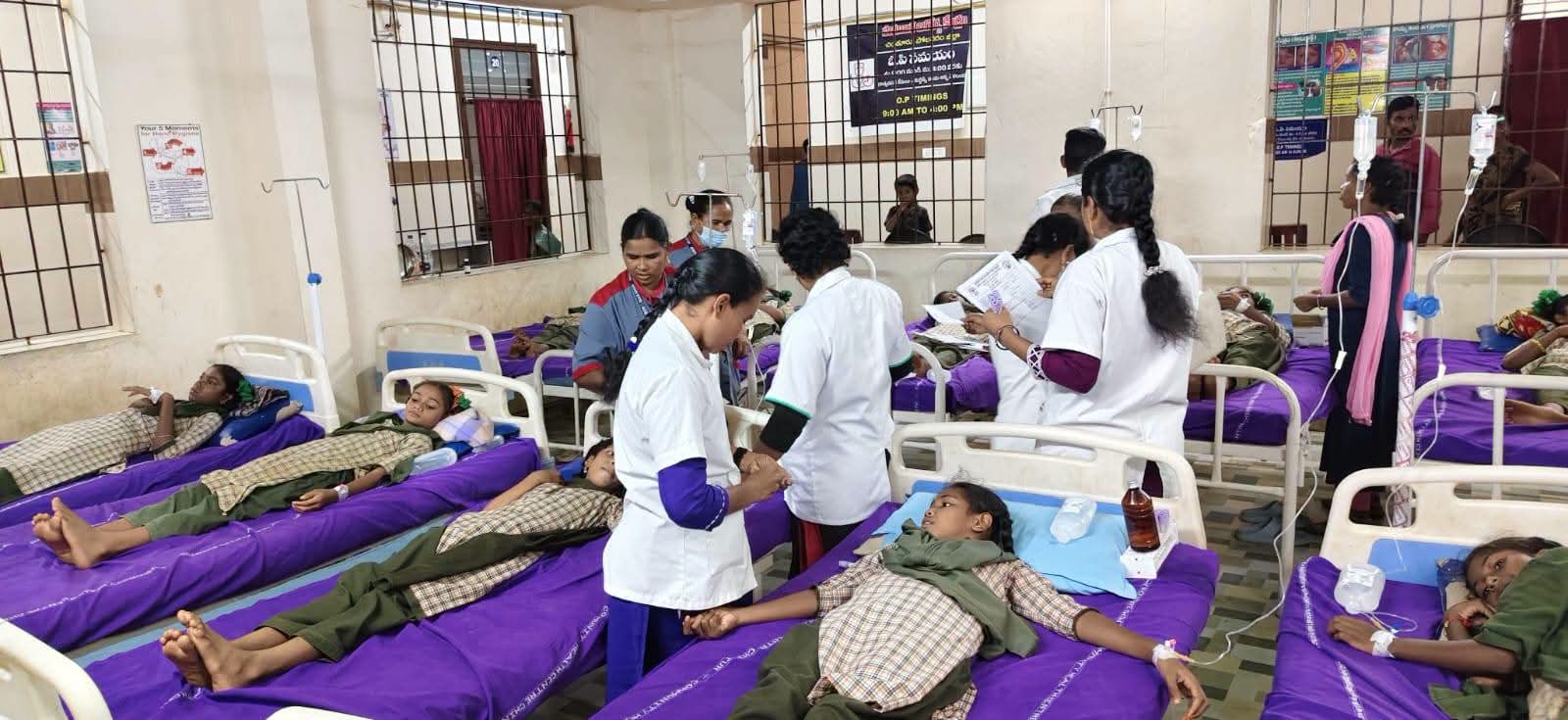
71 Girl Students Fall Ill in Two Separate Incidents
Fresh concerns emerged after two separate food poisoning incidents were reported on the same day.
At a Tribal Girls’ Ashram School in Somulagudem, Polavaram district, 41 girl students reportedly fell ill after leftover dal served during lunch was allegedly reused for dinner in violation of prescribed food safety norms.
On the same day, at a Kasturba Gandhi Balika Vidyalaya (KGBV) in Kotavuratla, Anakapalli district, 30 girl students were hospitalized with vomiting and diarrhoea after vegetables left over from an earlier meal were reportedly served again at dinner.
With 71 students falling ill in a single day, concerns over food management practices intensified.
Series of Food Poisoning Cases Reported Across Andhra Pradesh
The recent incidents are part of a larger pattern reported between 2024 and 2026 under the coalition government’s tenure.
According to reports cited by critics, food poisoning incidents have occurred in several government institutions across the state, including:
- Nayudupeta Gurukul School – 121 students affected
- Nuzvid Triple IT – More than 1,000 students reportedly fell ill
- Institutions in Gooty, Pedabayalu, Srikalahasti, Kurupam, Maredumilli, Kadapa, Panyam, and several other locations also reported dozens of students suffering from suspected food poisoning.
These recurring incidents have raised serious concerns about food safety protocols in government-run educational institutions.
Preliminary Findings Point to Poor Food Quality
Initial inquiries in various cases have reportedly identified several possible causes, including:
- Rotten eggs
- Spoiled dal
- Leftover vegetables being served again
- Improperly cooked food
- Contaminated drinking water
- Use of substandard food ingredients
In several locations, parents staged protests demanding accountability. Although departmental inquiries were announced after multiple incidents, critics argue that similar cases continue to recur.
Calls for Stronger Monitoring and Better Food Safety
Parents, educationists, and public organisations have urged the Andhra Pradesh government to strengthen the implementation of the Mid-Day Meal Scheme and ensure that students receive safe, hygienic, and nutritious food every day.
They have also appealed to the government not to limit the legacy of Dokka Seethamma to publicity campaigns alone, but to uphold her spirit of public service by ensuring that every child studying in government institutions receives quality meals in a safe and healthy environment.