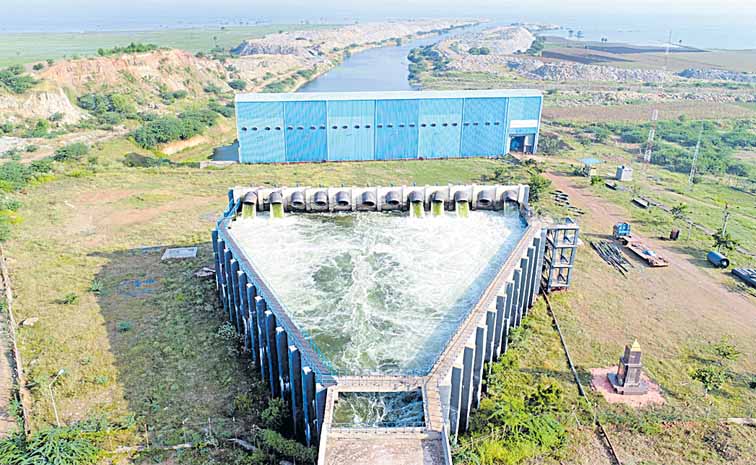
The Handri-Neeva Sujala Sravanthi (HNSS) Project has once again become the center of political controversy in Andhra Pradesh. The opposition has alleged that the state government awarded four tender packages at an average premium of 4.83%, resulting in an alleged ₹52.35 crore additional burden on the state exchequer.
Critics also claim that high-value contracts were awarded to companies allegedly linked to ruling party leaders, individuals close to the Chief Minister, and firms perceived to be supportive of the Telugu Desam Party (TDP). They argue that if the government had followed the reverse tendering system and judicial preview mechanism used during the previous administration, the state could have saved more than ₹110 crore. These claims remain allegations, and the government has not yet officially responded.
₹52.35 Crore Additional Burden Alleged in Four Tender Packages
According to the opposition, the government awarded four HNSS project packages at rates averaging 4.83% higher than competitive estimates.
Critics argue that this decision has placed an additional financial burden of ₹52.35 crore on the state treasury. They allege that public money will now be spent on paying contractors at rates higher than necessary.
Who Received the Major Contracts?
According to details cited by critics:
- A company allegedly belonging to the TDP MLA from Kalyandurg was awarded two packages worth ₹530.90 crore.
- NCC Limited, whose Managing Director is alleged by critics to be close to Chief Minister N. Chandrababu Naidu, reportedly received contracts worth ₹462.32 crore.
- TNMR Projects, a company alleged to be associated with a TDP sympathizer, was awarded projects valued at ₹122.09 crore.
These allocations have raised questions from the opposition regarding the transparency of the tender process.
Could Reverse Tendering Have Saved Over ₹110 Crore?
The opposition claims that if the government had implemented the reverse tendering process, as was done during the previous government, the contracts could have been awarded at least 5% lower than the current rates.
They further argue that if the tenders had undergone judicial preview, public funds would have received greater protection.
Based on these assumptions, critics estimate that the state could have saved more than ₹110 crore.
Opposition Levels Serious Allegations Against the Government
Opposition leaders have strongly criticized the government over the HNSS tenders.
They allege that decisions are being taken to benefit selected contractors and that influential individuals are receiving high-value contracts through the government’s exercise of power.
Some opposition leaders have even alleged that the tender allocations reinforce suspicions that public funds are being distributed among politically connected beneficiaries.
Questions Raised Over Transparency
The opposition has demanded that the government clarify several issues, including:
- Why were the tenders awarded at higher rates?
- Why was the reverse tendering system not implemented?
- Why was judicial preview not adopted?
- Who will be held accountable for the alleged loss to the public exchequer?
The opposition insists that the government provide clear answers to these questions.
Government Yet to Respond Officially
The HNSS tender issue has now emerged as a major political debate in Andhra Pradesh.
Allegations surrounding the ₹52.35 crore additional expenditure, the award of contracts worth ₹530.90 crore, ₹462.32 crore, and ₹122.09 crore, along with claims that the absence of reverse tendering resulted in a potential loss of over ₹110 crore, have intensified criticism of the government.
However, these remain allegations made by the opposition and critics. The Andhra Pradesh government has not yet issued an official response. A complete assessment of the controversy will be possible only after the government’s clarification or the findings of any official inquiry.