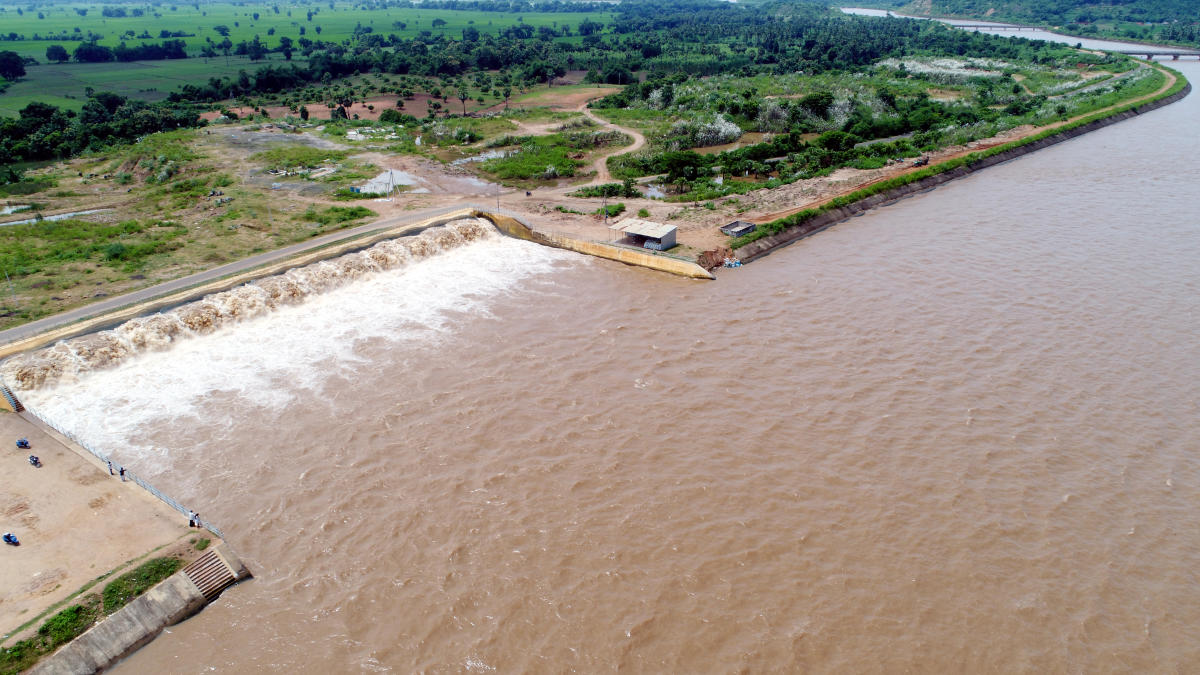
The Pattiseema Lift Irrigation Project has once again become a major political flashpoint in Andhra Pradesh. Amid the ongoing Godavari floods, the Telugu Desam Party (TDP) and Jana Sena Party have been actively promoting on social media that even during the Y.S. Jagan Mohan Reddy government’s tenure, Pattiseema continued to pump Godavari water into the Krishna River.
According to their campaign, more than 150 TMC of water was diverted during the last five years, and even today, when the Krishna basin is facing water shortages, Pattiseema remains a crucial lifeline for the state.
However, critics are presenting a completely different set of figures, raising questions about the project’s actual benefits, operational costs, and overall efficiency. The debate has now shifted from political claims to public expenditure and measurable outcomes.
TDP–Jana Sena Campaign: “Over 150 TMC Diverted Through Pattiseema”
Social media campaigns by TDP and Jana Sena largely focus on three key points:
- Pattiseema pumps remained operational even during the previous YSRCP government.
- More than 150 TMC of Godavari water was diverted into the Krishna River over five years.
- The project continues to provide critical support whenever Krishna basin water levels decline.
The campaign attempts to reinforce the argument that without Pattiseema, Andhra Pradesh would have faced a severe water crisis.
Critics Say the Numbers Tell a Different Story
Opponents of the project argue that available statistics present a far less favorable picture. They question whether the massive public investment has translated into proportionate benefits for farmers and irrigation.
According to critics, the focus should not only be on the volume of water pumped but also on how much ultimately served productive purposes.
Project Cost
According to figures cited by critics:
- Construction cost: ₹1,900 crore
- Bonus reportedly paid to the contractor (as claimed by some political leaders): Around ₹250 crore
- Electricity expenditure for lifting water: ₹773.15 crore
They argue that apart from the initial construction expenditure, recurring operational costs have significantly increased the project’s financial burden.
How Much Water Was Actually Utilized?
As per figures being circulated by critics:
- Water effectively used for irrigation and other purposes: Around 170 TMC
- Water diverted from Godavari to Krishna but eventually flowing into the sea: Around 176 TMC
Based on these numbers, critics contend that not all diverted water ultimately benefited agriculture or irrigation.
The Controversial Claim of 5,441 TMC Reaching the Sea
One of the most debated figures being highlighted by critics is 5,441 TMC.
They claim that between 2015–16 and 2025–26, thousands of TMC of Godavari water entering the Krishna basin eventually flowed into the sea.
According to their argument:
If only about 170 TMC actually benefited irrigation, can the project be considered fully successful when thousands of TMC ultimately reached the sea?
This claim has become a major point of political discussion.
Nearly ₹2,900 Crore in Public Spending
Based on the figures cited by critics:
- Construction cost: ₹1,900 crore
- Contractor bonus: Around ₹250 crore
- Electricity expenditure: ₹773.15 crore
They estimate that public spending on the project has approached ₹2,900 crore.
Critics argue that despite such substantial expenditure, the tangible benefits have remained relatively limited.
Political Narrative vs Public Expenditure
While one side continues to project Pattiseema as the project that saved Andhra Pradesh during periods of water scarcity, the opposing side emphasizes:
- ₹1,900 crore construction cost
- ₹773.15 crore electricity expenses
- Thousands of TMC reportedly flowing into the sea
- Approximately 170 TMC effectively utilized
The contrast between these competing narratives has intensified public debate over the project’s true effectiveness.
Questions That Remain
Several important questions continue to be raised:
- Would the Krishna Delta have received adequate water without Pattiseema?
- Or did the project mainly add to the financial burden on taxpayers?
- Was the expenditure of ₹773.15 crore on electricity operationally justified?
- Was the reported 5,441 TMC flowing into the sea a natural hydrological phenomenon or a sign of inefficient water management?
- Does the “150 TMC diverted” narrative present the complete picture?
Experts argue that these questions can only be conclusively answered through official government data and independent technical analysis.
Ultimately, Performance Will Be Judged by Public Benefit
The political debate surrounding the Pattiseema Lift Irrigation Project continues to intensify.
While TDP and Jana Sena highlight the diversion of over 150 TMC of water as evidence of the project’s success, opposition voices focus on the ₹1,900 crore construction cost, ₹773.15 crore electricity expenditure, approximately 170 TMC of effective utilization, and claims that thousands of TMC eventually flowed into the sea.
In the end, the success or failure of Pattiseema will not be determined solely by political slogans, but by transparent official data, technical evaluation, and a clear assessment of how much public benefit was generated for every rupee spent.