₹4.55 Million Approved for Temporary Facility Rent
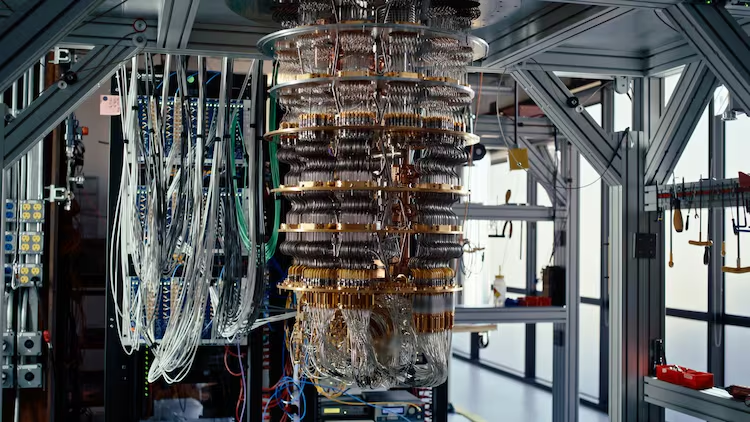
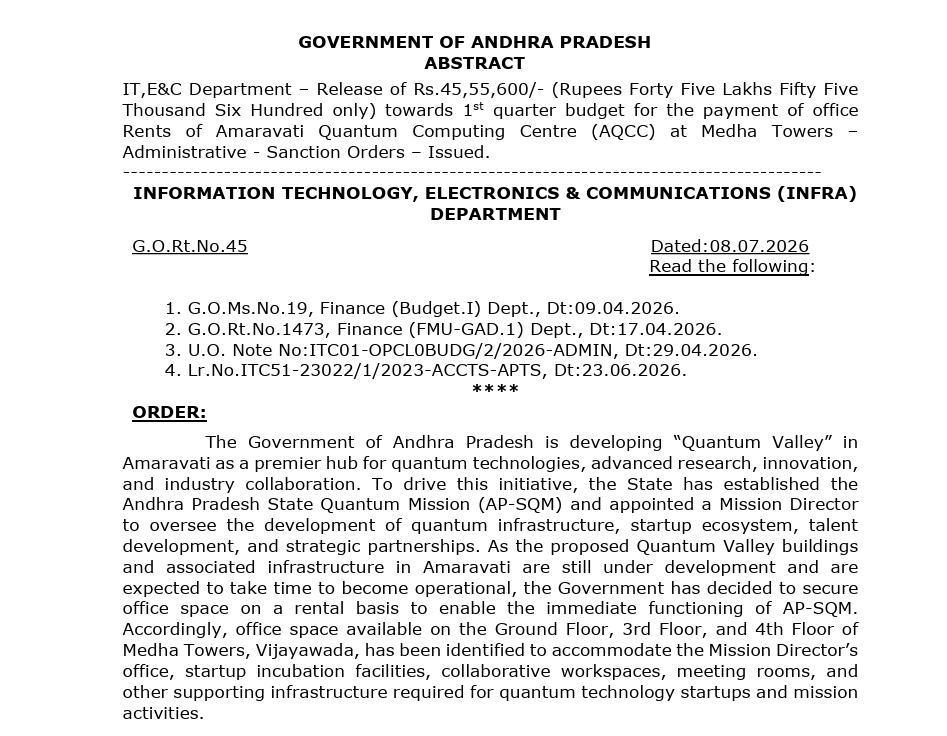
The Andhra Pradesh government’s ambitious Quantum Mission has come under scrutiny at its very early stage over the use of public funds. According to G.O.Rt. No.45, the government has sanctioned ₹4.55 million (₹45.55 lakh) towards rent and applicable taxes for the Amaravati Quantum Computing Centre (AQCC) operating from Medha Towers in Gannavaram during the first quarter of the 2026–27 financial year (April–June).
Temporary Facility Before Permanent Quantum Valley
As per the government’s explanation, the permanent infrastructure proposed under the Quantum Valley project in Amaravati is still under construction. Until then, the AQCC is functioning from the ground, third, and fourth floors of Medha Towers, which have been taken on lease.
However, the decision to spend significant public money on rented private premises before completing permanent infrastructure has drawn criticism. Several observers have questioned whether such expenditure is justified while the state’s own facilities remain under development.
Questions Over Corporate Partnerships and Public Expenditure
The project includes collaborations with major technology companies such as L&T, IBM, and TCS. Critics argue that instead of investing in government-owned infrastructure, public funds are being used to pay rent for a privately owned building.
This has sparked a wider debate over whether the government’s decisions are primarily aimed at serving the public interest or whether they disproportionately benefit corporate entities associated with the project.
Lack of Clarity on Research Outcomes and Public Benefits
Chief Minister N. Chandrababu Naidu inaugurated the Quantum Characterization Facility at Medha Towers and a Quantum Computer at SRM University. Despite these launches, critics say the government has not provided adequate details regarding the current status of research, testing, or measurable progress achieved so far.
Questions have also been raised about how quantum technology will directly benefit the people of Andhra Pradesh, particularly in addressing pressing public health challenges such as Uddanam kidney disease and issues affecting fluoride-impacted communities. According to critics, the government’s roadmap on these practical applications remains unclear.
Concerns Over Infrastructure Priorities
At a time when the Government of India and industry bodies such as NASSCOM are emphasizing cybersecurity preparedness and responsible development of quantum technologies, some critics argue that the Andhra Pradesh government appears to be prioritizing high-profile events in temporary rented facilities rather than accelerating the creation of permanent infrastructure.
Several observers have suggested that instead of continuing to spend public money on rental payments, the government should focus on building long-term infrastructure that can support sustainable research, innovation, and public benefit.
Debate Continues
While the government maintains that the rented facility is a temporary arrangement until the Quantum Valley campus becomes operational, the expenditure has triggered political and public debate. The controversy highlights broader questions regarding financial priorities, transparency, infrastructure planning, and the long-term vision for Andhra Pradesh’s quantum technology ambitions.