Grand Claims During the Previous Government
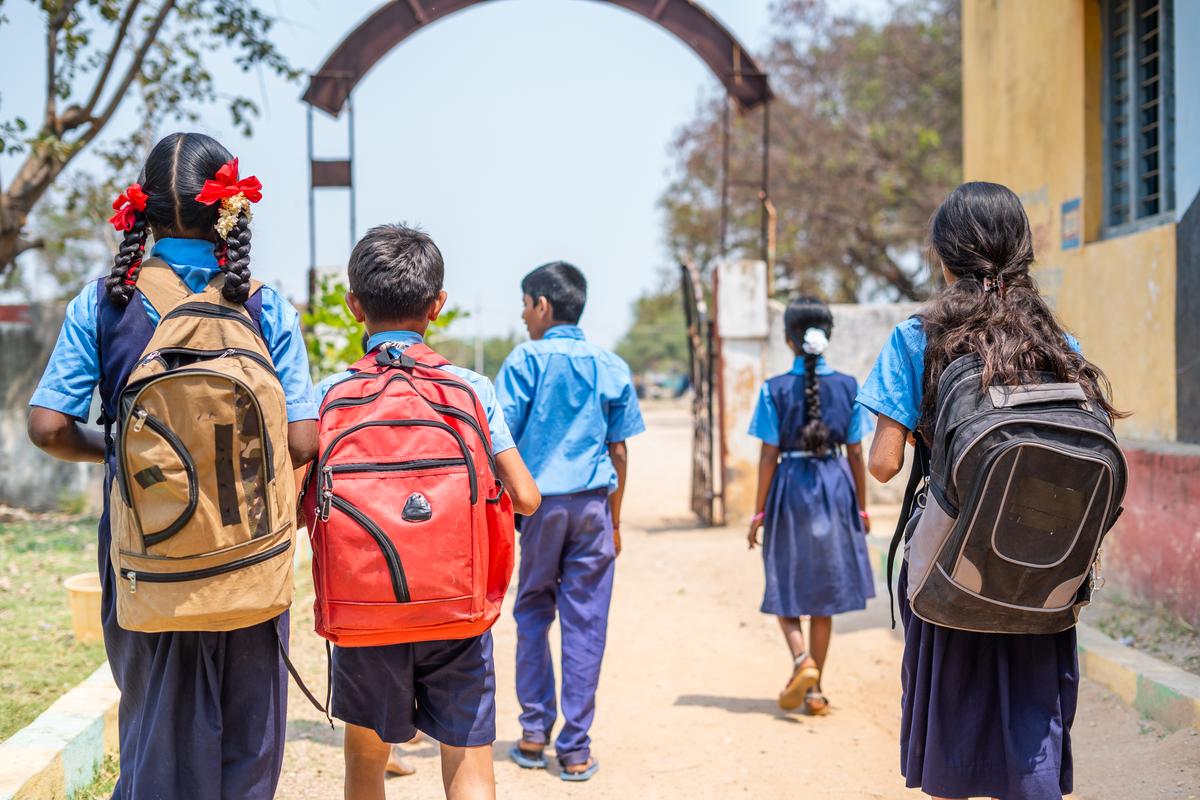
During the tenure of former Chief Minister Y.S. Jagan Mohan Reddy, the government extensively promoted its education reforms under the “Nadu-Nedu” programme. Initiatives such as English-medium instruction, digital classrooms, student tablets, and upgraded infrastructure were projected as a transformation that would make Andhra Pradesh’s government schools a national model.
The government repeatedly claimed that public schools had become vibrant learning centres capable of delivering corporate-level education to children from economically weaker sections.
However, the latest statistics released by the Union Ministry of Education present a picture that appears to differ significantly from those claims.
More Government Schools, Fewer Students
Central Education Ministry Report Reveals Key Numbers
According to the latest report released by the Union Ministry of Education:
- Andhra Pradesh has around 41,915 government schools (approximately 45,000 institutions).
- Government schools currently have 36.43 lakh students enrolled.
- The state has 12,396 private schools (around 15,000 institutions).
- Private schools account for 47.02 lakh students.
- Despite having far fewer institutions, private schools educate nearly 11 lakh more students than government schools.
The figures have sparked discussions about enrolment trends and parental preferences in the state’s education sector.
Dropout Rates Raise Fresh Concerns
The report also highlights dropout rates across various stages of government schooling:
- Primary level: 11.2%
- Upper primary: 8.2%
- Secondary level: 3.7%
Education experts say these numbers indicate the need for closer examination of why students are leaving government schools before completing their education.
Teacher Vacancies Continue
The Union Ministry’s report further states that:
- 11,715 teacher posts remain vacant in government schools during the 2025–26 academic year.
- 17,646 teachers are working as the sole teacher in their respective schools (single-teacher schools).
These figures have renewed concerns regarding teacher availability and classroom management across the state.
Thousands of Classrooms Need Repairs
Infrastructure also remains a challenge.
According to the report:
- Around 13,000 schools have more than 87,000 classrooms requiring repairs.
- These damaged classrooms account for roughly 26% of the state’s classroom infrastructure.
The findings suggest that while infrastructure development has taken place over the years, significant maintenance requirements still remain.
What Happened to the ‘Nadu-Nedu’ Reforms?
The previous YSRCP government invested thousands of crores under the Nadu-Nedu programme to modernize government schools by improving buildings, classrooms, sanitation, furniture, digital learning facilities, and introducing English-medium education.
At the time, the government maintained that:
- Government schools had become competitive with private institutions.
- Children from poor families were receiving quality education.
- Parents were increasingly choosing government schools over private institutions.
The latest enrolment data, however, has prompted fresh political debate over whether those reforms translated into sustained student enrolment.
Why Are Government Schools Losing Students?
The latest statistics raise several important questions:
- Why are student enrolments in government schools declining?
- Why are private schools attracting significantly more students despite being fewer in number?
- Have parental preferences shifted?
- Are quality, accessibility, staffing, or other factors influencing these decisions?
Political observers argue that these questions require a comprehensive response from the government.
Why Are Dropouts Increasing?
The report has also intensified concerns regarding student dropouts.
Possible factors being discussed include:
- Declining confidence in government schools.
- Economic challenges faced by families.
- Growing preference for private education.
- Structural issues within the public education system.
Education experts believe detailed analysis is necessary before identifying the primary reasons behind these trends.
Debate Over Education Reforms Continues
During the previous government’s tenure, videos of students from government schools confidently speaking in English frequently went viral on social media. Those developments were showcased as evidence of educational transformation.
At the same time, some political opponents and social media users were criticized for mocking students from economically weaker backgrounds studying in government schools.
Now, the discussion has shifted toward a different question:
- Why has student enrolment declined?
- Why are dropout rates increasing?
YSRCP leaders argue that these questions deserve objective answers and that merely criticizing the previous government’s reforms does not address the underlying issues.
Opposition Questions Current Government’s Priorities
Opposition parties have also criticized the present government, alleging that greater attention has been given to issues such as:
- Expansion of belt shops.
- Liquor outlets.
- Alcohol retail policies.
They question why similar focus has not been directed toward strengthening government schools and improving public education.
The opposition argues that educational reforms should receive the same administrative priority as other policy decisions.
Education Becomes a Political Flashpoint Again
With the release of the Union Ministry’s report, education has once again become a major political issue in Andhra Pradesh.
The report highlights several concerns:
- Declining enrolment in government schools.
- Increasing dropout rates.
- Thousands of vacant teacher posts.
- Growing number of single-teacher schools.
- Large numbers of classrooms requiring repairs.
Together, these issues have triggered renewed debate over the state’s public education system.
Ultimately, the Numbers Will Shape the Debate
Election speeches, political advertisements, and campaign narratives present one side of the story.
The latest statistics released by the Union Ministry of Education present another.
While government schools continue to outnumber private institutions, private schools now educate substantially more students. Combined with teacher shortages, infrastructure challenges, and dropout rates, the data has become central to the political debate.
Opposition parties argue that the statistics raise difficult questions about the long-term impact of earlier education reforms, asking:
- If Nadu-Nedu transformed school infrastructure, why has student enrolment not kept pace?
- If an education revolution was achieved, who bears responsibility for the current trends?
They contend that, ultimately, it is not political speeches but official statistics that will influence public opinion on the effectiveness of education policies in Andhra Pradesh.