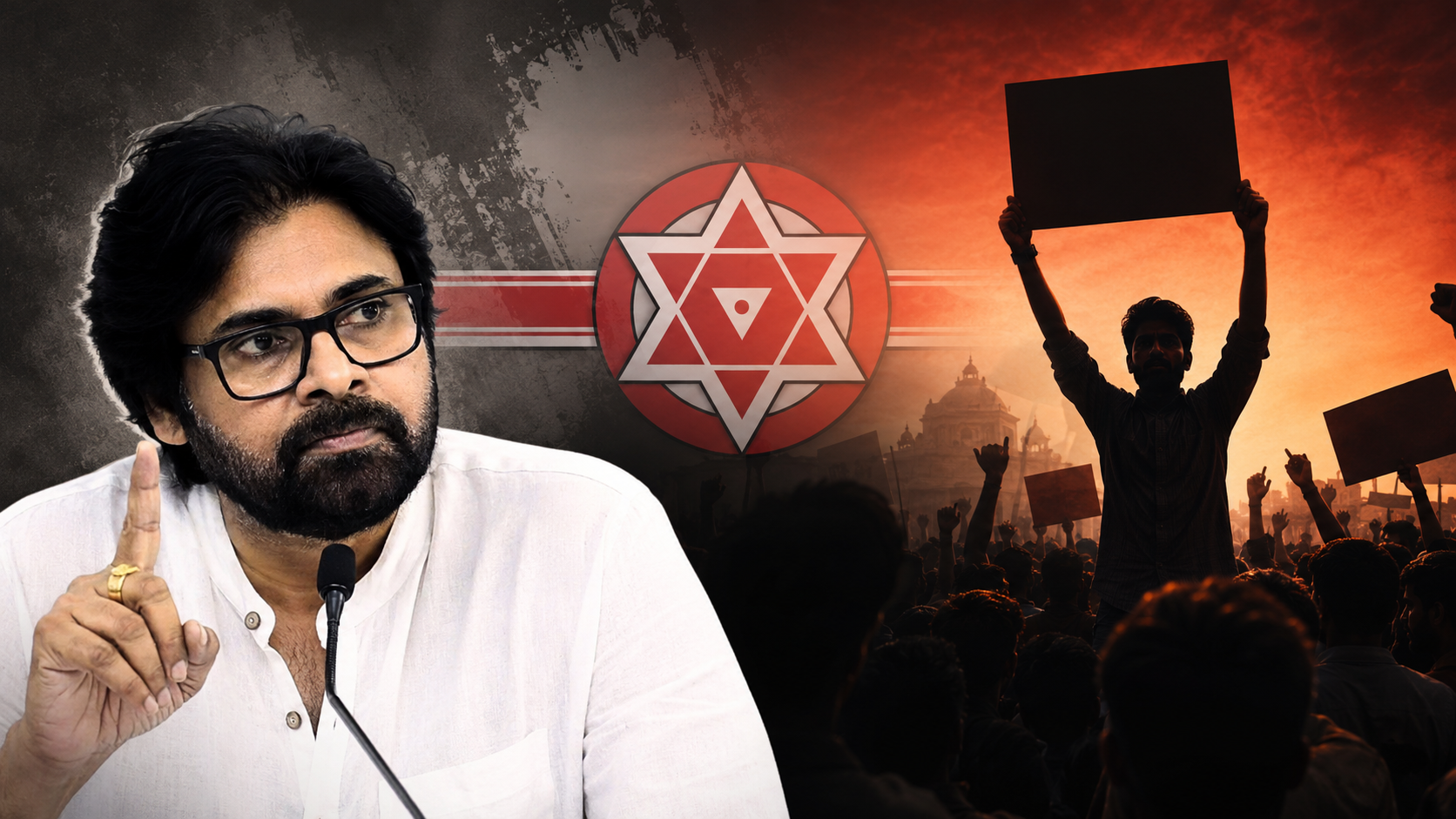
Comments made by Jana Sena Party chief and Andhra Pradesh Deputy Chief Minister Pawan Kalyan have sparked widespread discussion and debate. For years, Pawan Kalyan built his political identity around the idea of questioning the system, holding governments accountable, and speaking on behalf of the people. However, his recent remarks criticizing sections of youth who are raising concerns about governance, employment, and public issues have drawn strong reactions.
Many young people today are expressing frustration over unemployment, delays in government recruitment, examination paper leaks, and what they perceive as administrative inefficiency. Much of this discussion is taking place on social media platforms, where various online groups—including the much-discussed “Cockroach Janata Party”—have emerged as symbols of youth dissatisfaction.
The controversy has now raised a larger question: Should questioning voices be viewed as a problem, or as an essential part of a healthy democracy?
Youth Frustration Reflects Real Concerns, Not Just Anger
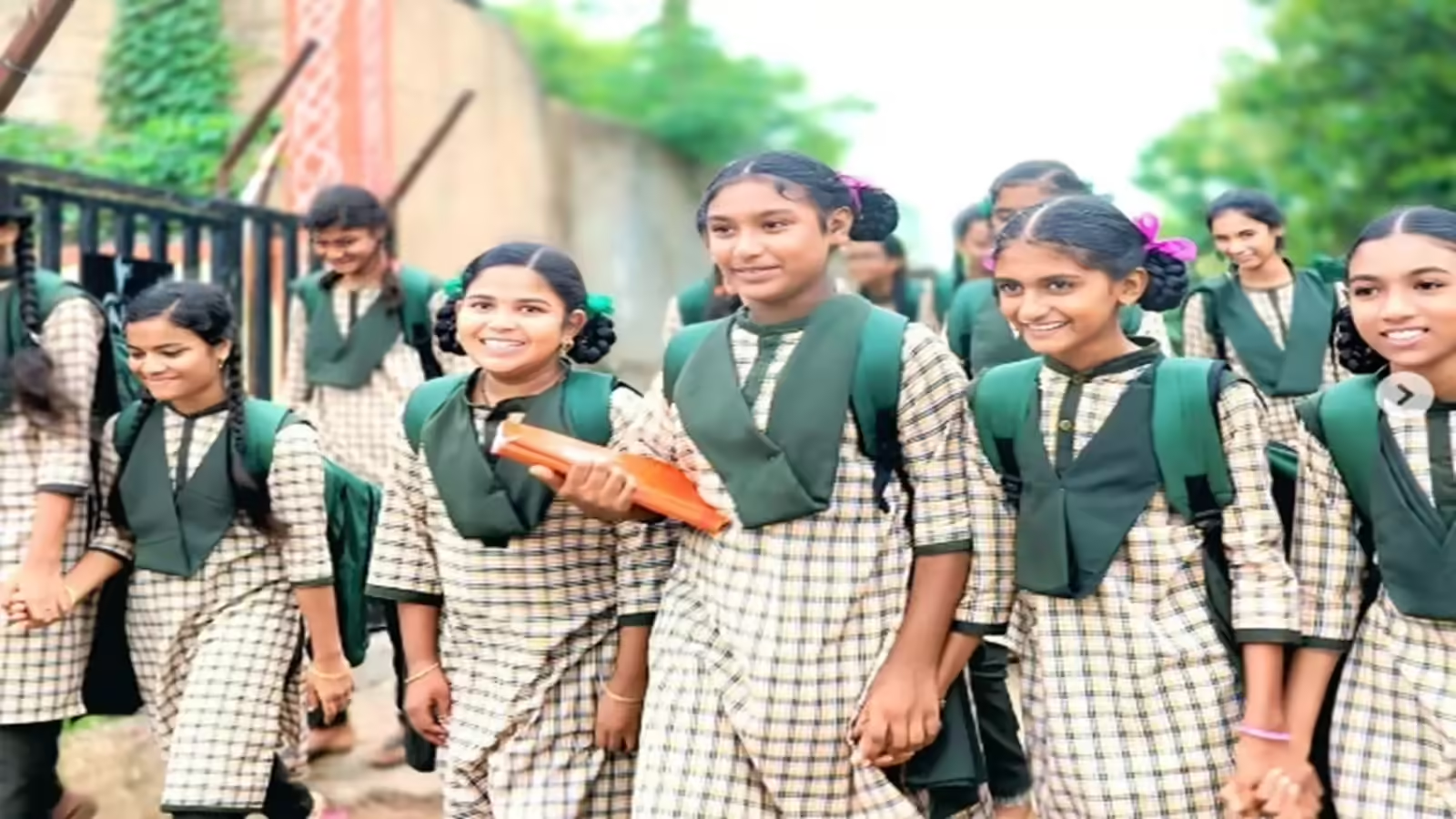
Across the country, thousands of young people continue to struggle with unemployment and uncertainty about their future. Recruitment processes are often delayed, competitive examinations have faced allegations of paper leaks, and many aspirants spend years waiting for opportunities.
In such an environment, social media has become a platform where young people openly express their concerns, frustrations, and expectations from those in power. To many observers, online movements and discussion groups are not merely acts of criticism but reflections of genuine public sentiment.
This has led some to argue that the focus should be on understanding why young people are upset rather than questioning their right to express those feelings.
Does Democracy Not Give Youth the Right to Question?
In a democratic society, citizens have the right to question governments and public representatives. Many young people argue that asking questions about jobs, examinations, governance, and accountability should not be viewed negatively.
Questions frequently raised on social media include:
- Is it wrong to point out when systems are not functioning properly?
- Is asking for employment opportunities a crime?
- Does questioning examination paper leaks make someone anti-government or anti-national?
For many, these are not acts of rebellion but expressions of concern about issues that directly affect their lives and futures.
From “I Will Question” to Facing Questions: The Contradiction Critics Highlight
One of the reasons Pawan Kalyan’s remarks have generated attention is because of his long-standing image as a leader who encouraged questioning. Throughout his political journey, he often emphasized the importance of speaking up against injustice, exposing failures, and demanding accountability.
Critics now argue that there appears to be a contradiction between that message and the criticism directed at young people who are raising questions today.
A question frequently circulating on social media captures this sentiment:
“When a leader questions the system, he is celebrated. When citizens question those in power, should they be criticized?”
This debate is not just about one statement; it is about consistency in democratic principles.
Should Leaders Criticize Youth or Listen to Them?
Today’s youth are not demanding power or privilege. Most are seeking employment opportunities, transparent recruitment processes, quality education, and confidence in their future.
Many analysts believe that when young people voice dissatisfaction, it should be viewed as feedback rather than hostility. Constructive criticism, they argue, is often an opportunity for governments and leaders to identify problems and build trust with the public.
Supporters of Pawan Kalyan also point out that his broader intention may have been to discourage misinformation, abusive political culture, or irresponsible online behavior. However, they believe that genuine concerns raised by youth deserve engagement and answers rather than dismissal.
This is why many observers feel that dialogue and responsiveness are more effective than confrontation.
The Political Importance of Listening to Questioning Youth
History has repeatedly shown that youth sentiment plays a major role in shaping political outcomes. When young people feel heard, they become active participants in democratic processes. When they feel ignored, frustration often grows stronger.
Questioning citizens are not a weakness of democracy—they are one of its greatest strengths. Their concerns can help identify policy failures, improve governance, and push institutions toward greater accountability.
For this reason, many believe that political leaders, regardless of party affiliation, should treat questioning voices as an opportunity to connect with the next generation rather than as a challenge to authority.
A Debate That Will Continue
The discussion surrounding Pawan Kalyan’s remarks has evolved into a broader conversation about democracy, accountability, and the role of youth in public life.
At the center of that debate remains a question being widely discussed across social media and political circles:
“Should leaders see questioning youth as critics to be opposed, or as citizens whose concerns deserve to be heard?”
The answer to that question may shape not only this controversy, but also the relationship between political leadership and the next generation of voters in the years ahead.