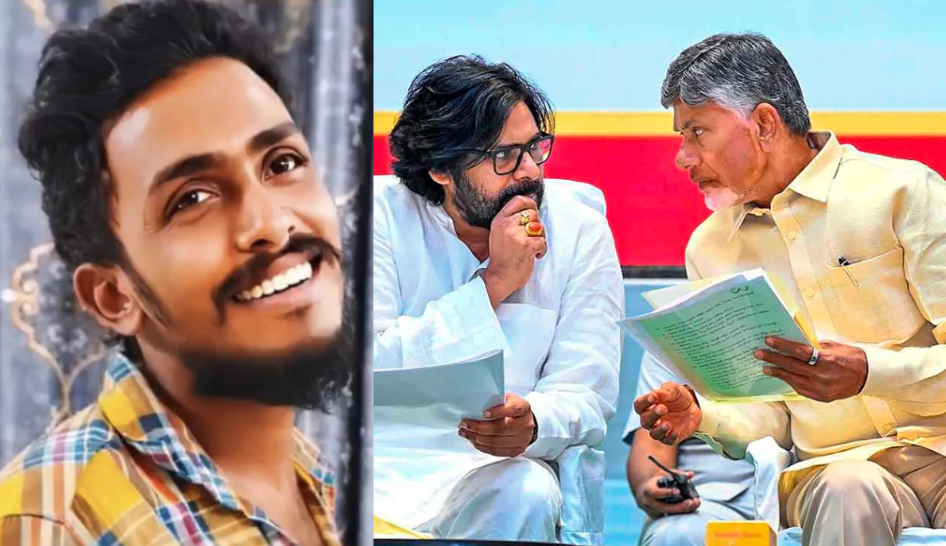
The Andhra Pradesh government has finally announced action in the Gade Saikrishna disappearance case, a case that has triggered widespread concern and outrage in Vijayawada. The suspension of CI Nagaraju and the announcement of an inquiry have been projected as significant steps, but critics argue that these measures came far too late and only after mounting public pressure.
More than a month after Gade Saikrishna’s disappearance, action was initiated only after discussions involving Chief Minister N. Chandrababu Naidu and Deputy Chief Minister Pawan Kalyan. This delay has raised serious questions about the government’s commitment to uncovering the truth and delivering justice.
Delayed Response Raises Concerns
One of the biggest questions being raised is why the government remained largely silent for so long despite growing public concern. For weeks, the victim’s family sought answers while citizens and rights groups demanded accountability.
Critics argue that the government acted only after the issue gained significant public attention, creating the impression that the response was driven more by political pressure than by a genuine commitment to justice. The delay has strengthened concerns that authorities initially failed to appreciate the seriousness of the allegations.
Allegations of Mere Cosmetic Action
Civil rights activists and opposition voices contend that the government’s response appears largely cosmetic. They argue that suspending an officer and ordering an inquiry cannot be considered adequate if the allegations involve a custodial death or serious abuse of power.
Critics point out that the government has yet to clearly establish what happened to Gade Saikrishna. In such circumstances, they say, administrative action alone cannot substitute for a thorough criminal investigation. To many observers, the measures announced so far appear aimed more at managing public anger than addressing the core issue.
Demand for Criminal Prosecution
Rights groups insist that accountability should not stop with departmental action. If the allegations of custodial death are proven, they argue that those responsible must face criminal prosecution.
Several activists and legal experts have called for a murder case to be registered and investigated under the appropriate provisions of law. They maintain that justice cannot be achieved merely through suspensions or internal inquiries and that those responsible must face legal consequences if wrongdoing is established.
Calls for Independent Investigation
There are growing demands for an independent investigation into the case. Many believe that an inquiry conducted by agencies linked to the same system facing allegations may not inspire public confidence.
Some have called for a judicial inquiry under the supervision of a High Court judge, while others have demanded a probe by the Central Bureau of Investigation (CBI). Their argument is simple: only an independent agency can ensure that the truth emerges without influence or interference.
Family Seeks Justice and Answers
At the heart of the case is a family still searching for answers. The relatives of Gade Saikrishna continue to ask the most basic questions: Where is he? What exactly happened to him?
Civil rights groups say the government’s responsibility extends beyond announcing inquiries. They argue that every effort must be made to establish the facts, ensure accountability, and provide the family with the justice they have been seeking for weeks.
Allegations of Political Damage Control
A growing section of critics believes the government’s actions are aimed primarily at damage control rather than uncovering the full truth. They argue that the timing and nature of the measures announced suggest an attempt to contain public outrage rather than aggressively pursue accountability.
The Gade Saikrishna case has now become a crucial test of the government’s commitment to justice, human rights, and the rule of law. For many observers, the real question is no longer whether action has been taken, but whether the government is prepared to pursue the case to its logical conclusion, regardless of who is found responsible.
Until that question is answered, criticism is likely to continue that the measures announced so far are little more than an eyewash designed to calm public anger rather than deliver justice.