Renewed Political Debate Over the Amaravati Project
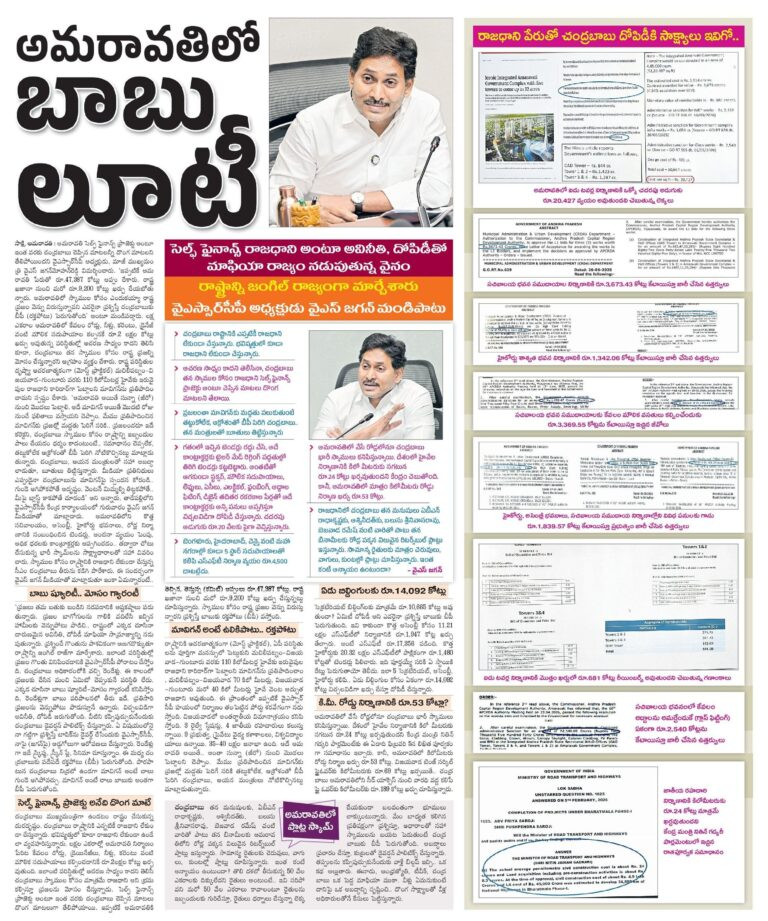
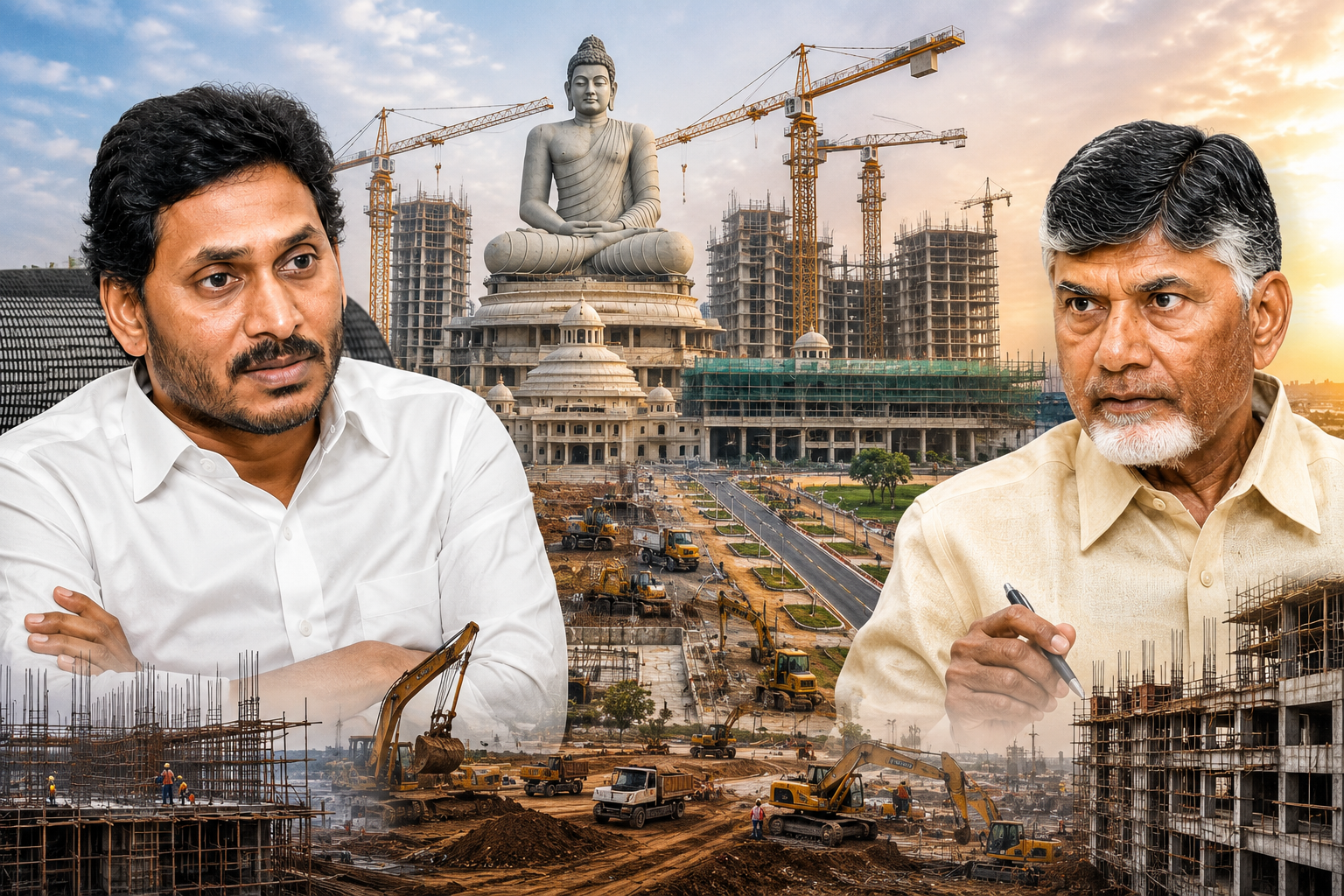
The controversy surrounding the construction of the proposed capital city of Amaravati has again intensified in Andhra Pradesh politics. The issue started when YSRCP chief Y. S. Jagan Mohan Reddy made some allegations.
Allegations made by Y. S. Jagan Mohan Reddy have triggered debate not only within political circles but also among the public. The discussion centers on tender processes rising construction costs and alleged irregularities in contract allocations related to the Amaravati project.
The Amaravati project was initially announced as a self-financed capital development model.
Allegations of Irregularities in a “Self-Financed Capital” Model
Jagan Mohan Reddy has alleged that significant financial irregularities occurred in the Amaravati project. He claimed that official documents indicate high escalations in project costs and inconsistencies between government-approved estimates and final contract values.
According to Jagan Mohan Reddy several contracts were modified in ways that benefited contractors.
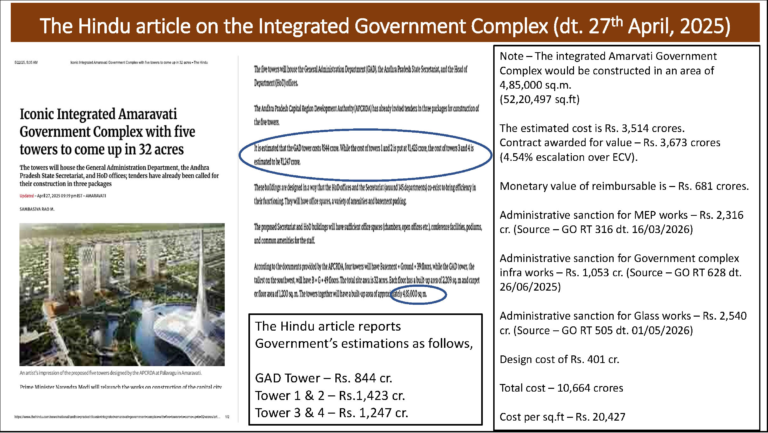
Concerns Over ₹20,427 Crore Construction Estimates
A point of contention is the reported construction estimate of approximately ₹20,427 crore.
According to the allegations raised major infrastructure components—such as roads starter infrastructure works, buildings, drainage systems and electrical works—saw cost escalations compared to initial estimates.
The construction costs of these projects have raised questions.
Secretariat and Administrative Building Cost Disputes
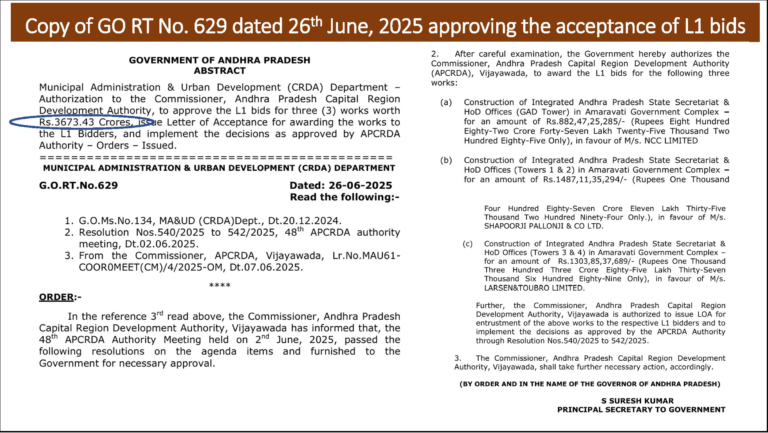
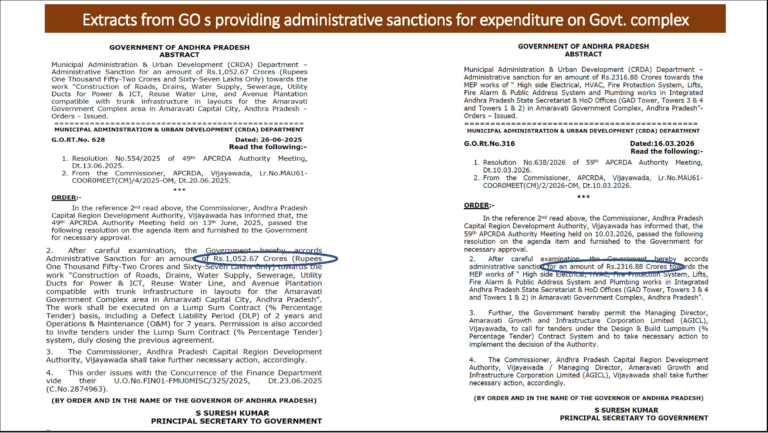
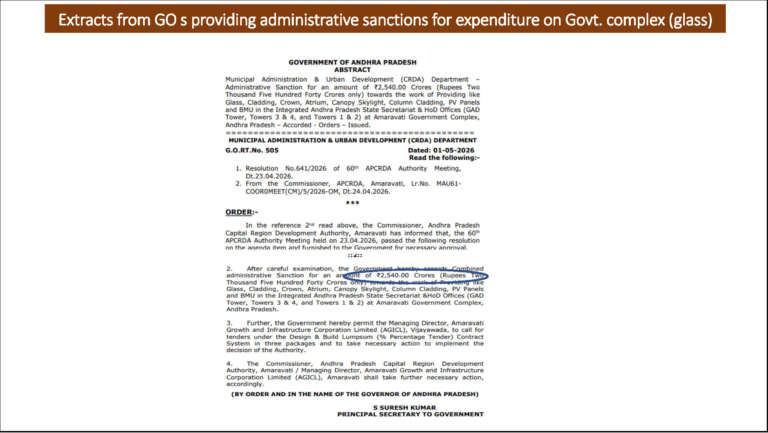
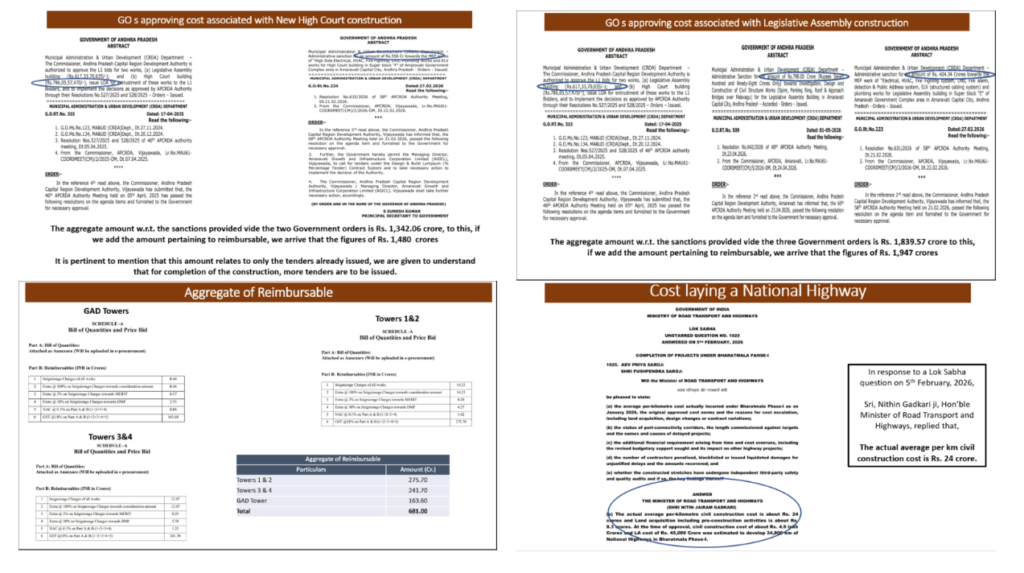
Documents released by Jagan reportedly highlight differences between initial approvals and revised cost estimates for key administrative structures, including the Secretariat towers, High Court and Assembly buildings.
The per-foot construction costs mentioned in these documents have become a major point of political debate. YSRCP leaders claim that revised cost approvals and contractor quotations show increases that require further scrutiny.
Allegations Extend to Multiple Infrastructure Projects
The controversy is not limited to buildings alone. It also includes:
- Secretariat towers and administrative blocks
- High Court complex
- Five towers
- National highway connectivity projects
- Road and infrastructure corridors
Reports suggest that revised estimates and tender modifications in these projects have raised further questions in political discussions and on social media.
” Cost Per Square Foot” Allegation
One of the most debated claims is the alleged extremely high construction cost per square foot. Jagan criticized the estimated costs suggesting that certain government structures were planned at levels to luxury-grade construction.
YSRCP’s Stand: Claims Based on Official Documents
YSRCP leaders maintain that their allegations are supported by government orders, tender documents and cost comparison reports. They argue that there is a gap between approved estimates and final contract values.
TDP’s Counter-Argument
The Telugu Desam Party (TDP) led by N. Chandrababu Naidu has strongly rejected these allegations. TDP leaders argue that Amaravati was envisioned as a world-class capital city and that higher costs are an outcome of building infrastructure aligned with international standards.
Political Temperature Rising in Andhra Pradesh
The Amaravati issue remains one of the sensitive political topics in Andhra Pradesh. With allegations and counter-allegations emerging the debate is expected to intensify further.
FAQ
Why has the Amaravati issue resurfaced?
It has returned to discussion after Y. S. Jagan Mohan Reddy raised allegations regarding construction costs and contract irregularities supported by documents.
What is the main allegation?
The main allegation is that Amaravati’s construction costs were significantly inflated and contracts were awarded with revisions.
What is TDP’s response?
TDP states that Amaravati was designed as a standard capital and that higher costs reflect quality and scale.
Which projects are under discussion?
The projects, under discussion are Secretariat towers, High Court buildings, Assembly structures and road infrastructure projects.